

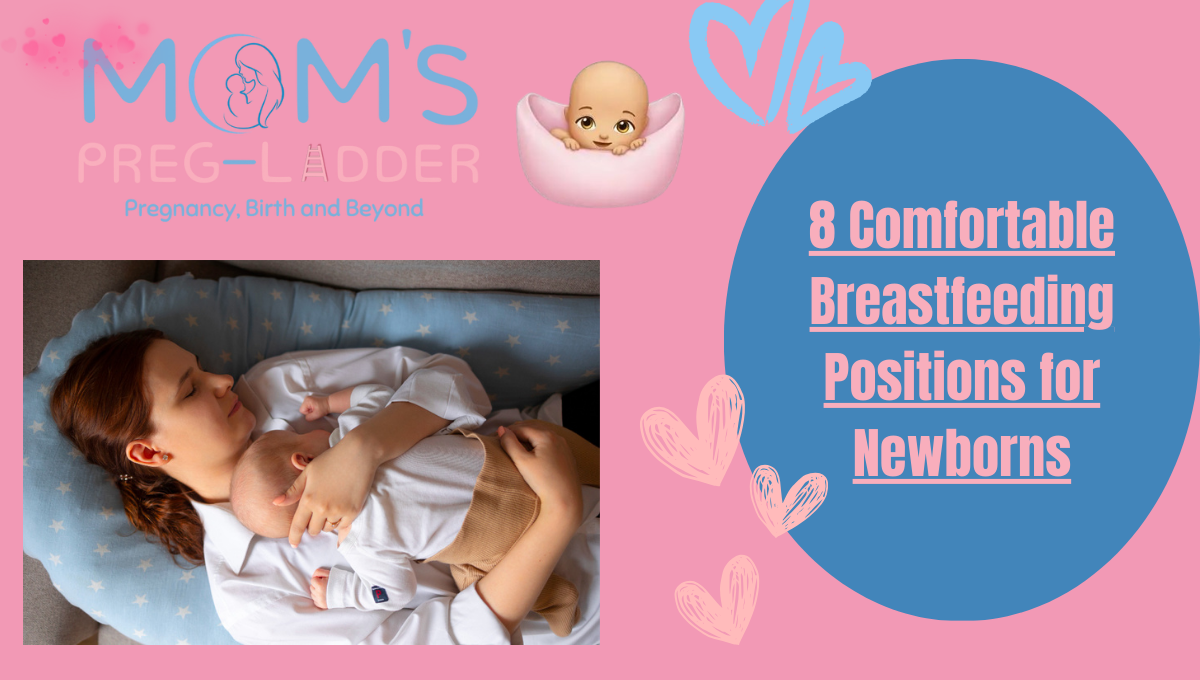
Breastfeeding your newborn can feel overwhelming at first. Finding the right position makes all the difference between a peaceful feeding session and a frustrating experience for both mother and baby.
The right breastfeeding positions help your baby latch properly, prevent nipple pain, and make feeding time more enjoyable. Let’s break down eight proven positions that work beautifully for new mothers and their little ones.
Why Your Breastfeeding Position Matters
Your position during nursing affects everything from milk flow to your baby’s digestion. A poor position can lead to sore nipples, back pain, and a fussy baby who struggles to feed properly.
Good positioning helps your baby’s mouth cover more of the areola, creating a deeper latch. This means better milk transfer and less discomfort for you. Your body also relaxes when you’re comfortable, which helps with milk letdown.
Many mothers visiting Mom’s Preg Ladder share that switching positions solved their early breastfeeding classes. Your body and baby are unique, so what works for one mother might not work for another.
1. Cradle Hold: The Classic Position
The cradle hold is what most people picture when they think of breastfeeding. Your baby lies across your lap, with their head resting in the crook of your arm on the same side as the breast they’re nursing from.
Here is why this position works well. Your baby’s body stays aligned from ear to shoulder to hip. This straight position helps them swallow easily without twisting their neck.
Support your baby’s bottom with your forearm. Their nose should be level with your nipple before latching. Bring your baby to your breast rather than leaning forward, which strains your back.
This position takes some practice with newborns because their heads are wobbly. A nursing pillow can help bring your baby to the right height.
2. Cross-Cradle Hold: Better Control for Beginners
The cross-cradle hold looks similar to the cradle hold but gives you more control over your baby’s head. You hold your baby with the arm opposite to the nursing breast.
Your hand supports the back of your baby’s neck and head, while your other hand shapes your breast. This position lets you guide your newborn to your breast more precisely.
New mothers often find this position easier during the first few weeks. You can see your baby’s mouth clearly and help them achieve a deep latch.
Switch arms when you switch breasts. Your baby’s tummy should face your tummy throughout the feeding.
3. Football Hold: Perfect After C-Sections
The football hold (also called the clutch hold) tucks your baby under your arm like a rugby ball. Your baby’s legs point toward your back while their head rests in your hand.
This position keeps pressure off your abdomen, making it perfect if you had a caesarean delivery. The football hold also works brilliantly for mothers with large breasts, twins, or babies who struggle with fast milk flow.
Place a pillow beside you to support your baby at breast height. Your baby’s nose should be level with your nipple. Support their neck and shoulders with your hand while guiding them to latch.
Many mothers at Mom’s Preg Ladder report that this position helped them continue breastfeeding comfortably during their C-section recovery.
4. Side-Lying Position: Rest While You Nurse
The side-lying position lets you nurse while lying down, which is perfect for night feeds or when you need rest. Both you and your baby lie on your sides, facing each other.
Your baby’s mouth should be level with your nipple. Place a pillow behind your back for support and another between your knees if that feels comfortable. Some mothers also place a small rolled towel behind their baby to keep them close.
This position works beautifully when you’re exhausted or recovering from delivery. You can even doze while your baby feeds, though always follow safe sleep guidelines.
Never leave your baby unattended while nursing in bed. Move them to their safe sleep space once feeding finishes.
5. Laid-Back Breastfeeding: Let Gravity Help
Laid-back breastfeeding (biological nurturing) uses your body’s natural reflexes and gravity. You recline at a comfortable angle with your baby lying on your chest and tummy.
Your baby can be in any direction as long as their whole front touches yours. They use their natural rooting and crawling reflexes to find the breast and latch on.
This position feels very relaxed and natural. Gravity keeps your baby close without you needing to hold them tightly. It works particularly well for babies with strong sucking reflexes or those who pull off the breast frequently.
Try different recline angles to find what feels best. Some mothers prefer a slight recline while others lean back more.
6. Upright Breastfeeding: For Reflux and Gas
Upright breastfeeding guides (also called koala hold) positions your baby sitting upright while nursing. Your baby straddles your thigh or sits on your hip, facing you.
This position works well for babies with reflux, ear infections, or those who spit up frequently. The upright angle helps milk flow down smoothly and reduces gas.
Support your baby’s bottom with one arm while they sit facing your breast. Your baby should be close enough to latch without stretching or pulling. This position works better once your baby has some head and neck control, usually around three to four months.
Some newborns with tongue ties or latch difficulties also feed better in this position.
7. Dangle Feeding: Clear Blocked Ducts
Dangle feeding positions your baby lying flat on their back while you lean over them on hands and knees. This position uses gravity to help milk flow and can clear blocked milk ducts.
You wouldn’t use this position for regular feeds because it’s tiring. However, it helps when you have a blocked duct in a specific area of your breast.
The gravitational pull combined with your baby’s sucking can dislodge stubborn blockages. Only use this position for short periods and return to a comfortable position once your breast feels better.
8. Transitional Hold: For Sleepy or Premature Babies
The transitional hold combines elements of the cradle and football holds. Your baby lies across your body at an angle, with their legs pointing toward the opposite side from the nursing breast.
This position works well for sleepy babies who need encouragement to stay awake during feeds. The slightly upright angle and skin-to-skin contact help keep them alert.
Premature babies often feed better in this position because you can support their head and body completely. The close contact also helps regulate their temperature and breathing.
Tips for Finding Your Best Position
Every baby latches differently. What works during one feed might not work for the next, especially during growth spurts or when your baby feels unwell.
Try different positions throughout the day. Morning feeds might work better in one position while evening feeds work better in another. Pay attention to what feels comfortable for both of you.
Watch for these signs of a good latch regardless of position: Your baby’s mouth is wide open, their lips are flanged outward, you can see more areola above their top lip than below their bottom lip, and their chin touches your breast.
Breastfeeding routine shouldn’t hurt once your baby latches correctly. Some initial tenderness is normal, but ongoing pain means something needs adjusting.
Getting Support When You Need It
Learning to breastfeed takes time and patience. Don’t hesitate to ask for help from lactation consultants, experienced mothers, or your healthcare provider.
Mom’s Preg Ladder offers resources and community support for breastfeeding mothers navigating these early days. Connecting with other mothers who understand your challenges makes the learning process less lonely.
Remember that even experienced mothers sometimes need to try several positions before finding what works with a new baby. Each child brings their own personality and preferences to feeding time.
Making Breastfeeding Work for You
The best breastfeeding position is the one that works for you and your baby. Comfort matters just as much as technique.
Keep experimenting until you find positions that feel natural. Most mothers use two or three favourite positions regularly and try others when specific situations call for them.
Your breastfeeding relationship will evolve as your baby grows. Positions that work beautifully at two weeks might need adjusting at two months. Stay flexible and trust your instincts about what feels right.
Frequently Asked Questions
Which breastfeeding position is best for newborns?
The cross-cradle hold works best for most newborns because it gives you excellent control over your baby’s head and helps them achieve a deep latch. This position lets you guide your baby precisely while seeing their mouth clearly. The football hold also works well, especially after caesarean deliveries or for mothers with twins.
How do I know if my baby is positioned correctly while breastfeeding?
Your baby’s body should face yours with their nose level with your nipple before latching. Once latched, their chin should touch your breast and you should see more areola above their top lip than below. Your baby’s ears, shoulders, and hips should align in a straight line without their head twisting.
Can I switch breastfeeding positions during the same feed?
Yes, switching positions during a feed is perfectly fine and sometimes helpful. Different positions drain different areas of your breast, which can prevent blocked ducts. If your baby seems frustrated or uncomfortable in one position, trying another can help them feed more effectively and get more milk.
Why does breastfeeding hurt even when my position looks correct?
Pain during breastfeeding usually means your baby’s latch needs adjusting, not just the position. Your baby might not be opening wide enough or might be sucking on the nipple rather than the areola. Tongue tie, lip tie, or thrush can also cause pain despite correct positioning. Consult a lactation consultant for assessment.
How long should I try each breastfeeding position before switching?
Give each position at least three to five feeding sessions before deciding it doesn’t work for you. Your body and baby both need time to adjust to new positions. Some positions feel awkward initially but become comfortable with practice. Keep pillows and supports handy to help you maintain each position comfortably.