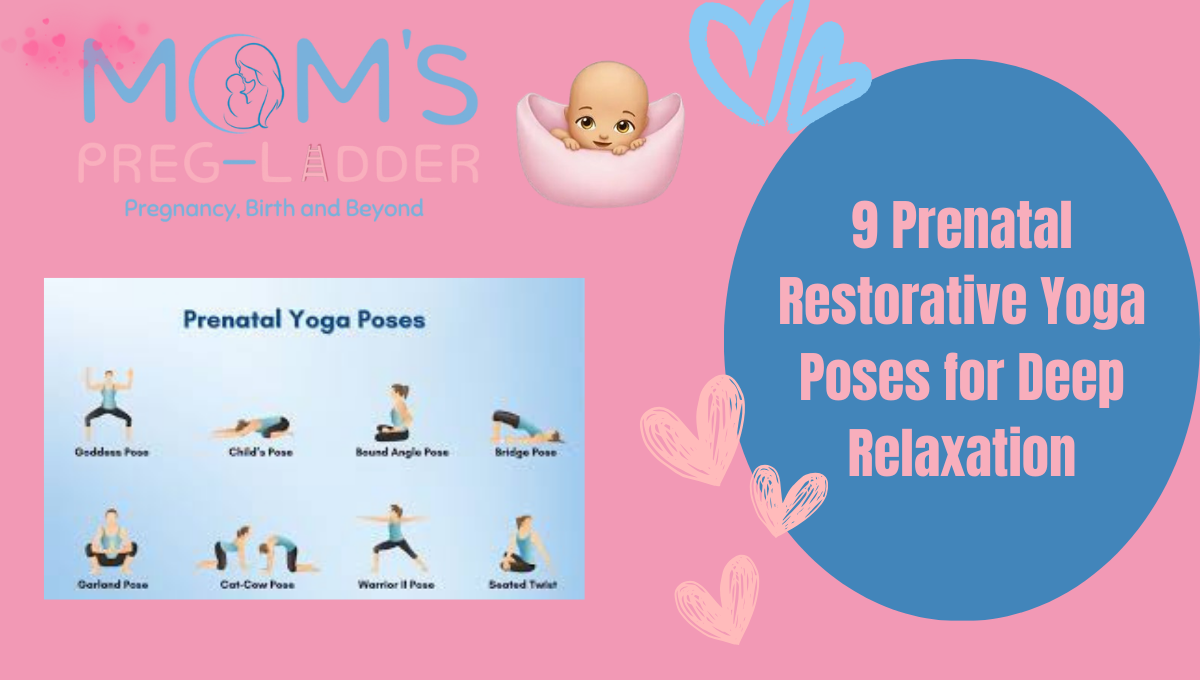
Pregnancy brings profound changes to your body, and finding moments of calm can feel like a luxury. Restorative yoga offers a gentle way to ease tension, support your growing body, and create space for deep relaxation. Unlike more active yoga styles, these poses use props and longer holds to help you rest completely.
Let me walk you through nine safe, effective yoga poses for deep relaxation during pregnancy. Each one helps you slow down, breathe deeply, and connect with your baby.
Why Choose Restorative Yoga During Pregnancy?
Your body works hard during pregnancy. Your heart pumps extra blood, your ligaments soften, and your posture shifts to accommodate your baby. This constant adaptation can leave you feeling tired and tense. Many women who begin pre-pregnancy classes notice that their bodies adapt more comfortably to these changes once pregnancy begins.
Restorative yoga addresses these challenges through supported positions that require minimal effort. You’ll hold each pose for several minutes, allowing your nervous system to shift from stress mode to rest mode. Research from the International Journal of Yoga shows that prenatal yoga can reduce anxiety, improve sleep quality, and decrease physical discomfort during pregnancy.
At Mom’s Preg Ladder, women discover that regular restorative practice—often introduced through pre-pregnancy classes and continued throughout pregnancy—helps them feel more grounded as their bodies change. The key is choosing poses that feel comfortable and safe throughout each trimester.
Safety First: What You Need to Know
Before starting any prenatal yoga practice, it’s important to understand what is prenatal yoga and its benefits during pregnancy, and to get clearance from your healthcare provider. Some medical conditions require pose modifications or complete rest from certain movements.
After your first trimester, avoid lying flat on your back for extended periods. This position can compress a major blood vessel and reduce blood flow to your baby. All the poses below account for this important safety guideline.
Listen to your body above all else. If a pose causes pain, dizziness, or discomfort, come out of it gently. Pregnancy is not the time to push your limits—prenatal yoga is about support, safety, and mindful movement.
Essential Props for Your Practice
Gather these items before you begin:
- Two to three firm pillows or bolsters
- Four to six yoga blocks (books work too)
- Three blankets
- A yoga mat
- An eye pillow (optional but lovely)
Having the right support makes all the difference in how deeply you can relax.
1. Supported Child’s Pose (Balasana)
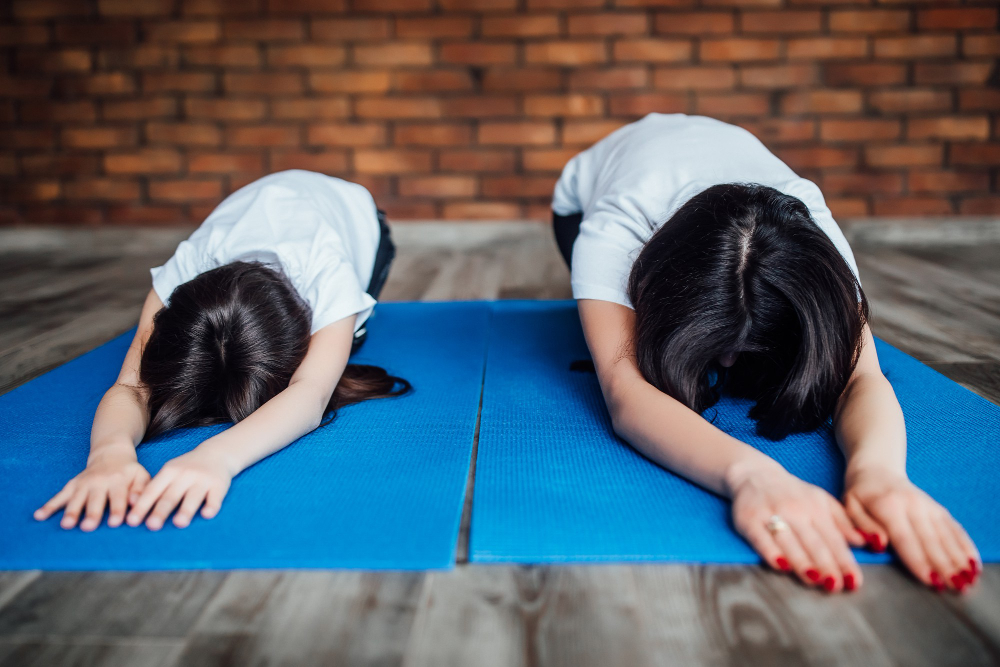
This classic resting pose opens your hips and gently stretches your lower back.
Place a bolster or stack of pillows lengthwise between your knees. Kneel with your knees wide apart, wider than your hips, to make room for your belly. Fold forward and rest your entire torso on the bolster. Turn your head to one side, switching sides halfway through.
Hold this pose for three to five minutes. Your arms can rest alongside the bolster or reach forward. Focus on breathing into your back body, feeling your ribs expand with each inhale.
This pose calms your nervous system and creates a sense of safety. Many women at Mom’s Preg Ladder find this their go-to position when they need instant relief from back tension.
2. Side-Lying Savasana

Traditional relaxation poses happen on your back, but this side-lying version keeps you and your baby safe while allowing complete rest.
Lie on your left side (this optimizes blood flow). Place a bolster or thick pillow under your head. Bend your top knee and rest it on another bolster or stack of pillows so your knee aligns with your hip. Place a folded blanket between your ankles for extra comfort.
Rest here for five to ten minutes. Close your eyes and scan your body from head to toe, consciously releasing any areas of tension. This is one of the most accessible yoga poses for deep relaxation during pregnancy because it requires virtually no effort.
3. Supported Reclined Bound Angle Pose (Supta Baddha Konasana)
This hip-opening pose relieves pelvic pressure and opens your chest for easier breathing.
Sit with a bolster behind you, positioned lengthwise along your spine. Bring the soles of your feet together and let your knees fall open. Place blocks or folded blankets under each knee for support. Recline back onto the bolster, using additional pillows under your head if needed.
Your arms rest out to the sides, palms facing up. This open position encourages deeper breathing and can help reduce upper back tightness. Stay for three to five minutes, breathing slowly and naturally.
If you’re past 20 weeks and feel any lightheadedness, elevate your upper body more by adding another pillow under your bolster.
4. Legs Up the Wall (Viparita Karani) – Modified
This gentle inversion reduces swelling in your feet and legs while calming your mind.
Sit sideways next to a wall. Swing your legs up the wall as you lower your upper body to the floor. Position yourself so your hips are about 15 to 30 centimetres from the wall. Place a folded blanket under your hips to create a slight incline, keeping your head lower than your heart.
Rest your arms out to the sides or on your belly. Stay for five to eight minutes. To come out, bend your knees, roll to your side, and rest there before sitting up slowly.
This pose works wonders after a long day on your feet. The gentle reversal helps fluid drain from your lower body, reducing that heavy, swollen feeling many pregnant women experience.
5. Supported Bridge Pose (Setu Bandha Sarvangasana)
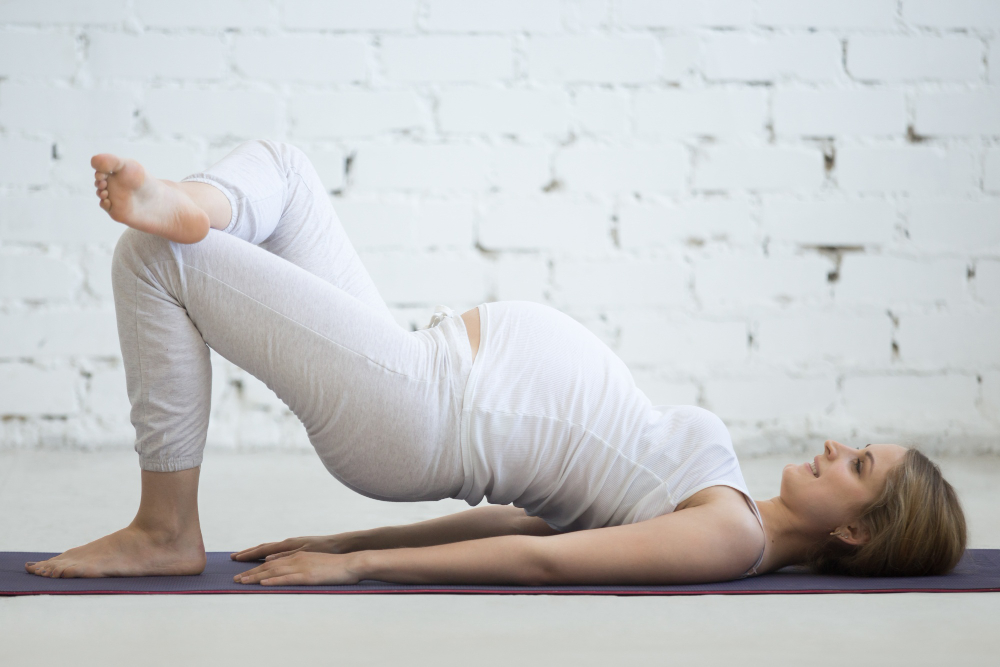
This gentle backbend opens your chest and can ease lower back discomfort.
Lie on your back with your knees bent and feet flat on the floor, hip-width apart. Lift your hips and slide a yoga block under your sacrum (the flat bone at the base of your spine). Choose a height that feels comfortable, low to moderate.
Your arms rest alongside your body. This supported position takes all effort out of the pose, allowing you to relax completely. Hold for two to three minutes, breathing deeply into your chest.
Remember, after your first trimester, limit how long you stay in any back-lying position. If you feel uncomfortable, come out immediately.
6. Seated Forward Fold with Support
Forward folds typically compress your belly, but this supported version creates space while still offering the calming benefits of folding inward.
Sit on the floor with your legs extended wide in a V-shape, feet flexed. If your hamstrings are tight, sit on a folded blanket to elevate your hips. Place a bolster or several pillows lengthwise between your legs.
Hinge forward from your hips and drape your upper body over the bolster. Turn your head to one side, switching halfway through. Your arms can wrap around the bolster or rest on the floor.
Stay for three to five minutes. This pose stretches your inner thighs and back while providing a sense of gentle compression that many find soothing.
7. Supported Sitting Meditation Pose
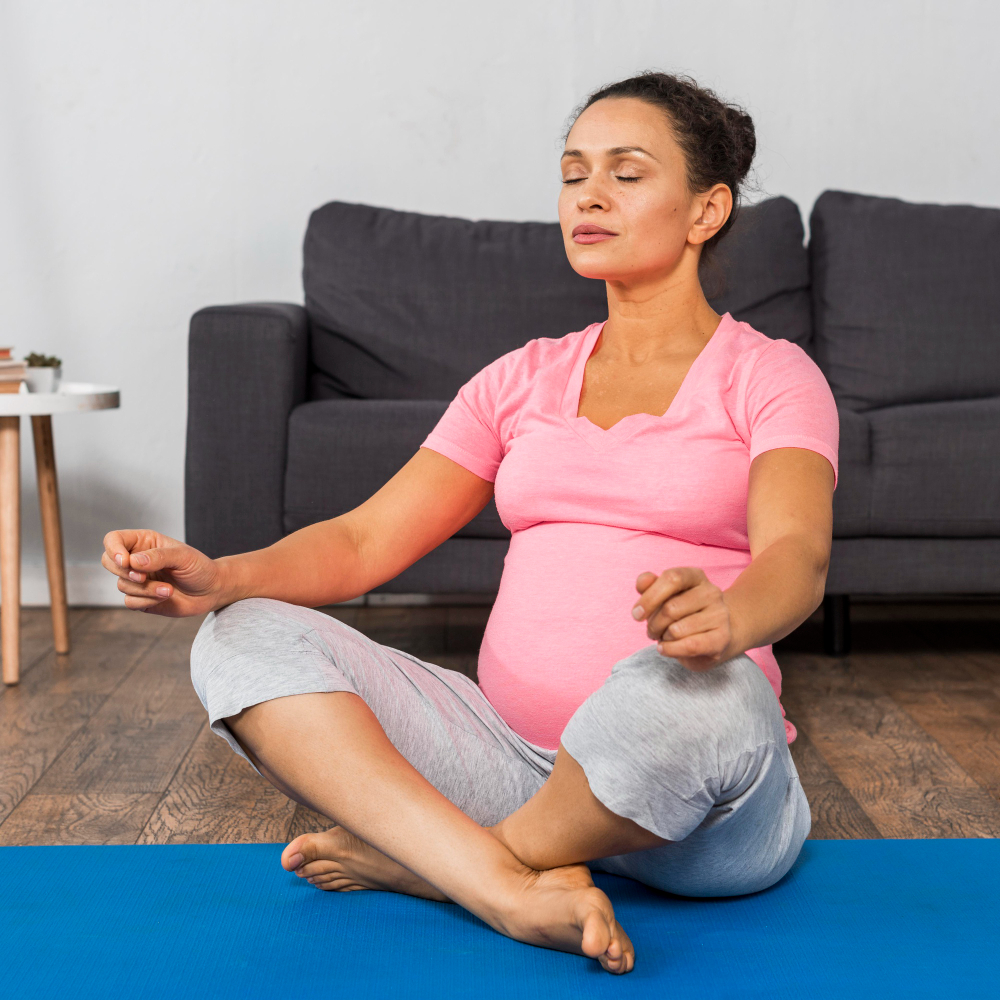
Sometimes the most powerful yoga poses for deep relaxation are the simplest. Comfortable seated positions help you turn inward and connect with your breath and baby.
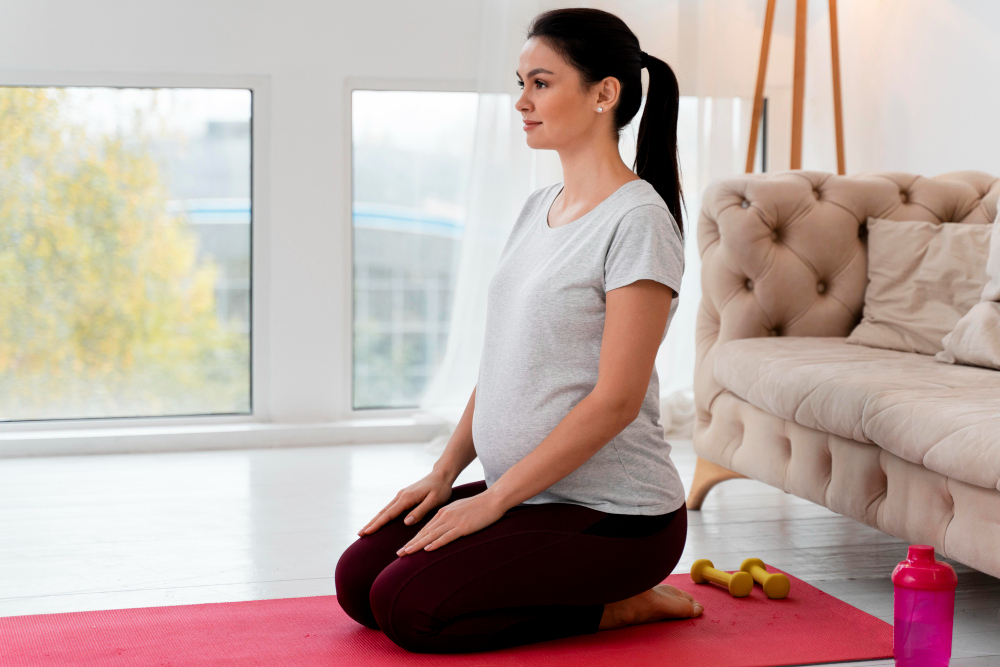
Sit cross-legged on a stack of blankets or a bolster, elevating your hips above your knees. If sitting on the floor is uncomfortable, sit on a chair with your feet flat on the ground. Place your hands on your belly or rest them on your thighs.
Close your eyes and focus on your breath. Notice the natural rhythm of each inhale and exhale. When thoughts arise, acknowledge them without judgment and return to your breath. Practice for five to ten minutes.
This simple practice builds the mental focus that serves you well during labour and beyond.
8. Supported Cat-Cow Stretch (Marjaryasana-Bitilasana)
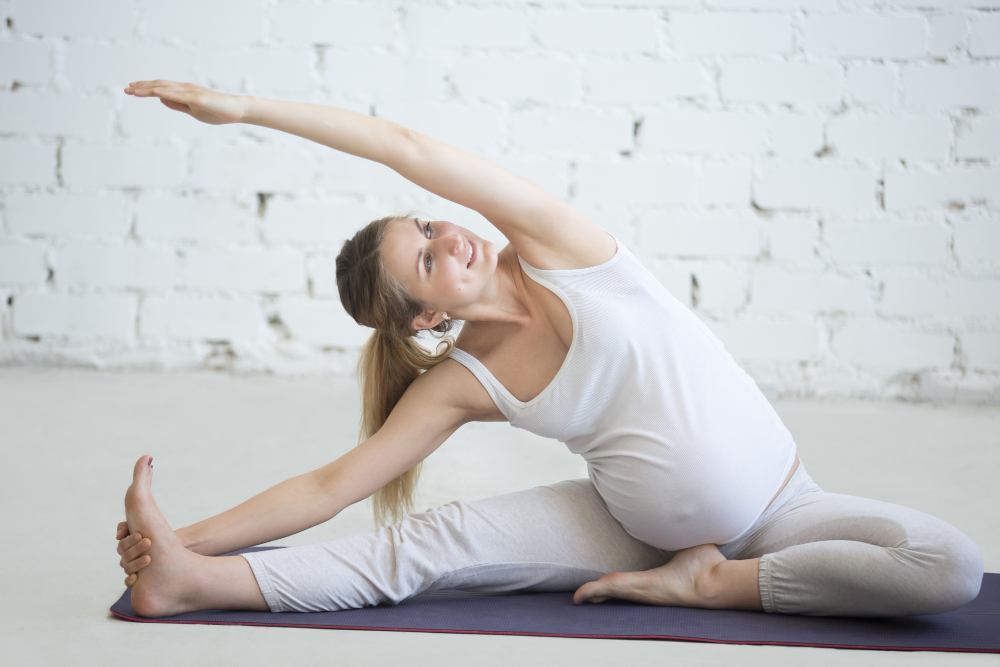
While not strictly a resting pose, this gentle movement helps release tension in your spine before settling into deeper relaxation.
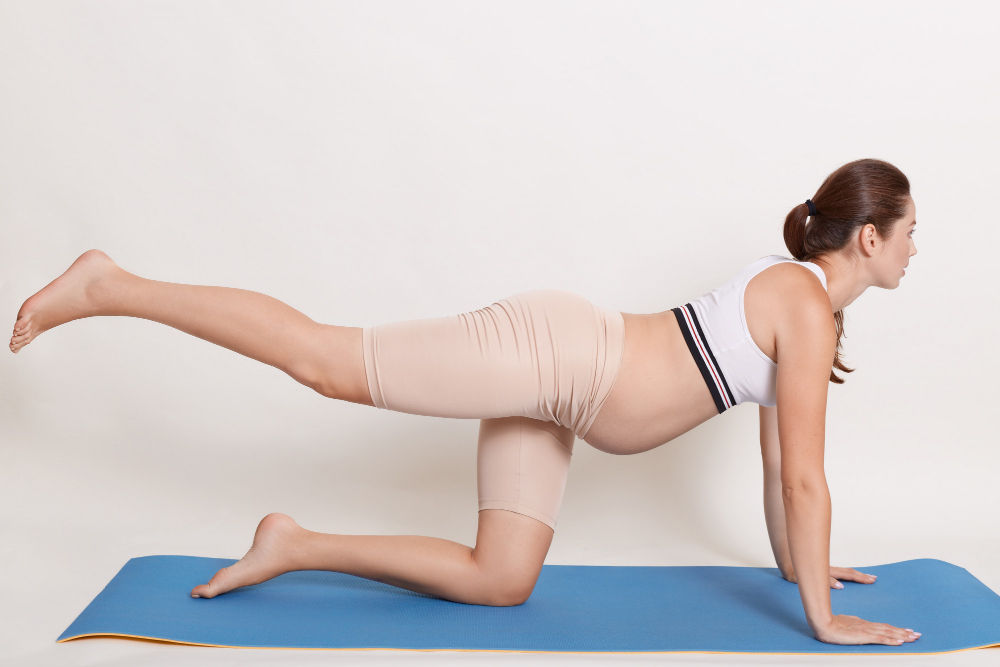
Come to hands and knees with a folded blanket under your knees for padding. Place blocks under your hands if reaching the floor strains your shoulders. Keep your wrists directly under your shoulders and your knees under your hips.
As you inhale, gently lift your head and tailbone, creating a subtle arch in your back. As you exhale, round your spine, tucking your chin and tailbone. Move slowly, following your breath. Continue for one to two minutes.
This flowing movement massages your spine and helps your baby move into an optimal position. Many women use this as part of their daily routine on Mom’s Preg Ladder.
9. Supported Reclining Twist
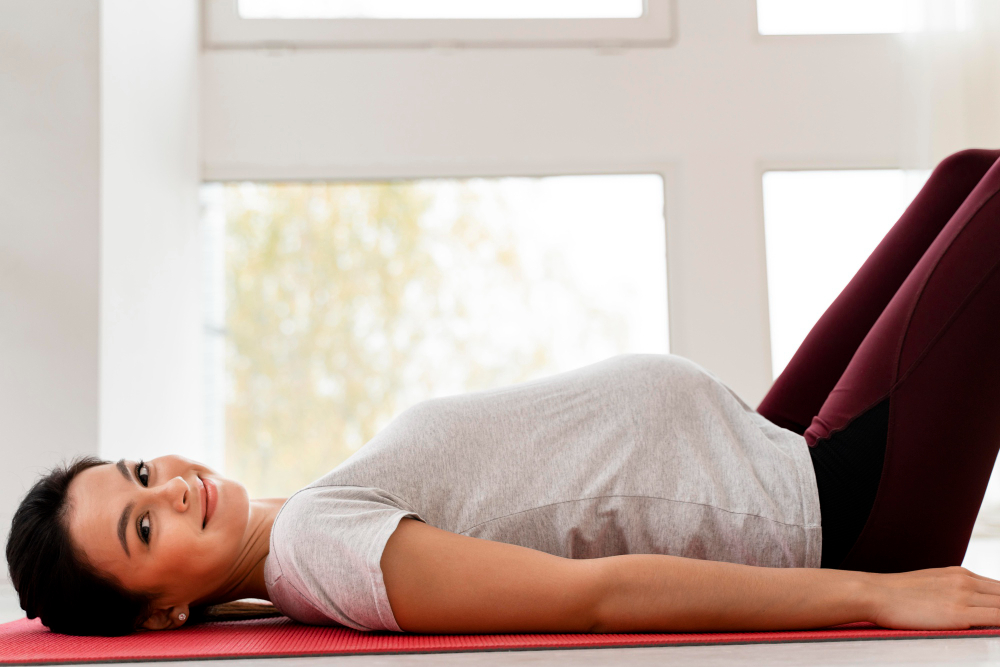
Gentle twists release tension in your back and sides without compressing your belly.
Lie on your left side with a bolster or several pillows in front of you. Bend your knees to 90 degrees, stacking them on top of each other. Place the bolster or pillows between your knees and under your top leg.
Rest your left arm behind you. Your right arm can rest on the bolster or reach forward. This creates a gentle opening through your chest and right side body. Hold for three to five minutes, then switch sides.
This pose feels particularly good in the third trimester when your growing belly creates tightness through your sides and back.
Creating Your Restorative Practice
You don’t need to do all nine poses in one session. Choose three to four poses that address your current needs. A complete practice might last 20 to 30 minutes. If you’re practicing with your partner, you can also explore 10 easy prenatal partner yoga poses to connect before birth, which add emotional support and deepen your bond during pregnancy.
Here’s a sample sequence:
- Supported Child’s Pose (3 minutes)
- Supported Bound Angle Pose (5 minutes)
- Legs Up the Wall (8 minutes)
- Side-Lying Savasana (10 minutes)
Practice in a quiet space where you won’t be interrupted. Dim the lights, play soft music if you like, and give yourself permission to rest completely. When practicing with a partner, gentle touch, guided breathing, or simple assisted poses can enhance relaxation and trust.
The breathing techniques you develop in these poses translate directly to labour. Learning to consciously relax your body—alone or with a supportive partner—despite discomfort is one of the most valuable skills you can cultivate during pregnancy.
When to Practice
Many women find evening practice helps them sleep better. Others prefer morning sessions to set a calm tone for the day. Experiment to find what works for your schedule and energy levels.
Avoid practicing immediately after eating. Wait at least an hour after a light snack or two hours after a full meal.
Your Journey to Relaxation
Pregnancy is demanding, both physically and emotionally. These nine poses offer you a practical way to care for yourself and your growing baby. You’re not being lazy or indulgent when you practice restorative yoga—you’re actively supporting your health and preparing for the work ahead. At Mom’s Preg Ladder, this philosophy of rest, awareness, and self-care is woven into every prenatal and restorative yoga practice.
Start with one or two poses today. Notice how your body responds. Pay attention to which positions feel most comfortable and return to those often. Your practice will evolve as your pregnancy progresses, and that’s exactly as it should be.
The deep relaxation you cultivate on your mat ripples outward into the rest of your life. You might find yourself sleeping better, managing stress more effectively, and feeling more connected to your changing body. This is the gift of slowing down and truly resting.
Frequently Asked Questions
Can I start prenatal restorative yoga in my first trimester?
Yes, restorative yoga is generally safe throughout pregnancy once your doctor approves exercise. First trimester is actually an ideal time to start since you’re establishing healthy habits. You can still lie on your back during early pregnancy, which gives you more pose options. Just listen to your body and avoid any position that causes discomfort or nausea.
How often should I practice these relaxation poses during pregnancy?
Aim for three to five sessions per week, though even once or twice weekly provides benefits. Many women practice a few poses daily, especially favourites like Supported Child’s Pose or Legs Up the Wall. Consistency matters more than duration. Ten minutes of daily practice often helps more than one long weekly session.
What if I feel dizzy during a pose?
Come out of the pose immediately and rest on your left side. Dizziness can indicate low blood pressure or compression of major blood vessels. Elevate your upper body more in reclined poses, and avoid any back-lying positions. If dizziness persists or happens frequently, contact your healthcare provider before continuing your practice.
Do I need previous yoga experience to try these poses?
Not at all. These yoga poses for deep relaxation are designed for beginners and work beautifully for experienced practitioners too. The focus is on rest and support rather than flexibility or strength. If you’re new to yoga, start with the simplest poses like Side-Lying Savasana and Supported Child’s Pose before progressing to others.
Can restorative yoga help prepare me for labour?
Absolutely. These poses teach you to consciously relax your body and breathe through discomfort, both crucial skills for labour. The hip-opening poses help your baby move into an optimal position. Perhaps most importantly, regular practice builds your ability to stay calm and present, which serves you well during childbirth and throughout motherhood.