Hip pain and pelvic tension have a way of quietly sneaking in and taking over your day. One week, you are walking around fine, and the next, you are wincing every time you get up from a chair or roll over in bed. If that sounds familiar, you are suffering from what doctors call pregnancy-related pelvic girdle pain, and it’s much more common than most women think.
Certain yoga poses for hip pain and pelvic tension can provide real relief. If done regularly, these ten gentle, safe, and truly effective poses have been collated by us here at Mom’s Preg Ladder as one of the most common queries mothers face in our pregnancy yoga classes.
Why Do Hips and Pelvis Hurt So Much During Pregnancy?
The pelvis is a ring of bones at the base of your spine. It consists of the sacrum, tailbone, and two hip bones that meet at the front of the body at the pubic symphysis. During early pregnancy classes, the hormone relaxin relaxes the ligaments around this ring so your body can prepare for labor. This helps during birth, but it also leads to less stable joints, which is why many women have pain, clicking, or stabbing sensations around the hips and pubic bone.
Exercises for pelvic girdle pain should help relieve discomfort while also strengthening the abdominal and pelvic floor muscles, improving balance, posture, and spinal stability, says the Royal College of Obstetricians and Gynaecologists. That is precisely what targeted, pregnancy-safe yoga poses can do.
Is Yoga Safe for Pelvic Girdle Pain?
Yes, generally. Clinical guidance notes that exercise is recommended during pregnancy because of its significant health benefits and low risk, a position supported by ACOG’s physical activity guidelines. Moving gently and mindfully usually works better than being still, as stiff joints often hurt more. That said, always check with your doctor first, especially if your pain is severe, travels down your leg, or comes on suddenly and you can join virtual prenatal yoga work. This article is a guide and is not a substitute for a proper medical assessment.
10 Best Prenatal Yoga Poses for Hip Pain and Pelvic Tension
Here’s a simple sequence you can do. Take 5 to 8 slow breaths with each pose, and avoid anything that makes your pain worse, not better.
1. Cat-Cow Stretch
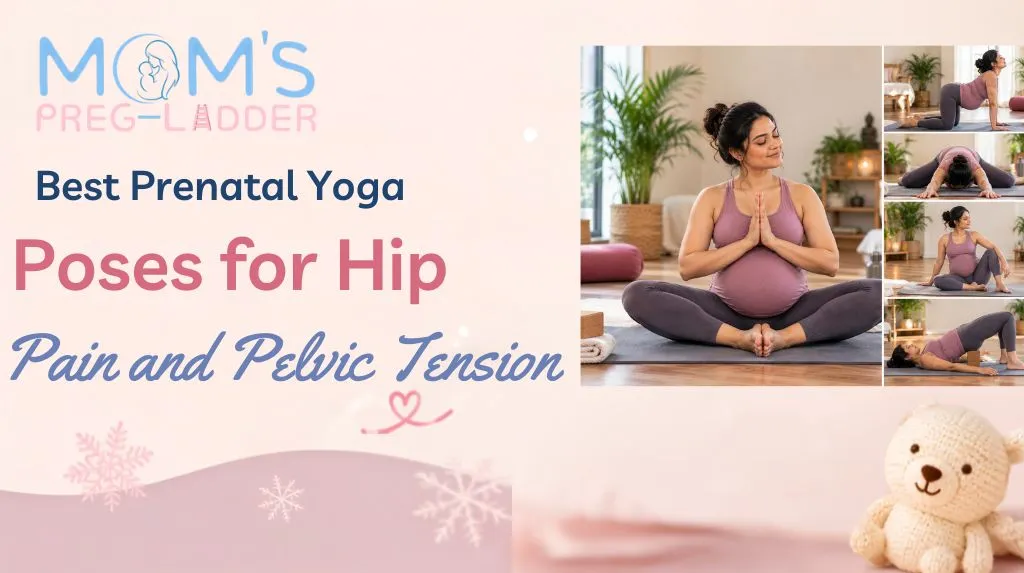
Get down on all fours and switch between arching your back (cow) and rounding it (cat). It warms up the spine and pelvis together, and it’s a gentle way to begin any prenatal yoga practice.
2. Butterfly Pose
Bend your knees, bring the soles of your feet together, and let your knees fall to the sides. If your hips are tight, use a cushion. This stretches the inner thigh and hip joints without putting any strain on the pelvis.
3. Supported Squat (Malasana)
Stand with your feet wider than your hips, hold onto a wall or solid chair, and squat down gently. This posture eases the tension in the hips and pelvic floor and may help later with positioning for labour.
4. Side-Lying Leg Lifts
Lie on your side, knees bent. Raise your top leg a few inches and lower it slowly. This strengthens the outer hip muscles that assist with pelvic stability, and that’s a big deal when the pelvic girdle feels loose.
5. Pigeon Pose (Modified)
From all fours, lift one knee to your wrist and extend the other leg back, with cushions under your hip for support. This releases deep tightness in the outer hip and buttock region.
6. Bound Angle Pose with Support
This version of the pose is restorative, like Butterfly, but instead of reclining on a bolster or pile of cushions, it eases your pelvic floor and hips and relieves pressure on your lower back.
7. Standing Hip Circles
Stand with your feet apart from your hips and your hands on your hips. Slowly circle your hips in both directions. This helps keep the pelvic joints mobile and can help ease stiffness that builds up after long periods of sitting.
8. Low Lunge with Support
Step one foot forward into a gentle lunge using the wall or chair for balance and sink slightly into your front hip. This stretches the hip flexors, which tend to tighten and pull on the pelvis as your belly grows.
9. Seated Forward Bend (Modified)
Sit with your legs straight and slightly apart and fold forward from your hips with a rolled towel behind your knees if necessary. This releases tension in the hamstrings and lower hips
10. Reclined Twist (Supported)
Lie on your back and bend your knees. Allow both knees to drop to one side while keeping your shoulders on the ground. You can use a cushion under your knees for support. This is a good way to help release tension through the hips and lower spine.
Simple Tips to Manage Pelvic Girdle Pain Day to Day
Along with your yoga practice which food is good for 1 month pregnant, a few small daily habits can make a real difference. Physical therapy guidance for pelvic girdle pain suggests it is helpful to stand with your weight evenly distributed on both legs, rather than resting on one hip, as this keeps the pelvis in a neutral position and reduces stress on the joints and muscles.
A few more practical changes:
- Sit for short periods of time with long periods of standing.
- Keep both feet flat on the floor, and your knees at or below hip level. Don’t put your legs across each other; it can strain the pelvis.
- Take smaller steps, one stair at a time, leading with your stronger leg. Don’t turn your spine with your feet planted like a quick turn in bed.
- Instead, in one fluid motion, roll over, knees together.
When Should You See a Doctor Instead of Just Doing Yoga?
generally respond well to gentle movement and stretching. But if the pain is severe, sudden, radiates down one leg, or makes walking very difficult, you should talk to your doctor or a pelvic health physiotherapist. A proper assessment also excludes other causes and helps you get the right treatment plan for your yoga practice.
How Mom’s Preg Ladder Supports You Through This
These ten poses are a good starting point, but pelvic girdle pain often needs a more personalised approach, as each body experiences pregnancy differently. Pregnancy yoga classes at Mom’s Preg Ladder are conducted live by certified instructors who observe your posture, recommend the right modifications, and tailor each pose to your comfort and trimester. Classes are small, so you get real individual attention, not a one-size-fits-all video. If hip pain or pelvic tension has been preventing you, the trimester-specific yoga program, Mom’s Preg Ladder, includes guided poses, breathing techniques, and posture work designed to ease this very type of discomfort. If you are around Gurugram, you can even visit us in our studio and learn from the comfort of your home.
Final Thoughts
Hip pain and pelvic tension can be discouraging but manageable with the right yoga poses for hip pain and pelvic tension, done consistently and gently. Take it slow, listen to your body, and remember that a little movement each day usually brings more relief than complete rest. If the pain does not go away, don’t hesitate to involve your doctor or physiotherapist in your yoga practice.
Frequently Asked Questions
1. What causes hip and pelvic pain during pregnancy?
It’s usually caused by the hormone relaxin, which loosens ligaments around your pelvis to get ready for birth. This makes the joints unstable, and you may feel achy, clicking, or sharp pain around the hips and pubic bone.
2. Which yoga pose gives the fastest relief for pelvic girdle pain?
Supported butterfly pose and gentle reclined twist often provide quick relief for many women. Results will vary, so try a few poses from this list and choose the one that feels best for your body.
3. Can I do hip-opening yoga poses in the third trimester?
Yes, the majority of these poses are still safe in the third trimester with proper support and modifications. Don’t do any deep stretches that cause sharp pain, and pad yourself out with cushions.
4. How often should I practise these poses for pelvic tension?
It is better to practise a little bit every day, 10 to 15 minutes, than to have occasional long sessions. Consistency helps to keep the hips mobile and prevents stiffness from building up again.
5. When should I stop doing yoga for hip pain and see a doctor?
If the pain is severe, travels down your leg, or comes on suddenly with swelling, stop and see your doctor. A physiotherapist can help rule out other causes and help guide safe next steps.