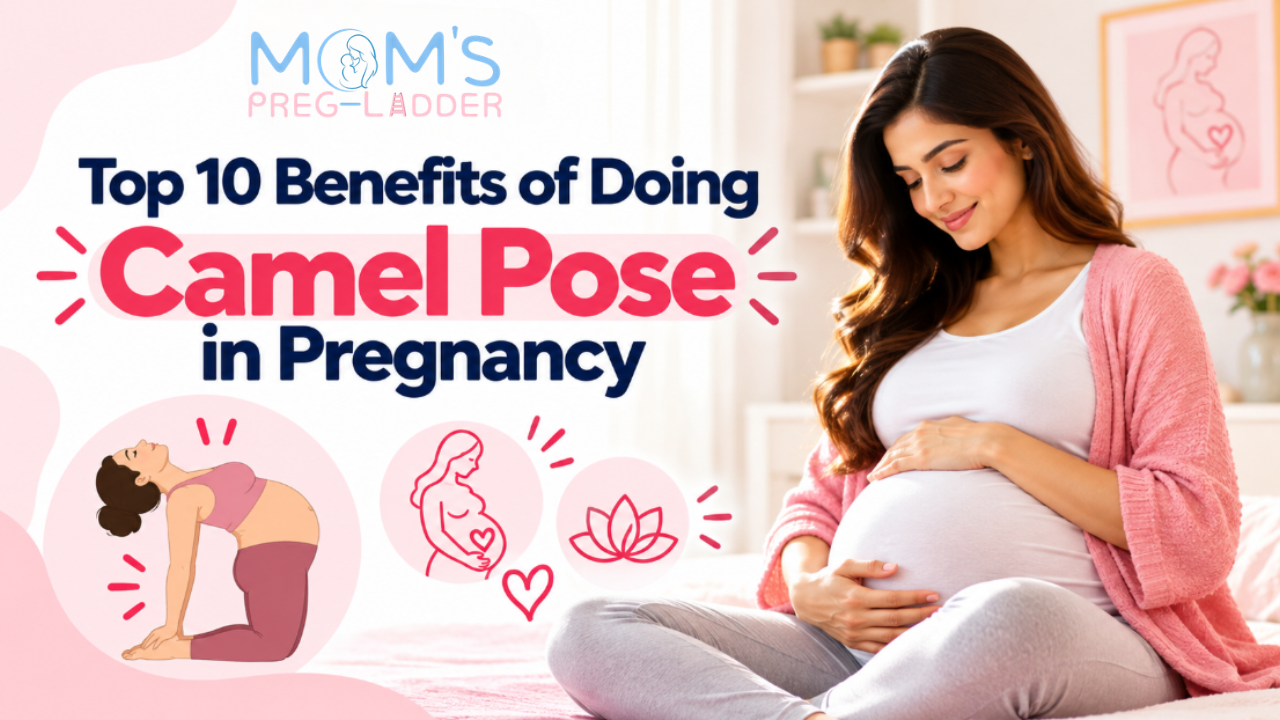
Camel pose: Prenatal yoga instructors are split on the pose. Some people call it a nice chest opener for bump development. Others say pregnant women should avoid it. Both camps have a point, and that’s why you owe us a straightforward answer. Let’s look at what the camel pose does, what the benefits really are, where the evidence stops, and how to practise a gentle version if your doctor approves.
Quick Answer: Is Camel Pose Worth It During Pregnancy?
Here’s the short story:
- Possible advantages: open chest, improved posture awareness, gentle spinal movement, stress relief, deeper breathing.
- Safety: Various sources. A small study found it safe for healthy women late in pregnancy. Some yoga organisations advise pregnant women not to do it.
- If you do try it, use a supported, modified version, keep the range small, and get your doctor’s OK first.
- If it feels wrong: Stop right now. Cat-cow and other proven poses offer similar relief.
What Is Camel Pose?
The camel pose, or Ustrasana in Sanskrit, is a deep backbend. You rise up on your knees and lean back, opening your chest to the ceiling. The name comes from the fact that your body looks like a camel’s hump. Teachers call it intermediate/advanced because many of us sit all day, and backbends are hard.
In the full version, you place your hands on your lower back, push your hips forward, lift your chestbone, and then reach your hands toward your heels. The final step, with the head thrown back, is the deepest part. Pregnancy changes the amount of this; you should try.
Is Camel Pose Safe During Pregnancy?
Real answer: Experts are divided.
Reasons some sources say no. Twenty-five pregnant women in their 35th to 38th week of pregnancy classes were tested on 26 yoga poses, such as camel pose, in a study in Obstetrics and Gynaecology, according to Harvard Health. The doctors kept watch on blood pressure, heart rate, oxygen levels, uterine contractions and the baby’s heart rate. There were no falls, no injuries or safety problems and all of the vital signs of the mothers and babies remained normal. Supported and modified versions of the camel pose are also safe during pregnancy, according to Livestrong.
Why some sources say no. Women who are pregnant, prenatal, and postnatal should avoid camel pose, says the Art of Living Foundation. My yoga teacher also recommends avoiding it when pregnant.
What to do about this. The study, backed by Harvard, is promising, but it was brief and small. The women were otherwise healthy and did not have high blood pressure or gestational diabetes. Pregnancy hormones relax muscles and ligaments, which means overstretching is a risk even in the first trimester. Harvard Health says moms-to-be should focus on strength and stability, not flexibility.
So the safest way to read this is that a gently supported camel ride may be appropriate for a healthy pregnancy with your doctor’s OK. No deep full camel? Forget that version.
The Top 10 Benefits of Camel Pose in Pregnancy
A note on the evidence. These benefits come from prenatal yoga teachers and from research on prenatal yoga in general. No studies have been done on camel pose alone. Think of the list as the reasons teachers like the pose. Not medical promises.
1. Opens the Chest and Shoulders
Camel is, fundamentally, a chest opener. As your breasts develop and your shoulders roll forward, a gentle chest opener can feel like a breath of fresh air. That’s precisely why the pose is valuable for teachers.
2. Improves Your Sense of Posture
Backbends like the camel are thought to enhance posture and spine flexibility. As their centre of gravity shifts forward in pregnancy, many mothers slump. A conscious lift of the chest can remind you how to stand tall.
3. Adds Gentle Spinal Movement
The camel takes the spine in the opposite direction to how we normally sit. A little of this motion will relieve stiffness. Keep it small; big ranges are risky with loose ligaments.
4. Stretches the Front of the Body
The camel pose is listed as a full-body stretch, a back stretch, and a chest stretch on ClassPass. It also stretches the front of your thighs and hips, which can feel tight after long hours of sitting or walking.
5. Counters the Effects of Sitting All Day
A camel pose can help counteract the negative effects of a sedentary lifestyle as part of a yoga sequence, according to Art of Living. This is important to you if you have a desk job during pregnancy.
6. Builds Strength in Your Thighs and Back
You are supported by your thigh and back muscles. A supported version suggests consistent work, and Harvard Health advises on stability during pregnancy.
7. Invites Deeper Breathing
An open chest allows your ribs to move more. Teachers in Camel Prompt slow breaths, and ClassPass says that paying attention to the breath brings clarity and confidence. Slow breathing is also a useful skill in labour.
8. Eases Stress
The camel pose helps reduce stress, according to Art of Living. Harvard Health points out that, aside from this one pose, yoga has been shown to reduce stress and anxiety in pregnancy and cut levels of the stress hormone cortisol.
9. Feels Energising
Deep backbends like camel are energising, according to Livestrong. If you’re feeling heavy and tired, a gentle opening might brighten your mood. But don’t chase the feeling. Pregnancy fatigue requires a break.
10. Builds Body Awareness
In the camel pose, you have to be aware of your balance, your breath, and any wobble in your lower back. Such awareness also applies to other postures and daily movement. Part of the practice is listening to your body, and Livestrong suggests skipping the pose if you experience pain or instability, especially in your lower back.
How to Do a Modified Camel Pose in Pregnancy
If your doctor and prenatal teacher approve, try this little supported version. The goal is a small lift in the chest, not a deep arch.
- Kneel on a folded blanket, spacing your knees a hip-width apart. If your knees ache, put a pillow under them.
- Keep your hips stacked over your knees.
- Place your hands on your lower back with your fingers facing down.
- Squeeze your shoulder blades together.
- Breathe in and lift your breastbone slightly. Keep your neck long and your chin tucked in.
- Stay for a few inhales. Don’t reach for your heels.
- To exit: exhale, drop your chin to your chest and your hands to your hips. Get up slowly.
Then relax in a comfortable seated or kneeling position. If you feel pain, dizziness, a pulling feeling in your belly, or pressure in your lower back, stop immediately.
Who Should Skip the Camel Pose
Skip this pose, and ask your doctor about any backbend if:
- Your doctor has classified your pregnancy as high-risk.
- You have hypertension or gestational diabetes. The women in the study didn’t.
- You have bleeding, spotting, or abdominal pain.
- You have issues with your knees, neck, or lower back.
- “When you lean back, you feel dizzy or woozy.
Your doctor knows you and your history, and their advice is better than any article.
Safer Alternatives That Give Similar Relief
If a camel does not feel right, there are choices. The Harvard-covered study also tested these poses, and all vital signs were normal:
- Cat and cow poses: Gentle spine movements on hands and knees.
- Urdhva Hastasana – Upward Salute: Reach your arms up overhead, opening the chest.
- Mountain pose (Tadasana): Stand tall, stacking your shoulders over your hips.
- Bound Angle Pose (Baddha Konasana): Sit with the soles of your feet together to open up your hips.
A prenatal teacher can adapt each one to your trimester.
Practise With Guidance
There are many benefits of doing yoga during pregnancy, but Harvard Health says to check with your doctor first. A prenatal yoga instructor can show you how to modify the poses. Avoid hot rooms. Hot yoga is likely to increase the mother’s core temperature and may pose a risk to the baby.
Swapnil Kaushik, an internationally certified childbirth educator, has established Mom’s Preg Ladder, which provides trimester-specific prenatal yoga classes with gentle exercises that promote flexibility and relaxation. It also offers one-on-one consultations, ideal for mothers who want to ask questions about specific poses, including Pawan Mukt Asana. These services supplement your medical care; they don’t replace it.
Final Thoughts: Your Next Steps
A camel pose in pregnancy sounds lovely! It opens the chest, improves posture, and allows for easier breathing and a calmer mind. The problem is that much of this is teacher wisdom, and the evidence of safety is limited. A gentle, supported version may be suitable for a healthy pregnancy. A deep one doesn’t.
Your next steps are here. Ask your gynaecologist if backbends are appropriate for you. Take a prenatal class with a qualified instructor. Start in the changed pose, or substitute cat-cow if that feels wrong.
If you want guided classes, try Mom’s Preg Ladder for prenatal yoga and consultation options. Walk softly. Your body works hard enough as it is.
Frequently Asked Questions
Is the camel pose safe during pregnancy?
It is contingent upon your health and the version. It’s proven to be safe in a small study of healthy women between 35 and 38 weeks and is advised against by some yoga organisations. Only try a supported version, with your doctor’s okay.
Which trimester is best for the camel pose?
No source provides a clear answer. Hormones loosen your ligaments from the first trimester on, so keep the range small at any stage. Your doctor and prenatal teacher will be guided by your health and growing belly.
Can a camel pose cause back pain in pregnancy?
It can, if you arch too high. Livestrong recommends that you avoid this pose if you feel any pain or instability, especially in the lower back. Keep your hands on your hips, lift just a little bit, and stop if you feel any strain.
What can I do instead of the camel pose?
Do cat-cow poses, upward salutes, mountain poses, or bound angle poses. The study was covered by Harvard. All these were tested. They open the chest, and they move the spine without the deep backbend.
Should I do the camel pose if I have a high-risk pregnancy?
“Talk to your doctor first, and plan on skipping it. The study included only otherwise healthy women, without high blood pressure or gestational diabetes. Personal medical advice is required for a high-risk pregnancy.