You just grew and delivered a human being. That is no small thing. But once the newborn haze settles a little, it is completely natural to look down at your belly and wonder, “When does this go away?”
Here is the honest answer: it takes time, and there is no magic shortcut. What there are, though, are real, research-backed strategies that can speed up your recovery, strengthen your core from the inside out, and help you feel at home in your body again. These tips to get a flat tummy after pregnancy are grounded in what actually works not fad diets or Instagram fitness culture.
Let’s break it down.
Why Your Belly Looks the Way It Does After Birth
Before jumping into what to do, it helps to understand what you’re actually dealing with.
During pregnancy yoga classes, your uterus expands significantly to accommodate your growing baby. Your abdominal muscles stretch, your skin loses some elasticity, and your connective tissue softens due to a hormone called relaxin. After delivery, your uterus begins shrinking back through a process called involution, which typically takes about six weeks. But visible belly changes the soft pouch, the loose skin can linger for six months to a year or more.
Many women also experience a condition called diastasis recti, where the two sides of the rectus abdominis (your “six-pack” muscles) separate along the midline. This is extremely common, and it can make the belly appear rounded or bulgy even when you have lost most of your pregnancy weight. Standard crunches can actually make this worse, which is why what exercises you choose matters enormously.
Knowing this sets realistic expectations. You are not just losing weight you are healing a body that did something extraordinary.
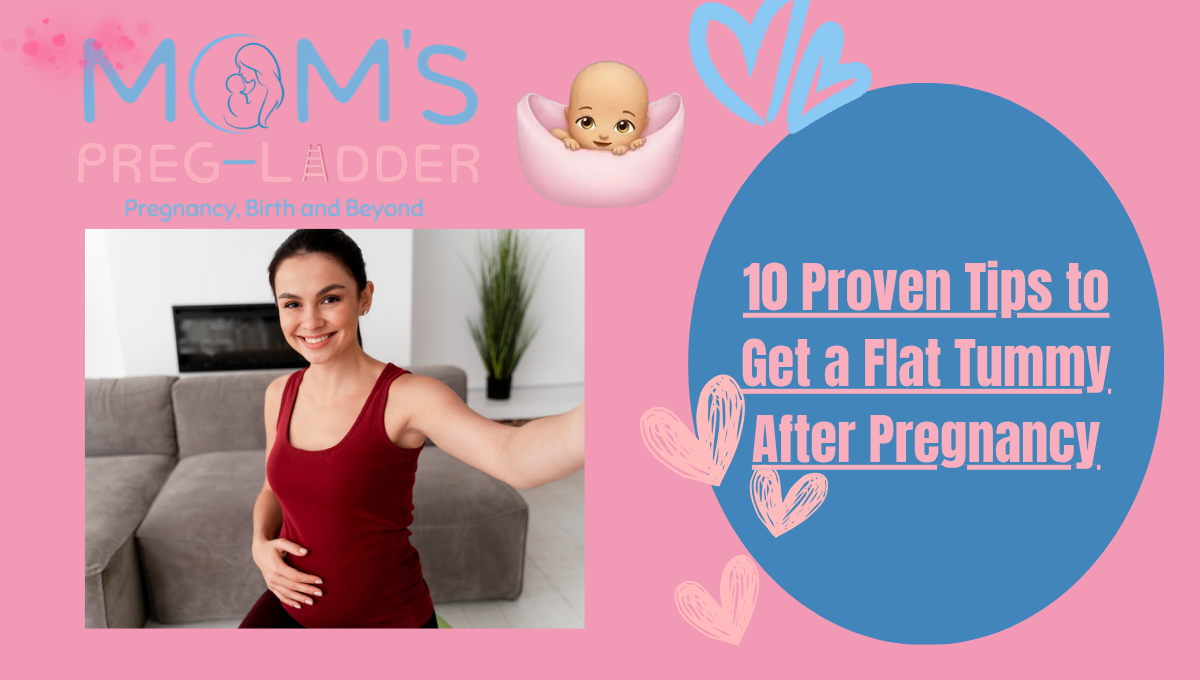
10 Proven Tips to Get a Flat Tummy After Pregnancy
1. Give Your Body the First Six Weeks to Heal
This might feel counterintuitive, but the single best thing you can do in the early postpartum weeks is rest. Your body is repairing tissue, rebalancing hormones, and potentially healing a C-section incision or perineal tearing. Jumping into an intense workout routine too soon can set your recovery back, not accelerate it.
Use the first six weeks to focus on gentle movement short walks, breathing exercises, and basic pelvic floor awareness. Most doctors clear new mothers for more intensive exercise at the six-week postpartum check-up.
2. Start With Diaphragmatic Breathing, Not Crunches
Here is why breath work matters more than most people realize: deep breathing directly engages your transverse abdominis, the deepest abdominal muscle layer and the one most responsible for a flat, stable core.
Practice this daily: lie on your back with your knees bent. Inhale deeply through your nose, letting your belly rise. As you exhale slowly, gently draw your navel toward your spine. This simple exercise begins reconnecting you to your core without placing stress on separated muscles.
At Mom’s Preg Ladder, this kind of foundational breath-and-core work is built into their Strong-MOM Postpartum Fitness Programme, specifically designed to support new mothers through safe, progressive recovery.
3. Check for Diastasis Recti Before Doing Any Ab Exercises
If you notice a gap or ridge running vertically down the middle of your belly when you try to sit up, you may have diastasis recti. A pelvic floor physiotherapist can confirm this with a simple assessment.
This matters because exercises like sit-ups, crunches, and leg raises can worsen the separation. The good news: a 2024 systematic review published in Scientific Reports analyzing 27 randomized controlled trials found that targeted physical therapy significantly reduces inter-recti distance in postpartum women with diastasis recti. Working with a professional gives you the right exercises for your specific situation.
4. Prioritize Pelvic Floor Rehabilitation
Your pelvic floor and your abdominal muscles work as a unit. A weakened pelvic floor extremely common after childbirth affects your posture, your core stability, and yes, how your belly looks and feels.
Kegel exercises are a start, but they are not the whole story. A proper postpartum core rehab approach also includes pelvic tilts, bridge exercises, and controlled breathing patterns that train the entire system together. If you experience leaking, pressure, or pain, see a pelvic health physiotherapist before progressing.
5. Do Not Skip Postpartum-Safe Core Exercises
Once you have clearance and have ruled out severe diastasis recti, you can begin building your core more intentionally. Here is a simple starting sequence:
- Pelvic tilts: Lie on your back, knees bent. Flatten your lower back against the floor by tightening your abs. Hold for five seconds, release. Do 5 sets of 20.
- Glute bridges: Lie on your back, feet flat, hip-width apart. Press into your heels and lift your hips off the floor. Lower slowly. Do 2 sets of 15.
- Modified plank: Start on your knees and forearms. Keep your spine neutral. Hold for 10–20 seconds and build from there.
- Dead bug: Lie on your back, arms extended toward the ceiling, knees bent at 90 degrees. Slowly lower one arm and the opposite leg toward the floor, then return. Alternate sides.
Within 8 to 12 weeks postpartum, most women can progress to deeper core work. The key word is progress slow and steady wins here.
6. Add Walking and Low-Impact Cardio
Cardiovascular exercise helps with overall fat loss, which contributes to a flatter midsection. But in the early months, low-impact is the way to go. Walking is ideal it is accessible, adjustable, and genuinely effective.
As you get stronger, you can add swimming, cycling, or low-impact aerobics. Aim for at least 150 minutes of moderate-intensity activity per week, which aligns with guidelines from the American College of Obstetricians and Gynecologists for postpartum women. Save the high-impact classes for when your body is truly ready, usually after three to six months.
7. Focus on Nutrition, Not Restriction
This is one of the most misunderstood tips about side effects of magnesium to get a flat tummy after pregnancy. Crash dieting or dramatically cutting calories is not the answer, especially if you are breastfeeding your body needs fuel to produce milk, heal tissue, and manage the physical demands of new motherhood.
What actually helps:
- Protein: Aim for at least five servings a day (seven if breastfeeding). Eggs, lentils, dairy, chicken, and fish all support muscle repair.
- Fiber: Whole grains, vegetables, and fruit support digestion and help you feel full, reducing the likelihood of overeating.
- Anti-inflammatory foods: Berries, leafy greens, turmeric, and fatty fish like salmon support healing.
- Hydration: Aim for 2 to 2.5 liters of fluids daily. Dehydration can cause bloating, which makes your belly appear larger than it is.
Avoid ultra-processed foods and excess sodium where you can both contribute to fluid retention and bloating.
8. Breastfeed If You Are Able
Breastfeeding has well-documented benefits for both baby and mother. One of those benefits for mom: it burns extra calories roughly 300 to 500 per day and it triggers uterine contractions that help your uterus return to its pre-pregnancy size more quickly.
Johns Hopkins Medicine notes that breastfeeding supports postpartum weight loss as part of an overall healthy approach to recovery. It is not a guarantee of a flat belly on its own, but it is a meaningful contributor when combined with the other strategies here.
9. Consider a Postpartum Belly Wrap (With Realistic Expectations)
Postpartum belly wraps and abdominal binders have become popular, and they do offer some real benefits particularly for C-section moms. The gentle compression can reduce pain and provide stability when moving, coughing, or picking up your baby. An OB-GYN quoted by WebMD noted that wraps may also provide support for posture during those early weeks of constant holding and feeding.
The important caveat: How to stay healthy and fit during pregnancy belly wraps are not a weight-loss tool. They do not melt fat or permanently change your shape. Think of them as support during recovery useful as a temporary aid, not a substitute for core strengthening and proper nutrition.
If your doctor recommends one, a typical wear schedule is 10 to 12 hours a day for six to eight weeks.
10. Sleep, Manage Stress, and Be Patient With Yourself
This one sounds like advice you’ve already heard a thousand times but the physiology behind it is real. Sleep deprivation raises cortisol levels, and elevated cortisol promotes fat storage, particularly around the midsection. With a newborn, perfect sleep is not always possible. But napping when the baby naps, accepting help, and prioritizing rest wherever you can does genuinely matter for your physical recovery.
Stress management whether through mindfulness, short walks, or talking to someone also keeps cortisol in check and supports your overall postpartum well-being.
On average, it takes six to twelve months to noticeably reduce a postpartum belly. That timeline varies depending on how much weight you gained during pregnancy, your age, genetics, and your delivery type. Comparing yourself to celebrities or social media accounts is genuinely not a fair comparison most do not have the same resources or the same bodies.
A Note on Getting Structured Support
If you want guided support through postpartum recovery, rather than piecing it together from random sources, Mom’s Preg Ladder offers a dedicated Strong-MOM Postpartum Fitness Programme and one-on-one consultations designed specifically for new mothers. The program focuses on safe core rehabilitation and posture recovery the kind of structured approach that takes the guesswork out of where to start.
Frequently Asked Questions
How long does it take to get a flat tummy after pregnancy?
Most women see noticeable improvement between six and twelve months postpartum, though the timeline varies based on individual factors like genetics, weight gained during pregnancy, delivery type, and consistency with exercise and nutrition. Your uterus typically returns to its original size within six weeks, but muscle tone and skin elasticity take longer to recover.
Can I do crunches to flatten my postpartum belly?
Not right away, and not if you have diastasis recti. Standard crunches can put pressure on separated abdominal muscles and make the condition worse. Start with breathing exercises, pelvic tilts, and transverse abdominis work first. Check with a pelvic floor physiotherapist before adding any traditional ab exercises.
Does breastfeeding help reduce the postpartum belly?
Breastfeeding burns extra calories each day and triggers uterine contractions that help your uterus return to its pre-pregnancy size. It supports recovery as part of a broader approach that includes nutrition and gentle exercise. It is not a guaranteed flat-belly solution on its own, but it does contribute meaningfully to the overall process.
Is it safe to diet while breastfeeding?
Severely restricting calories while breastfeeding is not recommended. Your body needs adequate nutrition to produce breast milk and heal from childbirth. A better approach is eating whole, nutrient-dense foods, getting enough protein, and staying hydrated. Focus on nourishment first sustainable weight loss will follow naturally.
What is diastasis recti and how does it affect belly recovery after pregnancy?
Diastasis recti is the separation of the two sides of your rectus abdominis muscles along the midline of the belly. It is common during and after pregnancy and can cause a persistent rounded or bulgy appearance. Certain exercises can worsen it, so it is worth getting assessed by a pelvic physiotherapist before starting any core training program.