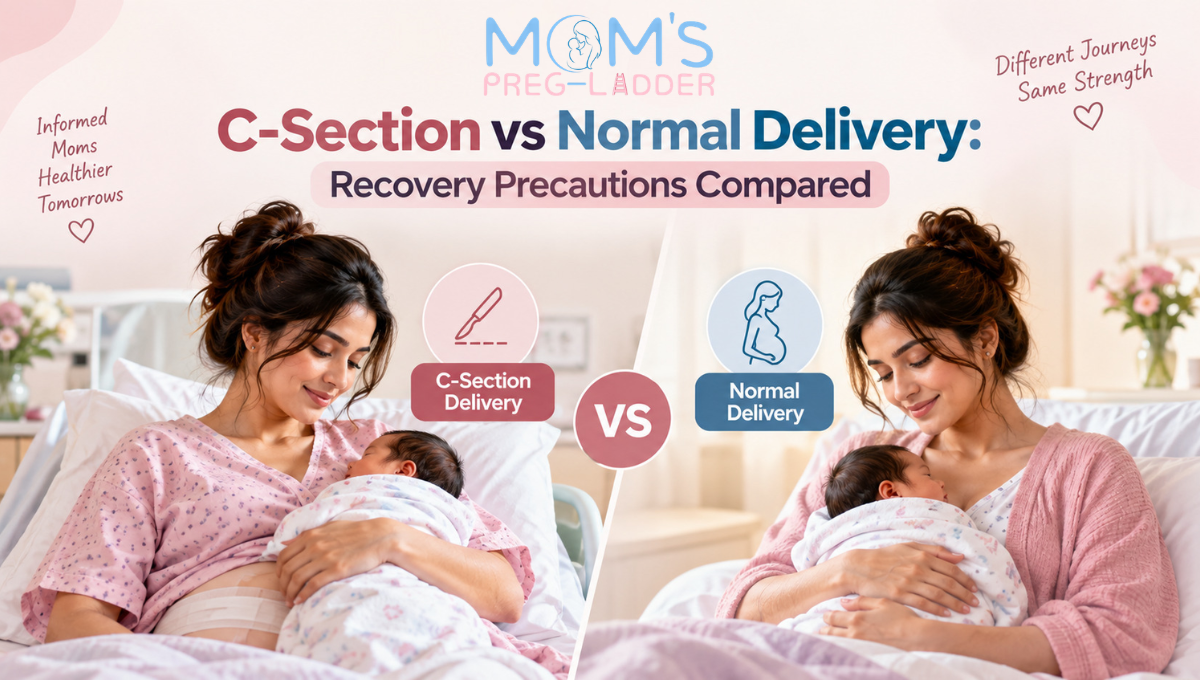
Every birth is different, but the way your body heals afterward has a lot to do with how your baby was born. A C-section is surgery. A vaginal delivery is not. That one difference defines almost everything about the weeks that follow, from how long you’ll be in the hospital to when you can lift a car seat without a second thought. This guide compares C-section vs. normal delivery recovery precautions by precaution so you know what to expect either way.
The Core Difference: Surgery vs. a Natural Process
In a vaginal birth, you are using your body’s own labour process. Muscles are stretched, and tissue may be torn or cut in the case of an episiotomy, but nothing is surgically opened. A caesarean is something else again. The surgeon cuts through the skin, fat, abdominal wall, and uterus to take the baby out. Then closes all of these layers. This is true even with a planned, low-risk C-section and postpartum programme. Therefore, caesarean recovery is similar to recovery from any other abdominal surgery, with the added factor of the normal postpartum changes that all new mothers encounter.
Hospital Stay: How Long You’ll Be There
- Vaginal birth: Most women go home within 24 to 48 hours if there are no complications.
- C-section: According to the American College of Obstetricians and Gynaecologists, women who have a caesarean birth usually stay in the hospital for 2 to 4 days.
The longer stay after a C-section is more than simply dealing with the wound. Staff also check your blood pressure, bleeding, and mobility to make sure you are comfortable before sending you home.
Overall Recovery Timeline
- Vaginal delivery: Many women feel much better by 1 to 2 weeks and are almost completely recovered by about 6 weeks.
- C-section: You’ll likely feel better in a few weeks, but it takes 6 to 8 weeks to fully recover—sometimes longer—because the deeper layers of the incision keep healing long after you feel normal again.
Remember that these are averages. A straightforward vaginal delivery with a little tearing will heal better than a deep episiotomy, and a scheduled C-section often goes more smoothly than an emergency C-section. Your personal timeline will depend on your health, your delivery, and if there are complications.
Pain and Pain Management
There is real pain with both types of birth. Just in different places and a different pattern.
- Vaginal delivery: Soreness will be localised to the perineum, especially if you’ve had tearing or stitches, and cramping as the uterus contracts back down. This pain usually disappears in the first couple of weeks.
- C-section: You may feel discomfort at the site of the incision, which can feel like a burning or pulling sensation, especially when you cough, laugh, or change positions. This type of pain is often more prolonged and requires more structured pain management, including prescribed medication in the first week or two, as it is a surgical wound.
Movement and Activity Restrictions
- It is here that the two recovery courses differ most from day to day.
Following a vaginal birth, you typically can:
- Walk and get around almost instantly
- Climb stairs without special restriction as comfort allows
- Lift your baby and other light objects with no hard limits
- Return to light exercise within days, when you are ready
After a C-section you will usually have to:
- Don’t lift anything heavier than your baby for about 6 weeks.
- Don’t drive until you can easily do an emergency stop, sometimes for weeks
- Use stairs and get out of bed carefully, using your arms instead of your abdominal muscles at first.
- Don’t do any ab-focused exercise, running or heavy lifting until you are cleared at your postnatal check.
Wound and Perineal Care
Both kinds of birth leave you with something to look after and watch for signs of infection.
- Vaginal delivery: If you have stitches in your perineum, they need to be kept clean and dry. Ice packs and sitz baths in the first few days often help to relieve swelling and soreness, and most stitches dissolve on their own in a few weeks.
- C-section: Daily care of abdominal incision. Gently clean the incision. Support the incision when coughing or laughing. Usually non-dissolvable stitches or staples are removed 5 to 7 days after surgery, and the wound should be checked regularly for any redness, warmth, or discharge.
Bleeding After Birth
Vaginal bleeding, called lochia, follows either type of delivery because it is caused by the site of placental attachment in the uterus, not the technique of delivery. It is heavy and red at first, but over weeks it gradually gets lighter and changes colour and new born baby face cream for winter. Either way, use pads, not tampons, and call your doctor if bleeding is heavier than expected or soaks a pad in an hour.
Driving and Returning to Daily Life
- Vaginal delivery: Most doctors will let you drive when you are physically up to it and can react quickly, often within a week or two if there are no complications.
- C-section: You typically have to wait a few weeks before driving — a sudden stop or pressure from a seat belt over the incision can be painful, and your reflexes might not be up to speed while you’re still healing and may still be taking pain meds.
Exercise and Core Recovery
Both types of delivery weaken the pelvic floor and core a little, because pregnancy itself stretches those muscles regardless of how the baby is delivered.
- Vaginal delivery: Gentle pelvic floor exercises can usually begin within days. Light walking is okay early on; higher-impact stuff is usually held off till around 6 weeks.
- C-section: Pelvic floor exercises are still important and can start early, but core work needs to work around a healing abdominal wall. Both types of birth are common causes of diastasis recti, or separation of the abdominal muscles, but recovery from a C-section usually requires a slower, more structured approach to rebuilding core strength.
Risk of Complications
All births are risky, but in different kinds of risk.
- Risks for vaginal delivery include perineal tearing, pelvic floor strain, and, in some cases, assisted delivery with forceps or a Hoover, which can add its own recovery needs.
- The risks of a C-section are the risks of any surgery: infection, blood clots, and a longer recovery. There are also implications for future pregnancies—you’re more likely to need another caesarean.
Neither is the easier or harder route across the board. They each have their own little quirks to watch out for.
Emotional Recovery
Most of the focus is on physical healing, but emotional healing is just as important after either type of birth. No matter how they deliver, hormonal changes, lack of sleep, and demands of caring for a newborn impact new mums and herbal tea benefits after pregnancy. Some women recovering from an unplanned or emergency C-section also process feelings about how their birth experience was different than they had expected. If you’re feeling persistent sadness, anxiety, or trouble bonding with your baby, talking with your doctor, a therapist, or a support group can help, because these feelings need attention no matter how your baby was born.
When to Call Your Doctor, Regardless of Delivery Type
No matter how you gave birth, there are some signs to look for. If you notice: Contact your doctor or midwife soon.
- Fever, chills, or generally feeling unwell
- Heavy bleeding that soaks a pad in an hour, or large clots
- More pain, redness, or drainage from a wound or stitches
- Swelling, redness, or pain in a leg
- Sudden chest pain or difficulty breathing
Infection or blood clot are possible complications of either delivery, and both need prompt medical attention.
How Mom’s Preg Ladder Can Help, Whichever Path You Took
Recovery will be different depending on how your baby arrived, but the right support makes a real difference either way. Mom’s Preg Ladder provides labour management classes to help you prepare for the type of birth ahead of you. We also have postpartum and newborn care classes that apply no matter which delivery path you take. For those recovering from a caesarean, the postpartum core rehab programme features safe, staged exercises to rebuild strength after surgery. You can also meet one-on-one with a certified educator to get guidance specific to your own recovery.
Next Steps
C-section and vaginal delivery recovery have some similarities, such as watching for red flags and giving your body time to heal, but they differ in the speed, pain, and limitations they place on your daily life. Knowing what to expect from your particular type of delivery helps you plan real support at home, rather than guessing. If you want guidance built around your own birth and recovery, Mom’s Preg Ladder’s classes and one-on-one consultations are there to walk you through it.
FAQs About C-Section vs Normal Delivery Recovery
Which recovery is faster, c-section or vaginal delivery?
It typically takes 2 to 6 weeks to recover from a vaginal delivery and 6 to 8 weeks to recover from a C-section. How fast you heal also depends on complications, your general health, and the specifics of your birth.
Is a C-section more painful than a vaginal delivery?
Pain location and pattern vary rather than one being simply worse. Pain from a vaginal birth is usually felt in the perineum and goes away relatively quickly. Pain from a C-section is centred on the incision and lasts longer.
When can I drive after a C-section compared to a vaginal birth?
With vaginal delivery, you can typically drive in one to two weeks when you feel up to it. C-section healing. Healing after a C-section can take several weeks, and the pressure of a seatbelt or a quick reaction could be uncomfortable or unsafe on a healing incision.
Do both types of delivery affect the pelvic floor?
Yes, pregnancy itself weakens the pelvic floor, regardless of how the baby is delivered. Pelvic floor exercises are beneficial for both vaginal and caesarean recovery and can usually be initiated gently within the first few days postpartum.
Can I have a vaginal birth after a previous C-section?
Many women can have a VBAC depending on the type of uterine incision and other medical factors. Consult your doctor to determine if this is a safe option given your personal history and current pregnancy.