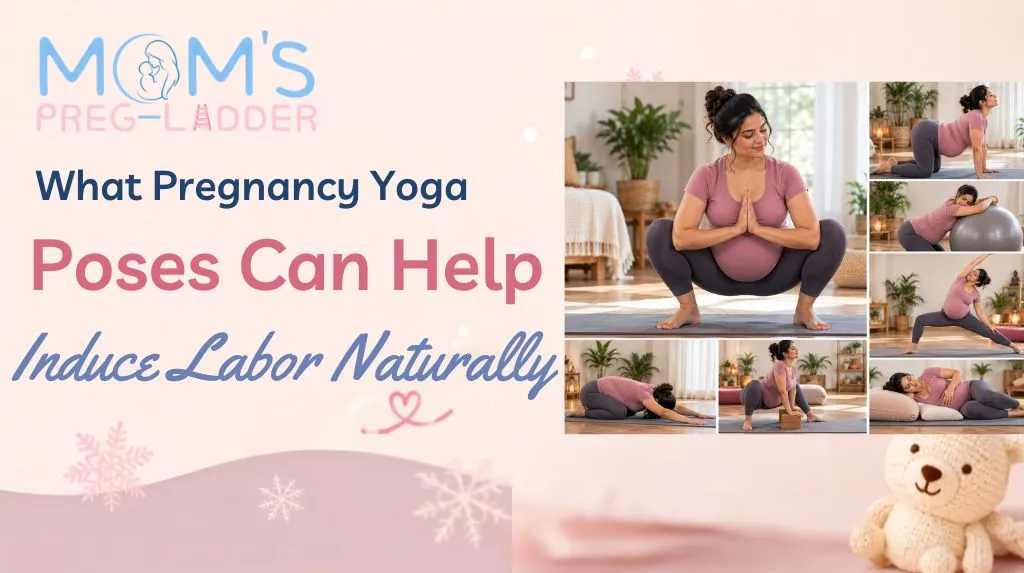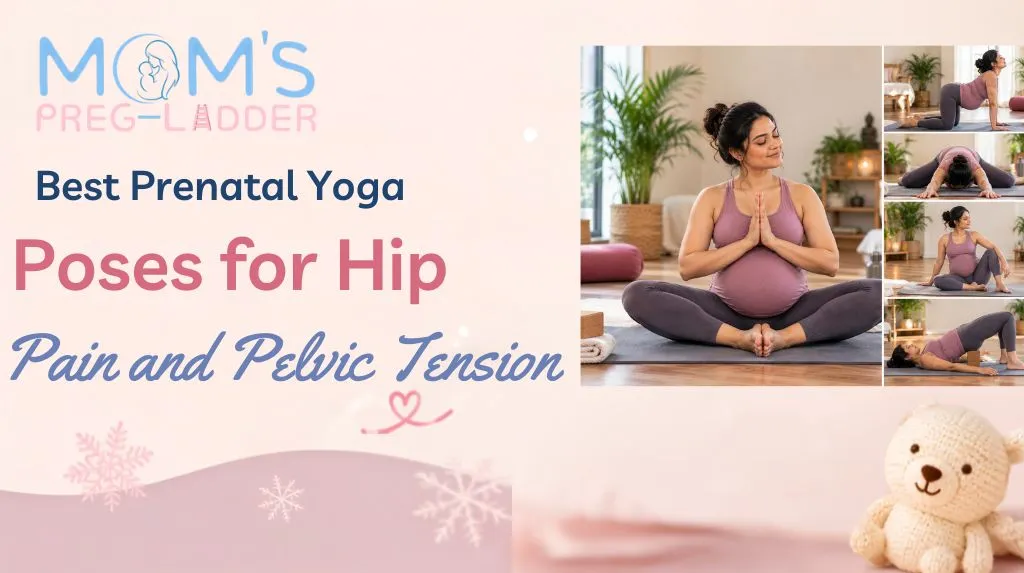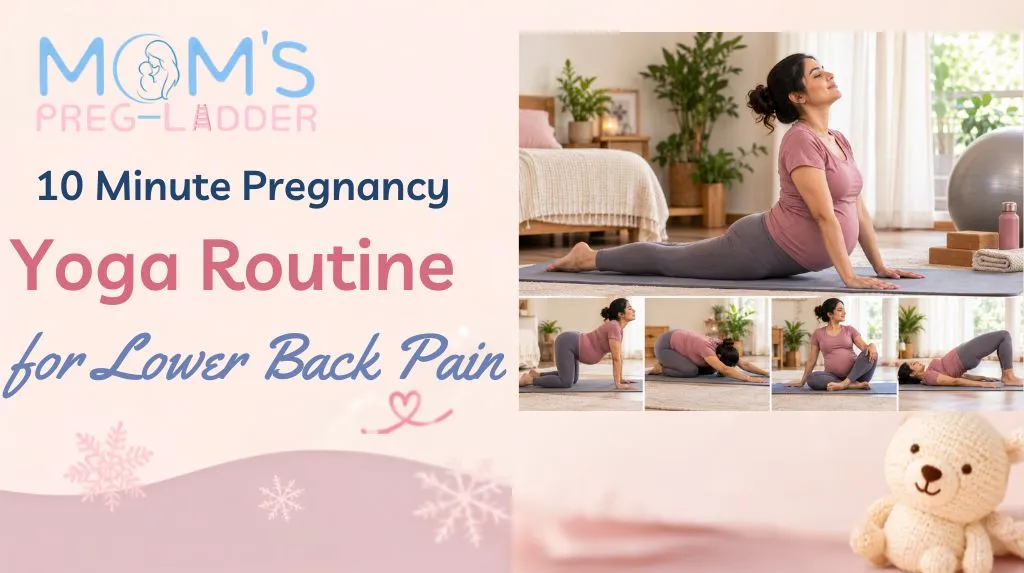
Constipation affects somewhere between 11% and 38% of pregnant women, according to research published by the American Journal of Gastroenterology. Between rising progesterone levels slowing your digestive tract, a growing uterus pressing on your intestines, and prenatal iron supplements, things can get uncomfortable fast.
The good news is that gentle movement, specifically targeted yoga poses, can get things moving again without medication. Here is what the research says, and seven poses worth trying.
Why Yoga Poses Help Relieve Constipation During Pregnancy
Yoga works on constipation through a few mechanisms. Twisting and compressing postures massage the abdominal organs and stimulate peristalsis, the wave-like contractions your intestines use to move waste along. Breathing exercises activate the parasympathetic nervous system, which controls digestion. And simply moving your body after long periods of sitting helps restart a sluggish gut.
The key during pregnancy yoga classes is keeping poses gentle, avoiding deep belly compression, and skipping any position that puts pressure directly on the abdomen. The poses below are adapted for pregnancy and generally considered safe across all three trimesters, but always check with your OB or midwife before starting any new physical practice.
Note: The information on Mom’s Preg Ladder is educational, not a substitute for personalized medical advice.
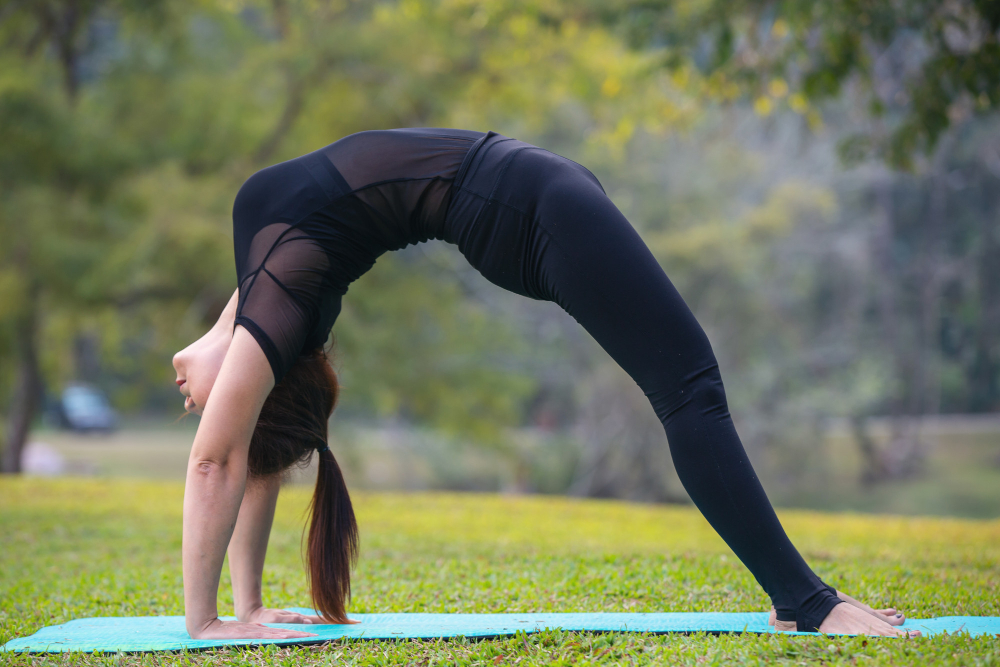
1. Cat-Cow Pose (Marjaryasana-Bitilasana)
How to do it:
1. Start on hands and knees, wrists under shoulders, knees under hips.
2. Inhale, drop your belly toward the floor, lift your chest and tailbone (Cow).
3. Exhale, round your spine toward the ceiling and tuck your chin (Cat).
4. Repeat 8 to 10 cycles, moving with your breath.
Why it works: The alternating flexion and extension of your spine gently massages your digestive organs, encouraging movement in the colon. This pose is widely recommended for yoga asanas because it also relieves low back tension and prepares the pelvis for birth.
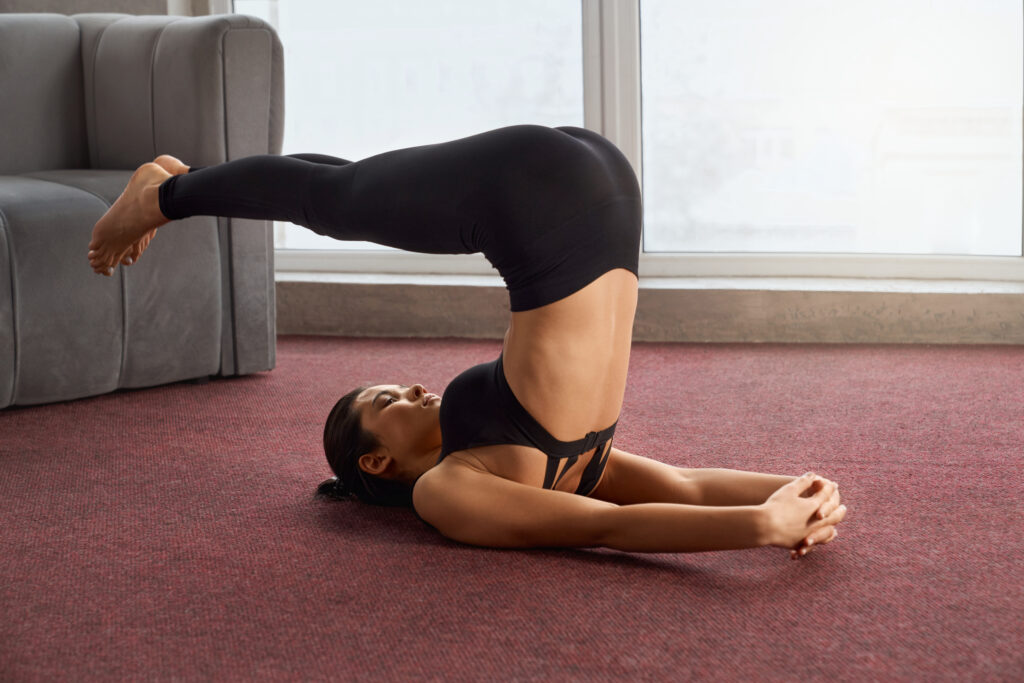
2. Seated Forward Fold with a Bolster (Modified Paschimottanasana)
How to do it:
1. Sit on the floor with legs extended in front of you. Place a folded blanket or bolster across your thighs.
2. Inhale to lengthen your spine, then exhale and hinge at the hips (not the waist) to fold forward.
3. Rest your hands on your shins or feet. Keep a long spine rather than a rounded back.
4. Hold for 30 to 60 seconds while breathing steadily.
Why it works: A gentle forward fold compresses the lower abdomen, stimulating the descending colon. The bolster keeps pressure off your bump while still creating the abdominal engagement that encourages peristalsis. Skip this one if it causes any discomfort in your belly.
3. Supine Twist (Modified Supta Matsyendrasana)
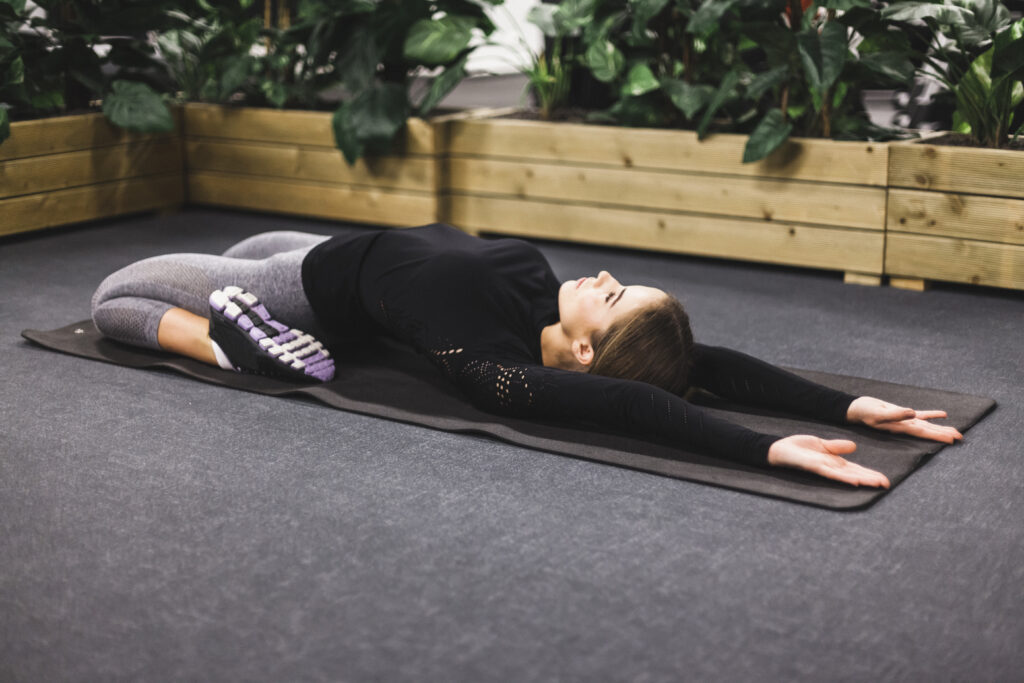
How to do it:
1. Lie on your left side with a pillow between your knees for support.
2. Bring your right knee toward your chest, then let it fall gently across your left leg while keeping your upper body relatively flat.
3. Extend your right arm out to the side and breathe into the twist.
4. Hold for 30 to 45 seconds, then switch sides.
Why it works: Spinal twists are considered one of the most effective yoga poses for constipation because they wring out the digestive organs. The modified side-lying version protects your pregnancy while still creating the rotational movement that stimulates the gut.
Important: After the first trimester, avoid lying flat on your back for extended periods. The side-lying modification here keeps your weight off the vena cava.
4. Wind-Relieving Pose (Apanasana)
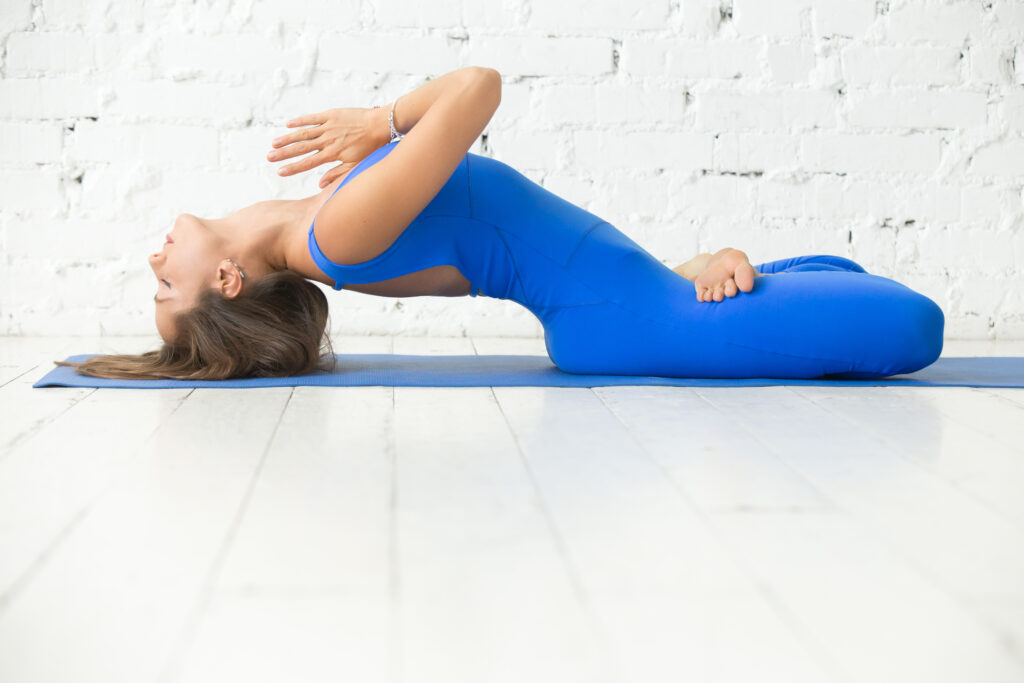
How to do it:
1. Lie on your back (early pregnancy only) or on a wedge cushion angled at about 45 degrees.
2. Draw one knee at a time toward your chest, clasping just below the knee.
3. Hold each leg for 20 to 30 seconds and breathe deeply.
4. For a gentle progression, rock side to side.
Why it works: Apana is the Sanskrit term for the downward-moving energy associated with elimination. This pose directly targets the lower abdomen and helps release trapped gas and stool. It is one of the most direct yoga poses to relieve constipation during pregnancy, particularly in the first trimester.
5. Malasana (Pregnancy-Adapted Garland Pose)
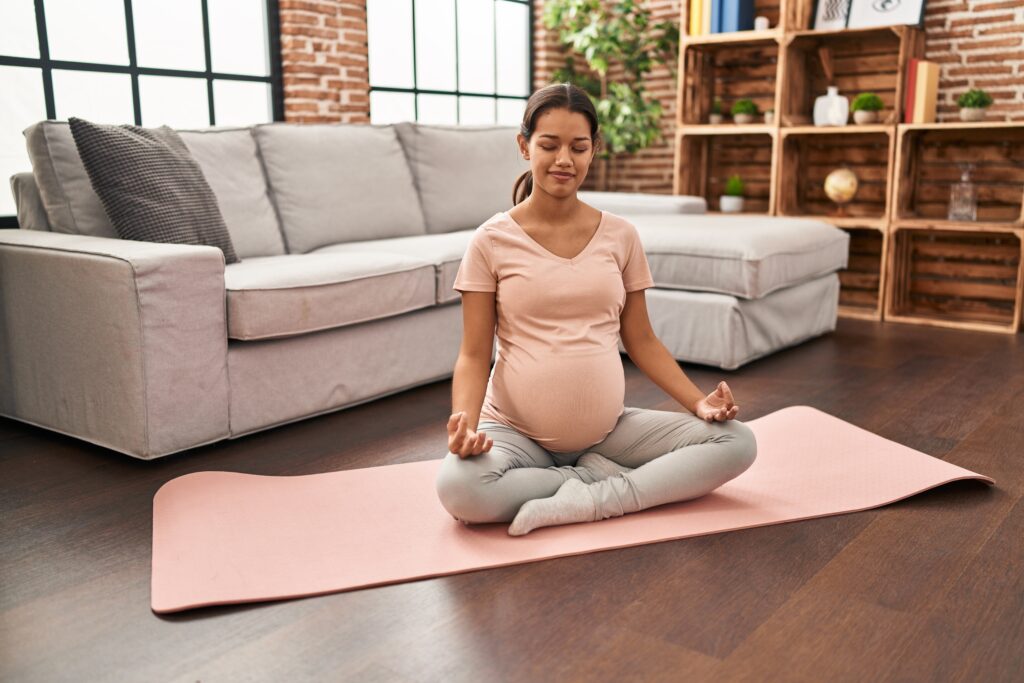
How to do it:
1. Stand with feet wider than hip-width apart, toes turned out at roughly 45 degrees.
2. Hold onto a chair back, doorframe, or yoga block for support.
3. Lower into a squat as far as comfortable, keeping your heels on the floor if possible.
4. Hold for 30 seconds to 1 minute, breathing steadily.
Why it works: Squatting is one of the most natural positions for bowel movements. This pose mimics the anorectal angle achieved on a squatting toilet, which research from the journal Digestive Diseases and Sciences has shown to reduce straining and shorten bowel transit time. As a bonus, malasana also opens the hips and pelvis, which is great preparation for labor.
6. Legs-Up-the-Wall Pose (Viparita Karani)
How to do it:
1. Sit sideways against a wall, then swing your legs up as you recline onto your left side first.
2. Place a folded blanket under your hips to tilt your pelvis slightly and relieve pressure on the vena cava.
3. Rest here for 5 to 10 minutes. Place a pillow under your head for comfort.
4. Come out by bending your knees and rolling to your side.
Why it works: Reversing gravity temporarily shifts blood flow and reduces pressure in the pelvic region. This allows the intestinal muscles to relax and can relieve both constipation and hemorrhoids, a common companion to eat grapes in pregnancy. It is best suited for second and third trimester with the hip elevation modification.
7. Diaphragmatic Breathing with Belly Focus (Dirga Pranayama)
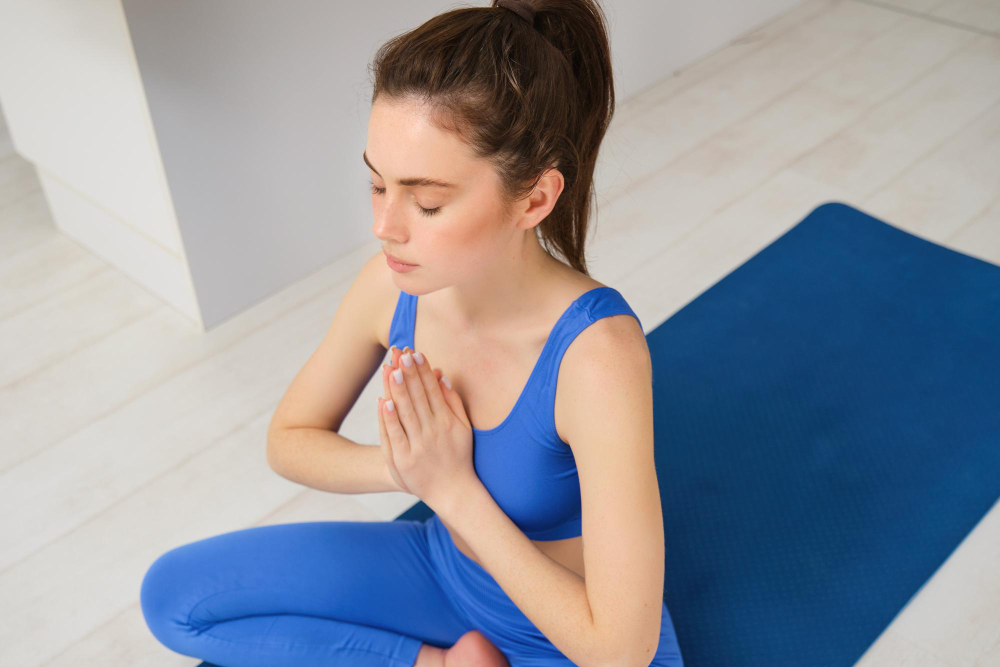
How to do it:
1. Sit cross-legged or in a chair with your spine tall.
2. Place one hand on your lower belly and one on your ribs.
3. Inhale slowly for a count of 4, letting your belly expand first, then your ribs.
4. Exhale for a count of 6, letting your ribs fall and belly gently compress.
5. Practice for 5 to 10 minutes.
Why it works: Deep diaphragmatic breathing acts as an internal organ massage. Each inhale gently compresses the colon from above while each exhale releases that pressure. Over time, this rhythmic massage supports regular bowel function. The extended exhale also activates the vagus nerve, which plays a direct role in gut motility.
Safety Tips for Prenatal Yoga and Digestive Health
Before you roll out your mat, keep these guidelines in mind:
• Stay hydrated. Yoga helps move things along, but dehydration is one of the leading causes of constipation in pregnancy. Aim for at least 8 to 10 cups of water daily, per CDC recommendations.
• Avoid deep forward folds. Any pose that creates strong pressure directly on the belly should be modified or skipped.
• Skip hot yoga. Elevated core body temperature during pregnancy carries real risks. The American College of Obstetricians and Gynecologists (ACOG) advises pregnant women to avoid overheating during exercise.
• Use props. Bolsters, blocks, straps, and chairs make poses safer and more comfortable as your bump grows.
• Stop if something feels wrong. Pain, dizziness, shortness of breath, vaginal bleeding, or reduced fetal movement are all reasons to stop and call your provider immediately.
If constipation is severe, persistent, or accompanied by other symptoms, speak with your doctor. Yoga is a supportive tool, not a substitute for medical care.
Pair These Poses with Other Constipation-Relief Strategies
Yoga works best as part of a broader approach. Here are a few evidence-backed additions:
• Fiber intake: The American College of Obstetricians and Gynecologists recommends 25 to 30 grams of dietary fiber daily during pregnancy from sources like fruits, vegetables, whole grains, and legumes.
• Walking: Even a 15-minute walk after meals can accelerate gut motility. ACOG recommends 150 minutes of moderate-intensity activity per week for most pregnant women.
• Probiotic-rich foods: Yogurt, kefir, and fermented vegetables support gut microbiome balance. A 2020 review in Nutrients found that probiotics modestly reduced constipation in pregnant women.
• Timing matters: The gastrocolic reflex is strongest in the morning. Try practicing a few of these poses after breakfast when your gut is already primed to move.
Final Thoughts
Constipation during pregnancy is common and uncomfortable, but it is also manageable. These seven yoga poses target the digestive system through movement, compression, and breathwork in ways that are adapted for your changing body.
Start with two or three poses that feel accessible. Cat-cow and diaphragmatic breathing are good entry points for beginners. Add malasana and the supine twist as you get more comfortable. Give it a week of daily practice before assessing results.
For more resources on staying comfortable and healthy throughout your pregnancy, visit Mom’s Preg Ladder.
Frequently Asked Questions
Is yoga safe for constipation relief in all trimesters of pregnancy?
Gentle prenatal yoga is generally considered safe throughout pregnancy, but poses need to be modified by trimester. In the first trimester, most poses are accessible. In the second and third, you will want to avoid lying flat on your back and deep abdominal compression. Always clear any new exercise routine with your OB or midwife first.
How often should I do these yoga poses to see results?
Most people notice improvement with daily practice of 15 to 20 minutes. Consistency matters more than duration. Starting your morning with cat-cow, malasana, and a few minutes of diaphragmatic breathing is a practical and accessible routine that targets constipation without overexerting yourself.
Can yoga replace stool softeners during pregnancy?
Yoga can complement and in mild cases reduce the need for stool softeners, but it should not replace medical treatment for moderate to severe constipation. Docusate sodium is commonly considered safe in pregnancy, but always check with your provider before taking any supplement or medication.
Are there any yoga poses I should completely avoid when pregnant?
Yes. Avoid deep backbends, strong inversions like headstands, poses requiring you to lie flat on your back after the first trimester, any closed twists that compress the belly, and hot yoga. If you have complications like placenta previa or preterm labor risk, additional restrictions apply. Your provider is your best guide.
Where can I find more pregnancy wellness tips like these?
Mom’s Preg Ladder (momspregladder.com) covers a wide range of pregnancy health topics, from prenatal fitness and nutrition to symptom management and postpartum recovery. It is a good starting point for evidence-informed content written with expecting mothers in mind.