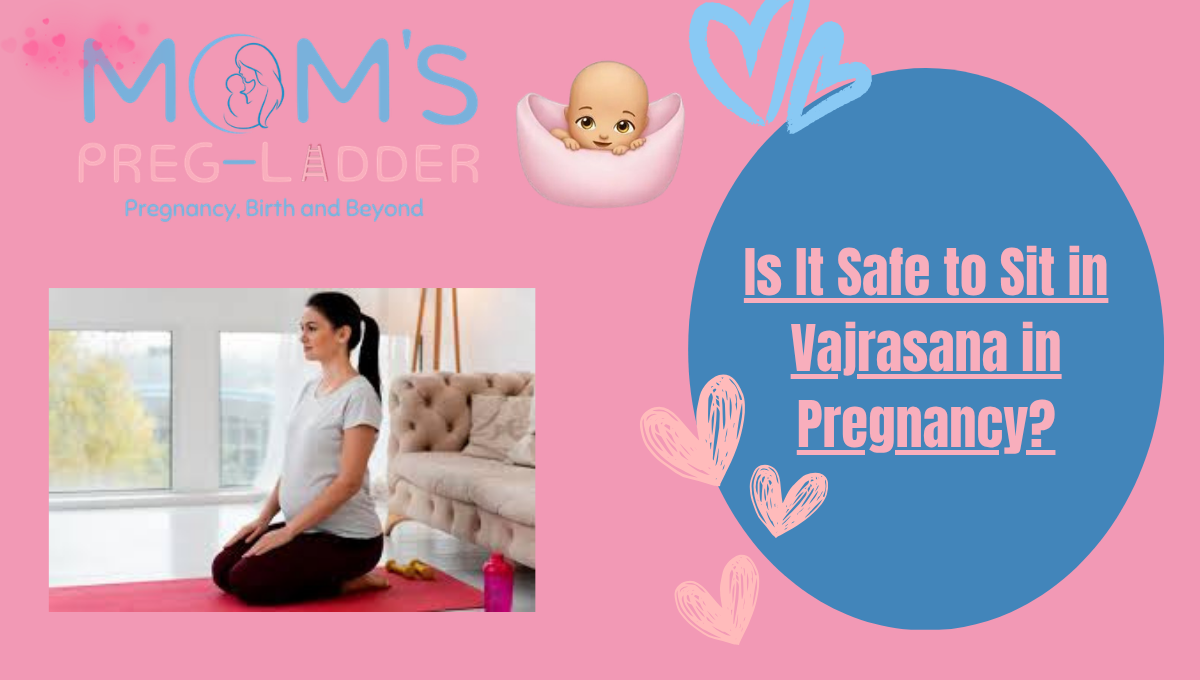
Maybe someone suggested you try Vajrasana while pregnant to help with digestion or lower back pain. You may be questioning whether or not it’s safe or just another friendly suggestion that could harm you and your baby. Or maybe you’re new to yoga and aren’t sure if THIS is something you should try while pregnant.
Let’s get one thing straight. Doing Vajrasana while pregnant is one of the safest yoga poses for pregnant women. However, that “general” statement does come with a few caveats. That’s why this blog post is here to walk you through when it can be beneficial, how to modify it safely, and when you should avoid it.
What Is Vajrasana?
Vajrasana is derived from two Sanskrit words: vajra meaning diamond or thunderbolt and asana meaning posture. To perform vajrasana, kneel on the ground, lean back, bringing your buttocks onto your heels, with your spine erect. Rest your hands on your thighs.
Vajrasana is unique from most pregnancy yoga poses in that it is meant to be practiced immediately after eating. It’s the only yoga pose recommended for after meals. Just that one reason makes it highly beneficial while pregnant. Digestive issues- bloating, heartburn, constipation, indigestion are some of the most common complaints pregnant women have throughout their pregnancy, all three trimesters.
Why Vajrasana Stands Apart from Other Yoga Poses During Pregnancy
Many yoga poses have longer lists of contraindications in pregnancy. Vajrasana doesn’t require you to twist, invert, compress your belly, or lay on your back. You remain upright. Your belly has space. Your spine lengthens and is supported.
According to an article published in the Global Journal for Research Analysis (Naragatti, September 2023), Vajrasana applies pressure to the lower legs instead of your abdomen. This redistributes blood away from your legs and toward your digestive organs. This improves digestion. That study also mentioned that when practiced later in pregnancy, it can put pressure on the abdomen if your knees are too close together. Hence the modification above to keep your knees wider than your torso.
Research published on ResearchGate helps to explain why Vajrasana is so uniquely benefits of meditations during pregnancy. It increases blood flow to abdominal and pelvic organs, strengthens lower back and thigh muscles, and increases function of the pelvic and abdominal organs. All beneficial to pregnant bellies.
The American College of Obstetricians and Gynecologists encourages expectant mothers to stay active. They recognize that exercise can reduce stress, build flexibility, and promote deep breathing. Yoga is one of the exercises they list as safe for pregnancy, as long as it is modified to avoid unsupported positions in the back, the extreme neck, and excess twisting. Vajrasana meets those requirements.
The Key Modification: Widen Your Knees
Spread your knees like THIS and you can do Vajrasana anytime in chemical pregnancy.
We usually practice knees together or nearly touching. When pregnant, separate them at least hip-width apart. (Further apart as the belly grows). According to PharmEasy’s clinical guide (which quotes several yoga sources), pregnant women can perform Vajrasana if they increase the distance between their knees. This will reduce pressure on the stomach.
Don’t adjust ANYTHING else until you do this one thing.
Vajrasana Trimester by Trimester
First Trimester: Generally Safe, Listen Carefully
During your first trimester, you may experience lots of hormonal changes as well as tiredness and nausea. Relaxin (the hormone that loosens ligaments and joints throughout pregnancy) reaches its highest levels between weeks 10-14. Your knees and ankles will feel wobbly during this time even when you’re just kneeling down.
Women in their first trimester can do Vajrasana, but there are a few pro tips:
Use a folded blanket or thin pillow under your shins to alleviate some pressure on your knees and tops of your feet.
Sit with your knees wider than hip distance apart from the beginning, even if you don’t see your bump yet.
Avoid sitting in Vajrasana for too long. Start with no more than 5 minutes.
If getting down on your knees triggers your nausea, take a rest from your practice that day.
Since the risk of miscarriage is highest during the first trimester, this is not because you do yoga poses like Vajrasana, but please seek out your doctor or midwife’s guidance before starting or continuing your yoga practice for pregnancy.
Second Trimester: Often the Most Comfortable Window
The second trimester is often the easiest trimester in which to practice Vajrasana for many women. Nausea usually subsides, energy levels increase, and your belly is out there, but hasn’t quite altered your center of gravity yet.
Digestive discomfort can actually worsen during the second trimester. According to the American Pregnancy Association, over 50% of women suffer from heartburn during pregnancy. Heartburn is most commonly experienced during the second and third trimesters. Why? Relaxation of smooth muscle all over the body due to rising progesterone. This includes the muscles of your gastrointestinal system, which can slow down digestion causing bloating, constipation, and indigestion.
Sitting in Vajrasana for 5-10 minutes post meals can help to alleviate these discomforts during your second trimester. Here’s why: Sitting upright prevents stomach acids from traveling up into your esophagus, and gently contracting your abdomen will encourage movement through your gut, without putting pressure on your uterus.
Continue to increase your knee width as your belly expands. Feel free to use props.
Third Trimester: Modification Becomes More Important, Not Less
Late pregnancy requires the most attention when practicing Vajrasana. Your abdomen sticks out, your center of gravity moves forward, your ligaments are at their stretchiest, and weight sits heaviest on your pelvis.
One study*, published in September 2023 in the Global Journal for Research Analysis, warned specifically about late pregnancy and kneeling because the pose can compress the abdomen and decrease blood flow to the uterus. However, the study did provide an easy fix: sitting on a cushion or bolster to elevate the hips.
Try this adjusted Vajrasana for the third trimester:
Sit on a yoga block, firm bolster, or folded blankets stacked between your heels
Settle your buttocks down onto your prop so that your hips are higher than your heels
Spread your knees wide enough that your belly can rest comfortably between your thighs
Lengthen your spine; try not to slump or round your back
Rest your hands on your thighs and take long, deep breaths
Stay for 3 to 5 minutes, increasing your time only if you feel comfortable doing so
Balance can be tricky in the third trimester as well because relaxin continues to loosen your joints. Don’t try to kneel into Vajrasana without something close to hold on to; keep a chair, the wall, or a willing supporter nearby.
Benefits of Vajrasana During Pregnancy
Here is a practical look at what consistent, properly modified Vajrasana practice can offer during pregnancy.
Relief from digestive discomfort. Progesterone slows the movement of food through the intestines during pregnancy, contributing to constipation which affects between 11% and 40% of pregnant people according to research cited by The Happiest Baby. Sitting in Vajrasana after meals helps stimulate digestive organs by directing blood flow toward the abdomen. This can ease bloating, gas, and constipation without medication.
Support for the lower back. Back pain is one of the most common complaints throughout pregnancy. Vajrasana reinforces an upright spinal position, strengthens the lumbar muscles, and reduces the tendency to slump or overarch the lower back. A study of 12 patients found that Vajrasana and related yoga postures helped reduce lower back discomfort.
Improved pelvic floor strength. Vajrasana increases blood circulation to the pelvic region, which supports the pelvic floor muscles. A stronger pelvic floor is directly associated with easier labor, better bladder control during pregnancy, and faster postpartum recovery.
Stress and anxiety reduction. A 2021 study published on PubMed Central found that yoga practice during pregnancy significantly reduces prenatal maternal stress and anxiety. Vajrasana, practiced with slow breathing, activates the parasympathetic nervous system the part of the nervous system responsible for rest and calm. This matters because chronic stress during pregnancy is associated with preterm birth.
A rare post-meal option. Most yoga is practiced on an empty stomach. Vajrasana is the one pose that works well after eating which is exactly the context where pregnant women often need most help with digestion.
Better sleep. Managing stress and digestive discomfort directly feeds into sleep quality. Better digestion and a calmer nervous system in the evening support the deeper, more restorative sleep that pregnancy demands.
How to Do Vajrasana Safely During Pregnancy: Step by Step
Follow these steps each time you practice.
- Lay a yoga mat on a flat, non-slip surface
- Place a folded blanket under your shins and knees for cushioning
- If you are in the second or third trimester, position a yoga block or firm bolster between your heels to sit on
- Kneel down slowly, using a chair or wall for support as you lower yourself
- Sit back onto your heels or the bolster, whichever applies to your trimester
- Widen your knees to create space for your belly — your belly should hang freely, never pressed
- Straighten your spine, lift the crown of your head, and draw your shoulders gently back
- Rest your hands on your thighs, palms facing down
- Close your eyes, or soften your gaze, and breathe slowly and evenly through the nose
- Hold for 3 to 10 minutes, depending on comfort level
- To come out, place both hands on the floor beside you, shift your weight forward, and rise to a kneeling position before standing go slowly to avoid dizziness
After the pose, stretch your legs out in front of you briefly and flex your ankles forward and back a few times. This restores circulation to the feet and ankles quickly.
Who Should Avoid Vajrasana During Pregnancy
Vajrasana is not suitable for every pregnant woman in every circumstance. Skip it if any of the following apply:
- You have a knee injury, recent knee surgery, or significant knee arthritis
- You have ankle injuries or severe ankle stiffness
- Your doctor has placed you on bed rest or pelvic rest
- You have been diagnosed with placenta previa, placental abruption, or cervical insufficiency
- You have a hernia or severe intestinal complications
- You have a slipped disc or significant spinal instability
- Sitting in the pose causes any pain in the knees, hips, lower back, or pelvis that does not resolve with props
Pain is not something to push through during pregnancy. If the pose causes discomfort that props and positioning cannot resolve, leave it out and discuss it with your prenatal care provider or a certified prenatal yoga instructor.
Stop Immediately and Contact Your Doctor If You Experience:
- Vaginal bleeding or spotting during or after practice
- Sudden or sharp abdominal pain
- Contractions or pelvic tightening
- Dizziness or lightheadedness that does not pass quickly
- Reduced fetal movement after a session
- Fluid leaking from the vagina
- Numbness or tingling in the legs that does not resolve within a minute of coming out of the pose
ACOG identifies these as warning signs to stop any form of exercise during pregnancy immediately. They apply to Vajrasana just as they apply to any other physical activity.
Vajrasana vs. Sitting Cross-Legged During Pregnancy: Which Is Better?
A lot of moms to be spend their time sitting cross-legged on floor and question if Vajrasana might be more or less comfortable. Let’s look.
Cross-legged (Sukhasana) positions open the hips/ pelvis. This position may be comfortable for early and middle pregnancy for many women. The position puts no pressure on knees or ankles but doesn’t allow for digestive benefits of Vajrasana because the relationship of the legs to the abdomen are not the same.
Vajrasana allows the spine to sit in a more naturally upright position because the hips are resting on the heels instead of the floor (cross-legged positions often result in a mild posterior pelvic tilt). If the goal is specifically post-meal digestion, VIajasana is more targeted for that purpose. If your goal is seated breathwork or meditation later in pregnancy when Vajrasana becomes uncomfortable, you may find cross-legged position with a bolster under your hips more comfortable.
Ultimately there is no right or wrong way to sit, cross-legged positions or Vajrasana serve different purposes. At Mom’s Preg Ladder our certified childbirth educator, Mrs. Swapnil Kaushik helps you discover which position works for your body at each stage of pregnancy instead of prescribing one position for all.
Practical Tips for Making Vajrasana More Comfortable
A few things make a real difference in practice:
Use a bolster early. Do not wait until the third trimester to introduce a bolster under your sitting bones. Starting to use one in the second trimester helps your body get used to the modified position and makes the late-pregnancy version feel natural.
Practice near a wall. Place your mat close to a wall so you can lean back gently if you feel dizzy or lose balance while kneeling.
Wear supportive clothing. Loose, comfortable clothing prevents any restriction around the belly. Nothing should press against the abdomen while sitting.
Time it right. The traditional recommendation is to sit in Vajrasana for 5 to 10 minutes after meals. Practicing after lunch or dinner rather than after a very light snack gives you more to work with digestively.
Combine with breathing. Once you are settled in the pose, try slow, deep nasal breathing inhale for four counts, exhale for four counts. This activates the parasympathetic nervous system and amplifies the calming effect of the posture.
FAQs: Vajrasana During Pregnancy
1. Can I sit in Vajrasana every day during pregnancy?
Yes, daily practice is generally fine if the pose is comfortable and you have your doctor’s approval. Most prenatal yoga guidance suggests 5 to 10 minutes after meals as a practical, sustainable frequency. Use props from the beginning, widen your knees to accommodate your belly, and reduce the duration if you notice any discomfort in the knees or ankles. Always come in and out of the pose slowly to avoid falls.
2. How long should I sit in Vajrasana while pregnant?
Start with 3 to 5 minutes and work up to 10 minutes as your body adjusts. In the third trimester, shorter sessions of 3 to 5 minutes with good prop support are often more comfortable than longer holds. Healthline’s clinical review recommends a ceiling of about 10 minutes for general practice; during pregnancy, listen to your body rather than watching the clock.
3. Does Vajrasana help with pregnancy constipation?
Yes. ACOG recommends 150 minutes of moderate-intensity activity per week during pregnancy partly because movement stimulates digestion. Vajrasana after meals supports this by directing blood flow toward the digestive organs and encouraging the upright posture that helps food move through the gut. It is not a substitute for adequate fiber intake and hydration, but it is a useful addition to a broader approach to managing constipation.
4. Is Vajrasana safe in the third trimester?
Yes, with the right props and positioning. In the third trimester, place a firm bolster or yoga block between your heels to elevate your hips, widen your knees well beyond hip-width so your belly hangs freely, and keep sessions short 3 to 5 minutes. Use a wall or chair for support when kneeling down and rising. If any pressure, numbness, or pain appears, come out of the pose and modify further or skip it.
5. What is the difference between regular Vajrasana and the pregnancy-modified version?
The standard Vajrasana has knees together or nearly touching, and the buttocks rest directly on the heels with no elevation. The pregnancy-modified version widens the knees to create space for the belly, adds a bolster or yoga block under the sitting bones to reduce pressure on the abdomen and knees, and shortens the duration of each session. Both versions maintain an upright spine and focused breathing the fundamentals of the pose remain the same.