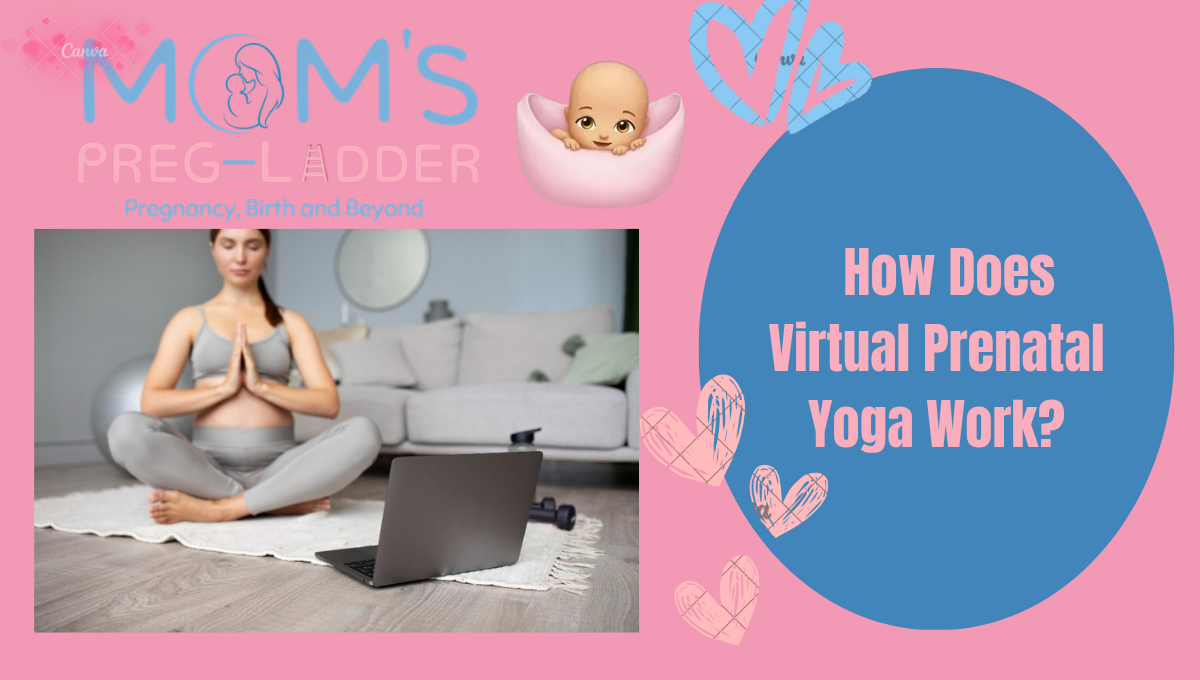
Your gynaecologist has probably advised you to stay active during your pregnancy, and somewhere along the way, prenatal yoga was mentioned. And then life happened. It was difficult to attend a class in person because of traffic, work hours, or not having a studio nearby. And that’s where virtual prenatal yoga comes in.
This post walks you step-by-step through what virtual prenatal yoga classes actually look like on a screen, whether they are as safe and effective as in-person classes, what you need at home, and when you should check with your doctor first.
What Is Virtual Prenatal Yoga?
Virtual pregnancy yoga class for pregnant women led by an instructor over video call, rather than in a studio. You can join from your living room or bedroom with a mat and a laptop or phone, and the instructor leads the whole session in real-time, just like they would in an in-person class.
It’s not a pre-recorded workout video. A trained prenatal yoga instructor observes your movements through video, corrects your posture, and adapts poses based on your trimester and comfort level. What makes this different from the generic pregnancy yoga videos you find online is that it’s live and guided.
How Does a Virtual Prenatal Yoga Class Actually Run?
Here’s what a typical online session looks like from start to finish:
- At the appointed time, you hop on a live video call, typically via Zoom or similar, on a laptop, tablet, or phone that is propped up so the instructor can see your entire body.
- The instructor opens by asking how you are feeling, how far along you are, and if you are experiencing any discomfort or concerns before beginning the poses.
- The warm-up typically consists of gentle breathing exercises and light stretching to prepare the body and calm the mind.
- Pregnancy-adapted guided poses come next, with the instructor demonstrating each pose and watching your form over video to suggest adjustments.
- The session ends with breathing and relaxation techniques, often including labour-preparation breathing patterns which come in useful later.
- There is a brief debriefing at the end of class where you can ask questions about poses, discomfort, or anything you want covered in the next class.
Most platforms, like Mom’s Preg Ladder, also record the live class and share it for the week. So if you miss a session, you can catch up at your own pace instead of missing that week’s practice entirely.
What You Need at Home for a Session
No studio setup is needed. A few basic items will suffice.
- Yoga mat with a non-slip surface
- A bolster, a stiff pillow for support
- A yoga block or a few thick books
- A blanket for the relaxation part
- A strap or a sturdy chair, useful for balance poses in late trimesters
- Comfortable, stretchy clothes that don’t restrict movement
A stable internet connection and a device propped at a height where the instructor and pregnant women drink coffee can see your full body matter more than people think. The phone angle is shaky, so the instructor can’t do a good job of correcting your posture.
Is Virtual Prenatal Yoga Safe?
Yes, for most pregnant women without complications. Physical activity during pregnancy is safe and recommended unless there are medical or obstetric complications, according to the American College of Obstetricians and Gynaecologists, which suggests pregnant women get about 150 minutes of moderate-intensity activity spread throughout the week. Prenatal yoga with appropriate modifications fits within that recommendation.
That said, a few conditions are cause for caution, and a qualified instructor should always screen for these before embarking on a programme:
- High-risk pregnancy or multiple pregnancies
- Placenta previa and other placental problems
- Pregnancy-induced hypertension or pre-eclampsia
- Continued bleeding in the second or third trimester of pregnancy
- Any condition you’ve been specifically warned by your doctor to cut back on activity for
If any of these apply to you, consult your obstetrician before starting any yoga programme, virtual or otherwise. A good teacher will enquire about your medical history up front and not incorporate poses that are not appropriate for your situation. For example, at Mom’s Preg Ladder, women with these particular conditions are not enrolled in normal prenatal yoga batches, and safety screening is done before the first class.
Why Choose Virtual Over In-Studio Classes?
I hear a few reasons from expectant mothers who make this switch.
- No travel in pregnancy. Traffic or waiting for a cab gets harder as pregnancy continues. With online classes, that step is eliminated.
- Flexibility of recordings. Missed a class due to a doctor’s appointment or morning sickness? A recorded version means you don’t lose your session for the week.
- The comfort of home. Some women feel more comfortable doing poses such as reclined stretches or restorative poses in their own space, not on the shared studio floor.
- Location-independent access. Women in smaller towns, or women who have moved closer to family for the pregnancy, can participate in a class that is run out of an entirely different city.
- Pace for beginners. Online instructors who are good tend to have more one-on-one check-ins, because they’re watching each participant closely on screen rather than walking around a room.
What Changes Trimester by Trimester
First Trimester
They’re typically gentle sessions, with a focus on breathing, easing nausea, and light stretching. Avoid deep twists and high-intensity poses.
Second Trimester
This often leads to an improvement in energy levels. Teachers add more standing poses, hip openers, and strength-building poses for the growing belly, always with a chair or wall for support as necessary.
Third Trimester
Moves to comfort and labour prep positions. Expect to do more pelvic floor exercises, breathing patterns used in labour, and restorative poses that take the pressure off your lower back and hips.
A Quick Note for Moms-to-Be in India
In India, many women choose online prenatal yoga classes, as the nearest studio offering such classes is often in another part of the city, or due to family responsibilities at home, making travel difficult in later trimesters. With a live online class led by a certified instructor and a doctor-informed screening process before you join, you get nearly the same guidance as if you were meeting in person, without the commute.
Final Thoughts
Virtual prenatal yoga brings a live instructor-led class directly into your home through video, with the same real-time corrections and safety checks that would be provided in a studio. It’s a practical way to stay active, manage discomfort, and prepare for labour without adding travel to an already demanding routine for most healthy pregnancies.
If you are considering starting, look for a programme that screens for medical history before enrolling you, keeps class sizes manageable so the instructor can actually watch each participant, and has recordings for weeks you can’t attend live. That’s how Mom’s Preg Ladder runs its prenatal yoga classes, along with associated support like breathing and labour management tips, for women who want a structured, trimester-wise practice from home.
Frequently Asked Questions
1. Can I start virtual prenatal yoga if I have never done yoga before?
Yes. Most of the programmes are geared toward beginners, with instructors walking you through each pose step by step and offering modifications along the way. Tell the instructor you’re new to yoga up front.
2. Do I need special equipment for online prenatal yoga classes?
Most sessions are covered with a mat, cushion, or bolster and a block or a couple of books. Having a chair or wall nearby can help with balance poses, especially in the third trimester.
3. What if I miss a live virtual yoga session?
Many programmes, like Mom’s Preg Ladder, tape the class and share it for the week, so you can practise at your own convenience instead of missing that week entirely.
4. Is virtual prenatal yoga as effective as attending a studio class?
Yes, for most healthy pregnancies. Your form is still seen live by the instructor, and posture is corrected on the fly. The difference is location. Not the quality of guidance.
5. When should I avoid prenatal yoga altogether?
If you have a high-risk pregnancy, placenta previa, pregnancy-induced hypertension, or persistent bleeding, consult your obstetrician before beginning any yoga programme, online or offline.