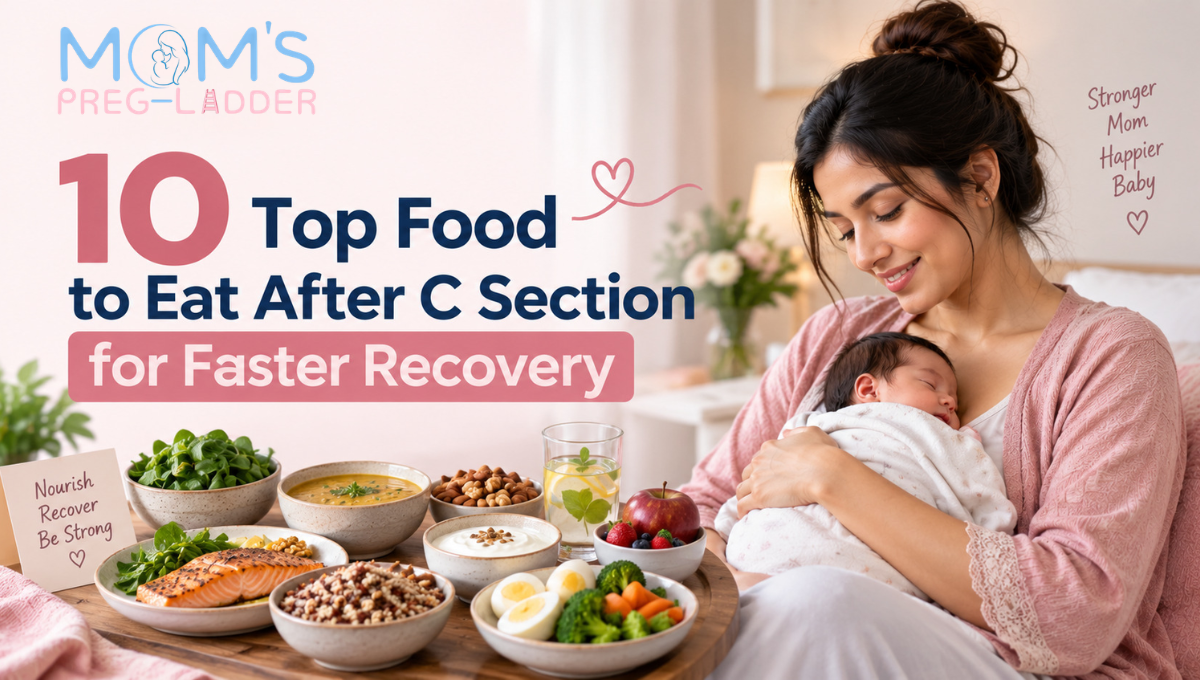
Most new mamas are not prepared for how much work it is to recover from a C-section. You’re recovering from major abdominal surgery, learning to sleep in brief snatches, and often trying to breastfeed, all at the same time. Food is one of the few tools that you really have control over, and making the right choices can make a noticeable difference in how quickly your body bounces back.
This guide walks you through the best food to eat after C-section recovery, why each one matters, and a few foods worth taking it easy on in the first weeks. We discuss postpartum nutrition at Mom’s Preg Ladder almost in every newborn care and lactation consultation we do. So, this list is based on the most commonly asked questions by mothers.
Why Nutrition Matters So Much After a C-Section
A C-section is an operation where you cut through layers of skin, fat, and muscle, and your body needs specific building blocks to repair all that. In addition to the incision, you are replacing the blood you lost during delivery, supporting your gut after anaesthesia and pain medication slows digestion, and, for many mothers, producing breast milk on top of everything else.
What you should eat after C-section surgery helps replenish 4 things at a time: your wounds, your blood, your digestion, and your milk supply. A postpartum programme can complement this recovery by providing structured guidance on nutrition, gentle movement, rest, breastfeeding support, and gradually returning to daily activities, based on your individual recovery and your healthcare provider’s advice.
Recovery time varies, but for many mothers the first week is the most difficult period for appetite and digestion, gradually improving over the next two to six weeks. It’s not so much about a perfect diet, as it is about feeding your body a steady, reliable stream of the nutrients it needs when everything else feels unpredictable.
10 Top Foods to Eat After C-Section for Faster Recovery
1. Protein-Rich Foods
Protein is the most important nutrient for wound healing. Your body uses it to rebuild tissue and to make collagen, the structural protein that holds your incision together as it heals. Good sources are:
- Eggs –
- Chicken & lean meats
- Seafood
- Tofu, paneer and dal
- Greek yoghurt
Don’t wait until dinner to eat all your protein; try to have a source of protein at every meal and snack. Your body uses protein all day long.
2. Iron-Rich Foods
Losing some blood during delivery is normal, and the iron in your body helps you make back red blood cells. Low iron can leave you tired and foggy, in addition to the normal exhaustion of postpartum. Hang on to:
- Spinach and other green vegetables
- Beetroot
- Meat and poultry (red)
- Lentil and bean
- Iron-fortified cereal.
Having a source of vitamin C with these in the same meal helps your body to better absorb the iron.
3. Fibre-Rich Whole Grains
The pain medication and the reduced movement after surgery usually slow digestion down, and constipation is one of the most common complaints in the first week after a C-section. Fibre keeps things moving. Choices are:
- Oats.
- Brown rice
- Roti and whole-grain bread.
- Quinoa 1.
Slowly add fibre and drink lots of water with it, because a rapid increase in fibre without adequate fluid can make bloating worse, not better.
4. Vitamin C-Rich Fruits
Vitamin C is directly involved in collagen production, so it’s a natural partner for the protein you’re already getting. It also helps your body absorb iron from plant foods. Watch For:
- Oranges, other citrus fruits
- Kiwi
- Strawberries and other berries
- green peppers
Pairing a fruit with an iron-rich meal is a simple, no-fuss way to get both nutrients at once.
5. Leafy Greens and Colourful Vegetables
Leafy greens and colourful vegetables are also good sources of folate, vitamin A, and antioxidants, which help repair tissue and maintain a balanced inflammatory response after surgery, in addition to iron. Rotate over:
- Spinach and other leafy greens
- Broccoli
- Carrots and sweet potatoes
- Tomatoes
Raw vegetables are often harder to digest than cooked or steamed vegetables in the first week or two.
6. Dairy and Calcium-Rich Foods
Calcium helps to keep your bones healthy and helps your baby to grow if you are breastfeeding. Probiotics are also found in dairy products, which can help get your digestion back on track after surgery. Good examples of choices are:
- Milk
- Yoghurt, particularly those with live cultures
- Cheese.
- Lactose-free fortified plant milk.
7. Nuts and Seeds
Nuts and seeds are a powerhouse of healthy fats, protein, and minerals in a tiny, easy-to-grab package, which counts when you have barely a free hand between feeds. Almonds, walnuts, flaxseeds, and chia seeds can provide nutritious fats and protein to support a balanced postpartum diet. For tips to get a flat tummy after pregnancy, focus on gradual recovery, balanced meals, hydration, adequate protein, and gentle, doctor-approved exercise rather than rapid weight loss. Have a small container of nuts and seeds ready to snack on between meals.
8. Legumes and Lentils
Dal, chickpeas, and other legumes are a double whammy of protein and fibre, making them particularly helpful in recovery. They are budget-friendly and easy to batch-cook ahead of delivery, so you have something to reheat during those hardest first days at home.
9. Bone Broth and Clear Soups
The collagen-rich bone broth is easy on the stomach and a gentle option for the first day or two after surgery, when your appetite may still be low. Vegetable or lentil soups are also great for this, because they are hydrating, easy to digest, and simple to make in large batches for the week ahead.
10. Hydrating Fluids
Water isn’t enough to cover everything your body needs post-surgery, especially if you’re breastfeeding. Fluids help digestion, prevent constipation, and are required for milk production. Toggle between:
- Water Elevation
- Buttermilk or chass
- Coconut water
- milk”
- Broths, clear
Aim for about three litres of fluid a day, but be guided by your thirst, the colour of your urine, and your doctor’s advice.
Foods to Go Easy On After a C-Section
Some foods are worth limiting, especially in the first couple of weeks:
- Carbonated drinks and gas-forming foods such as large amounts of excess cabbage or beans, which can contribute to post-surgery bloating.
- Very spicy or oily food, which can upset digestion while your gut is still settling down.
- Alcohol. It slows healing and is not compatible with breastfeeding in the first few weeks.
- Highly processed snacks that fill you up but aren’t giving your body the protein and nutrients it needs to heal.
None of these must be avoided for good. It’s worth taking it easy while your body spends its energy on healing.
Simple Tips for Eating Well After Surgery
- Three large meals are more difficult to digest than smaller frequent meals.
- Eat slowly and thoroughly to ease the work of your gut.
- Include protein and fibre at each meal, rather than save it for later in the day.
- Make and freeze meals before your due date so you’ve got something to eat during the hardest first week.
- “Get help. Ask family or friends to take over the grocery runs or the cooking so that you can focus on rest and feeding your baby.
A Sample Day of Post-C-Section Eating
- Breakfast: Muesli with nuts and fruit on the side
- Mid-morning: Greek yoghurt and berries
- Lunch: Dal rice and a side of cooked vegetables
- Afternoon snack: Orange and a handful of almonds
- Dinner: Grilled fish or chicken and quinoa with steamed vegetables
- Evening: A glass of warm milk or a bowl of clear soup
This is a starting point and not a rigid plan. Make it your own, to your taste or cultural food preferences, or to any advice given to you by your doctor.
When to Talk to Your Doctor About Diet
Contact your doctor if you have persistent constipation, unusual swelling or redness around the incision, fever, or if you are finding it difficult to eat enough to keep up with breastfeeding. Each recovery is unique, and your care team may adapt their advice to the specifics of your surgery, any complications that arise, and your general health condition.
For mothers who have been cleared for gentle activity, pranayama during pregnancy can offer benefits such as promoting relaxation, supporting mindful breathing, and helping manage everyday stress. Breathing practices should be gentle and pregnancy-appropriate, with guidance from a qualified prenatal instructor or healthcare provider. Avoid breath-holding or forceful techniques unless specifically approved.
Mentioning any big changes in appetite is also helpful, as a sharp drop in appetite along with pain or fatigue is sometimes an early sign something needs a closer look. You’re the best judge of your own body, so if you think something’s wrong, don’t wait it out.
A Final Word
Eating is one of the more manageable aspects of healing after a C-section, and it takes time. Concentrate on protein, iron, fibre, and hydration with each meal, cut down on foods that cause bloating, and use simple, prepped meals during those toughest first weeks. If you need more support in developing a plan before delivery, the Mom’s Preg Ladder team includes postpartum nutrition in our newborn care and lactation consultations so that you don’t have to figure out recovery meals from scratch while caring for a newborn.
FAQs on Food to Eat After C-Section
What is the best food to eat right after a C-section?
When you’re cleared to eat, begin with light, easy-to-digest foods such as clear soup, bone broth, or a soft meal with protein. As your appetite and digestion return, move toward regular meals with protein, fibre, and iron over the next couple of days.
How much protein do I need after a C-section?
No one number is right for everyone, but having a source of protein at each meal and snack is a good way to support wound healing. Eggs, dal, chicken, fish, and dairy are practical everyday ways to achieve it without overthinking it.
What foods should I avoid after a C-section?
For the first couple of weeks, avoid carbonated drinks, very spicy or oily food, alcohol, and heavily processed snacks. These can add to bloating or slow healing without providing much nutritional benefit.
Can I eat normally right after my C-section surgery?
Most hospitals will start you on clear liquids and then slowly progress you to solid food over the course of a day or two, depending on how your system handles it. Recovery times vary from person to person, so follow the specific guidance of your care team, not a general timeline.
Does diet affect breast milk supply after a C-section?
Yes, to some degree. Adequate hydration and eating enough calories, protein, and healthy fat can support milk production; missing meals or under-eating can make it harder to maintain supply during an already demanding recovery period.