That sudden, sharp tugging in your lower belly when you stand up too fast or roll over in bed has a name: round ligament pain. Most women are surprised by it at some stage in the second trimester, and although it is harmless, it is not comfortable. The good news is you don’t need a full workout to get relief. This fast, 10-minute sequence of yoga poses for round ligament pain is designed to fit into a busy day, whether you do it first thing in the morning or before you go to sleep.
This article is for general informational purposes only and should not be taken as medical advice. If the pain you feel is unusual, consult your doctor first.
What Causes Round Ligament Pain During Pregnancy?
2 rope-like bands hold your uterus in place, called the round ligaments. They run from the front of the uterus down into the groin. Your ligaments stretch and thicken to accommodate your enlarging uterus. When this happens, you may feel sudden, sharp, or pulling pain on one or both sides of your lower belly.
Generally, it appears between weeks 14 and 27. It’s usually triggered by fast movements, such as standing up abruptly, coughing, sneezing, or turning over in bed. The pain typically lasts only a few seconds to a few minutes and goes away when you slow down or change positions.
Is Yoga Safe for Round Ligament Pain?
Yes, gentle stretching is one of the suggested ways for most women to relieve this discomfort. Support your belly when getting into a different position; go slowly, and don’t make sudden twists to reduce the frequency with which the pain flares up. The American College of Obstetricians and Gynaecologists says most pregnancy yoga classes women can safely participate in physical activity, including low-impact movement, with physician clearance.
This is why yoga is good for this particular kind of pain:
- Move slowly and deliberately so you don’t make the sharp movements that cause the round ligament pain in the first place.
- Hip-opening poses ease the pressure on the ligaments that go into the groin.
- Breathing exercises help to relax the muscles around the uterus and can help ease discomfort caused by tension.
- Side-lying and supported positions are easier on the ligaments than standing or twisting suddenly.
If you have a history of preterm labour, placenta previa, or any other high-risk condition, talk with your doctor before beginning this or any routine.
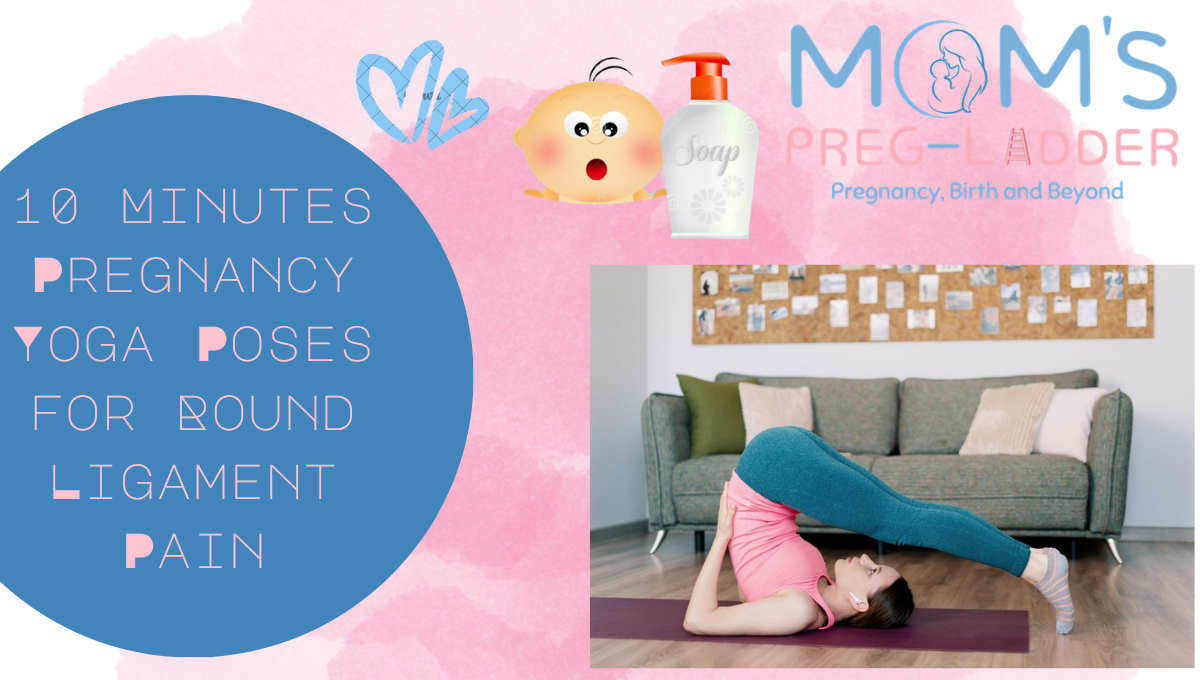
10-Minute Yoga Poses for Round Ligament Pain
Do the sequence slowly, holding each pose for the allotted time, breathing the whole time evenly. Don’t do any pose that makes you feel more uncomfortable.
1. Side-Lying Rest with Pillow Support (1.5 minutes)
Lie on your left side, with a pillow between your knees and one under your belly. This position takes the weight off the round ligaments immediately and is a good way to start and settle your body before moving.
2. Cat-Cow Stretch (1.5 minutes)
On all fours, with your wrists under your shoulders and knees under your hips, breathe in as you drop your belly and lift your chest, and breathe out as you gently round your spine. It works your lower back and gives a light massage to your abdomen without putting pressure on your groin area.
3. Child’s Pose with Wide Knees (1.5 minutes)
Walk your hands forward and place your forehead on the mat, then sit back on your heels with your knees spread apart to make room for your bump. This helps to release tension in the lower back and hips, which are often tight in the same region as round ligament pain.
4. Supported Butterfly Stretch (1 minute)
Sit with the soles of your feet together and your knees resting outward. If your knees do not comfortably touch the floor, place cushions under each knee. This slowly opens the hips and groin, easing rather than forcing them by pulling on the ligaments.
5. Standing Pelvic Tilt with Wall Support (1.5 minutes)
Stand with your back to the wall. Feet a little forward. Gently rock your pelvis forward and back a few times. This helps strengthen the muscles that support your growing belly and may help reduce how much strain is placed on the round ligaments during the day.
6. Seated Side Stretch (1 minute)
Cross your legs, raise one arm over your head, and gently lean to the other side. Switch after 30 secs. This creates space down the sides of your torso and is a subtle way of creating relief from tightness that can radiate toward the groin.
7. Reclined Deep Breathing (2 minutes)
Lie on your left side again, one hand on your belly, breathing slowly through your nose and out through your mouth. This last section is great for calming the nervous system and giving your body a chance to settle after the sequence, which many women find decreases the frequency of sharp pain later in the day.
And there is your 10-minute routine. If the pain is likely to flare up at those times for virtual time yoga work, then you can do it again in the morning and again in the evening.
Everyday Habits That Support These Poses
Even better is a short yoga routine combined with a few daily habits:
- If you lie down, get up slowly. Roll over on your side before sitting straight up from your back.
- Wear supportive shoes to decrease the strain that travels up to your pelvis and lower belly.
- Sleep on your side with a pregnancy pillow at night to keep your hips aligned.
- No sudden movements, like twisting quickly or jumping out of bed.
When Round Ligament Pain Needs a Doctor’s Attention
Round ligament pain is common and not dangerous in itself. But there are some signs and you can check complete shopping list you should call your doctor about right away:
- Pain that doesn’t get better with rest or a change in position after several hours.
- Pain with vaginal bleeding, fever, or chills.
- Cramping that comes in a pattern or pressure low in your pelvis, contractions.
- Painful urination or abnormal discharge.
- These symptoms could represent something other than round ligament pain, so it is best to get checked out rather than waiting it out.
At Mom’s Preg Ladder, our trimester-specific prenatal yoga classes are based on exactly these types of everyday discomforts, so poses are modified to your stage of pregnancy, not a generic routine. If a quick home sequence isn’t enough to bring you relief, working with a certified trainer can help you find the right modification for your body.
Frequently Asked Questions
Can yoga completely stop round ligament pain?
This is a normal part of pregnancy, and yoga will not prevent the stretching of the ligament that causes this pain. But it does help to lessen the frequency and severity of flare-ups by relieving tension in the hip and lower belly area.
How soon can I expect relief after doing these poses?
Many women find some immediate relief after the routine, especially from the side-lying rest and breathing steps. Doing the sequence daily is more effective for ongoing relief than a one-time session.
Is round ligament pain only felt on one side?
It can occur on one or both sides, although many women find it more prominent on the right side, as the uterus is often slightly tilted to the right during pregnancy. Either pattern is regarded as normal.
Should I avoid all twisting poses if I have round ligament pain?
Deep or fast twists should be avoided, but gentle, supported side stretches such as the ones in this routine are usually fine. Always take it slowly, and if you feel a sharp tug, stop.
Can round ligament pain come back after these poses feel better?
Yes, it can come back as your uterus grows, especially with sudden movements. This is normal, and repeating the routine as many times as needed usually helps get things under control with each new flare-up.