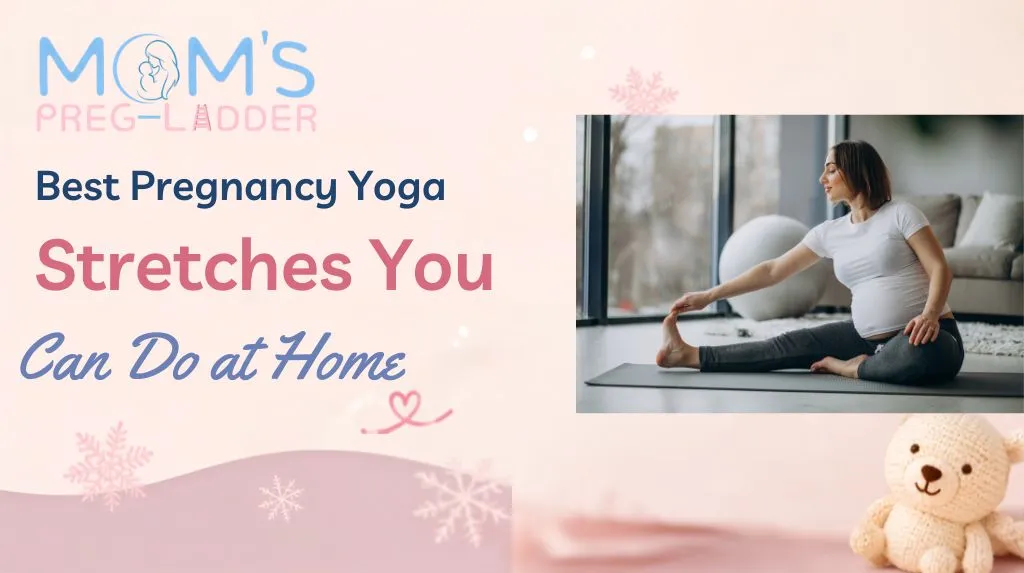
Your body changes every week during pregnancy, and your muscles and joints feel it the most. You can ease that tightness in your back, hips, and shoulders with hours of gentle stretching every day, without the gym or studio. That’s exactly what this list of the 10 best pregnancy yoga stretches you can do at home is for. Each stretch here requires nothing more than a mat, a wall, and a few cushions, so you can squeeze it in your morning tea break or your evening wind-down.
Just a quick note before we start the poses. This article is for general information purposes. Each pregnancy is different, so be sure to check with your doctor or a certified prenatal yoga instructor before starting any new routine, especially if you are considered high risk.
Why Prenatal Stretching Matters
That’s why stretching deserves to be a daily habit, not just an occasional one.
- It eases the tightness in your hip flexors and lower back muscles that are working extra hard as your bump grows.
- It promotes better posture and helps relieve backache that most women experience from the second trimester on.
- It slows down breathing, which calms the nervous system and can help to reduce stress and improve sleep.
- Studies have shown that pregnant women who do physical activity, even low-impact movement such as yoga, tend to have fewer complications and better overall wellness during pregnancy (World Health Organization 2020 Guidelines on Physical Activity and Sedentary Behavior, World Health Organization, 2020).
- The American College of Obstetricians and Gynaecologists says that physical activity in pregnancy carries minimal risk for most women and should be continued or started with medical guidance (Physical Activity and Exercise During Pregnancy yoga classes and the Postpartum Period, ACOG, April 2020).
Safety Tips Before You Start
So then let’s build it into a little checklist you run through before each session:
- Always get a green light from your doctor first, especially if you have a history of miscarriage, preterm labour, or low placenta.
- Have a wall, sturdy chair, or bolster handy for balance.
- Try not to lie flat on your back for long periods, especially after 16 weeks, because it can pinch a major blood vessel and make you feel dizzy (NHS, Exercise in Pregnancy, National Health Service, UK).
- Take it slow. Pregnancy hormones relax your ligaments, so overstretching can cause strain, not relief.
- If you experience sharp pain, dizziness, shortness of breath, or any bleeding, stop immediately and contact your doctor.
- Drink water before and after, and avoid practising in a hot or stuffy room.
The 10 Best Pregnancy Yoga Stretches You Can Do at Home
1. Cat-Cow Stretch (Marjaryasana-Bitilasana)
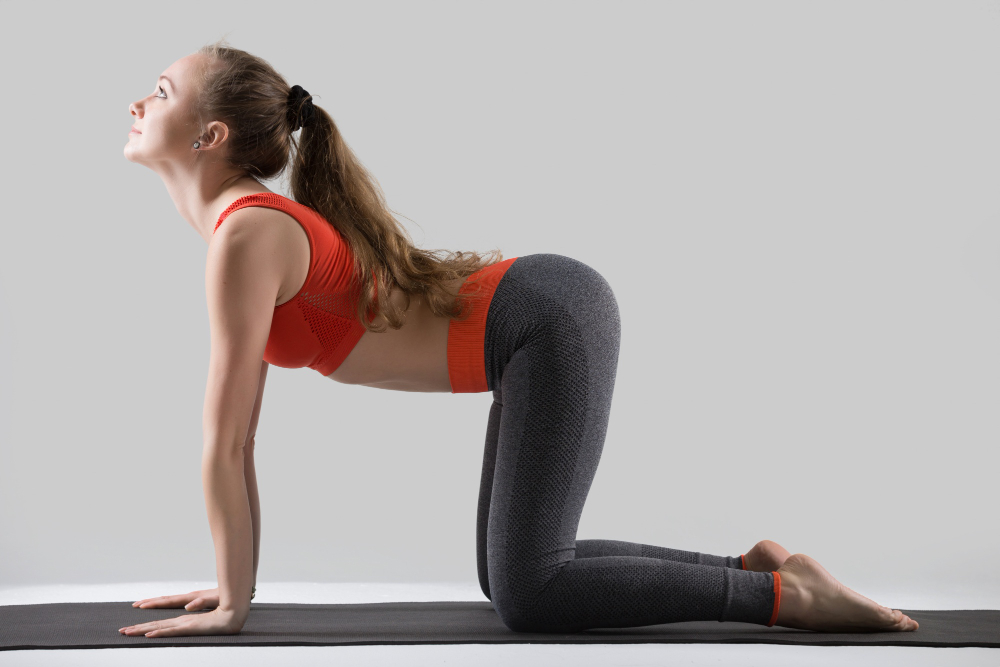
Get down on all fours, your wrists under your shoulders and knees under your hips. Inhale, drop your belly, and lift your chest (cow). Breathe out, round your spine, and tuck your chin (cat). Repeat for 8-10 rounds. This one relieves lower back tension and keeps your spine mobile through every trimester.
2. Child’s Pose (Balasana)
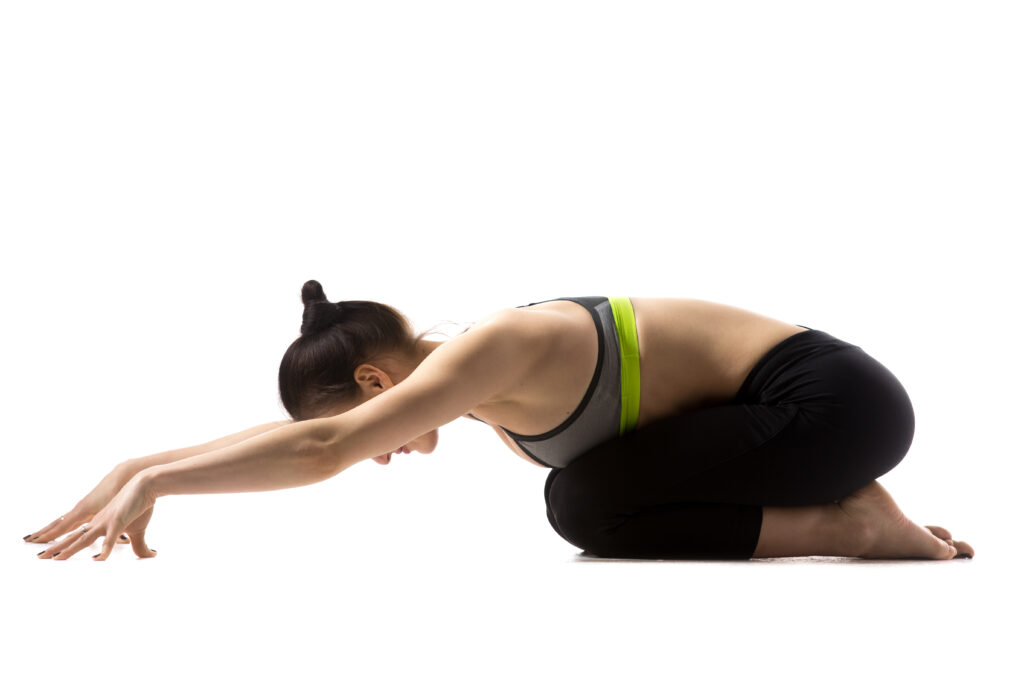
Sit back on your heels, with your knees wide enough to accommodate your bump, and walk your hands forward to rest your forehead on the mat or a cushion. Hold 30 to 60 seconds. It eases the tension in your hips and lower back and gives you a quiet moment to breathe.
3. Seated Forward Fold with a Wide Stance
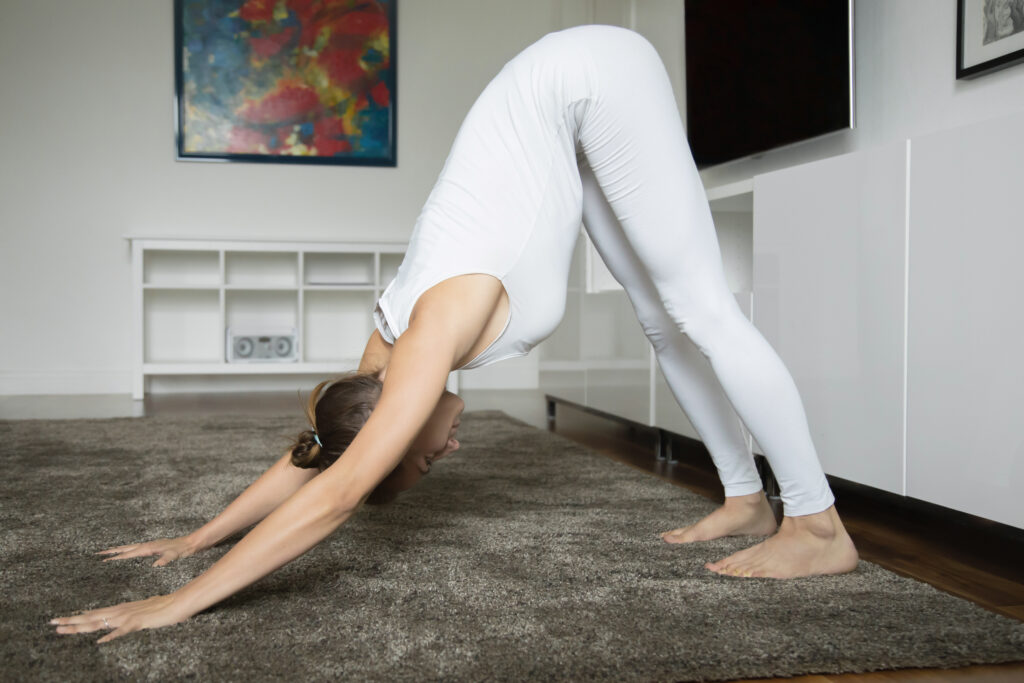
Spread your legs wide and sit up straight. Hinge from your hips, not your waist, and let your hands touch the floor or a block. It hits the inner thighs and hamstrings, both of which tighten up as your posture shifts to compensate for the extra weight in front.
4. Butterfly Stretch (Baddha Konasana)
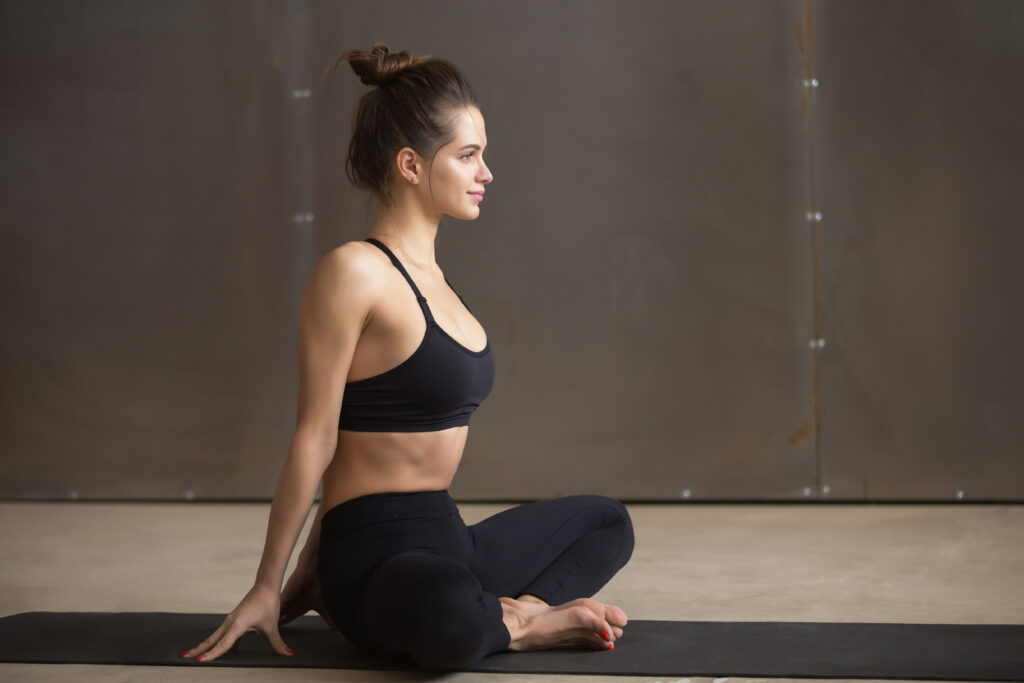
Sit with feet together, knees dropping out to the sides. Hold your ankles and slowly push your knees toward the floor without forcing them. It opens the hips and groin, which can be a tight area by the second trimester.
5. Standing Side Stretch
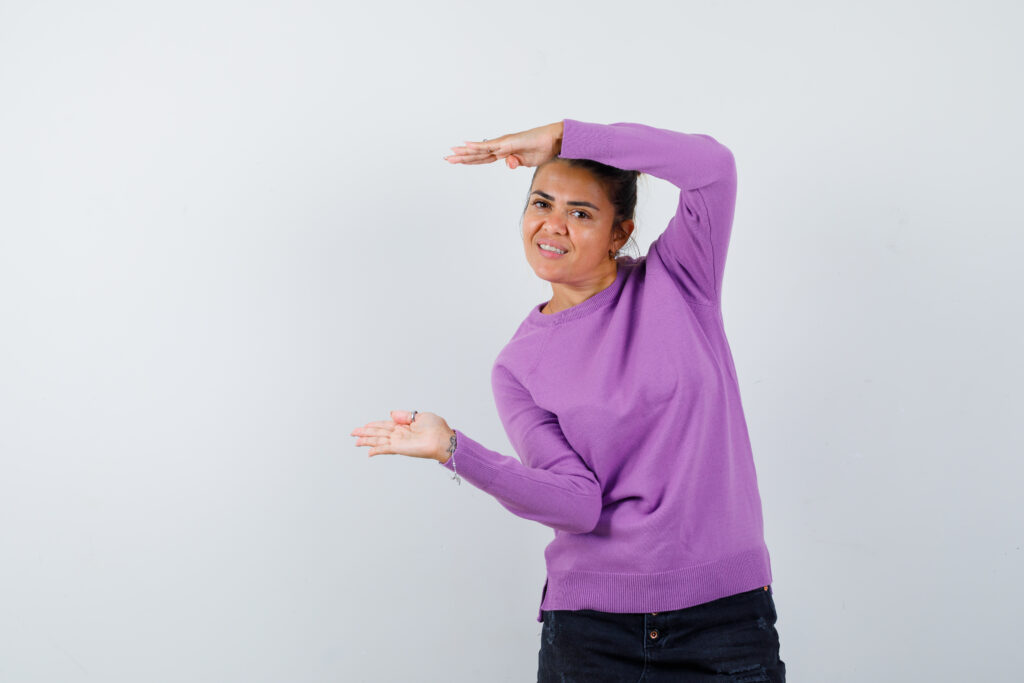
Stand with your feet hip-width apart. Raise one arm overhead and gently lean to the opposite side, keeping your core soft. Hold for a few breaths, then switch sides. It creates space along your ribs, which can feel pinched as your baby grows and pushes upwards.
6. Low Lunge with Chest Opener
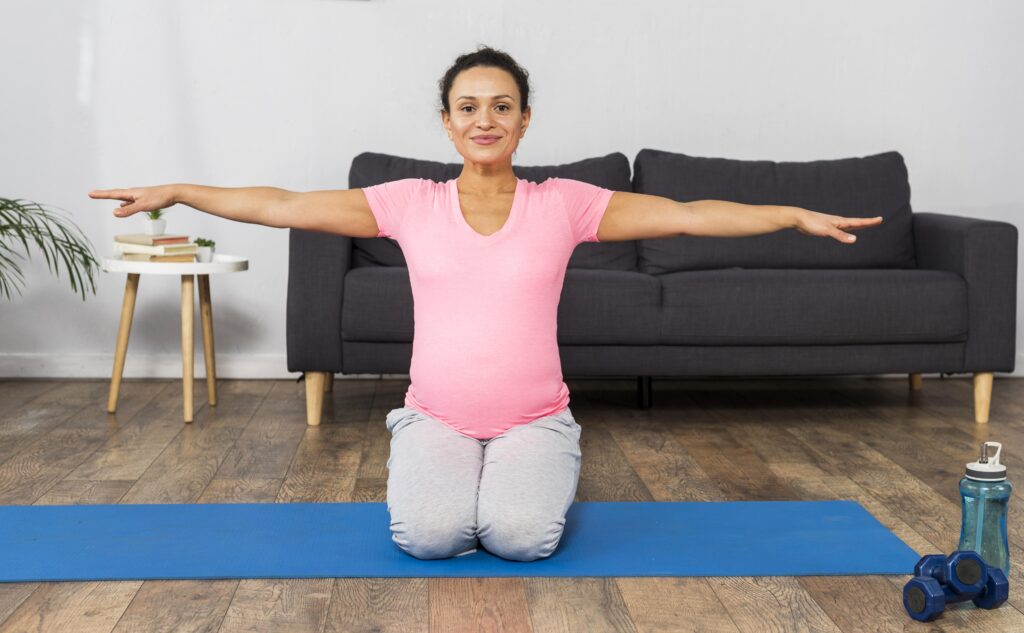
Step one foot forward into a lunge, keeping the knee over the ankle, and rest the back knee on a folded blanket. Bring both arms overhead or clasp behind your back for a chest opener. This one stretches the hip flexors and helps avoid the forward hunched posture that comes from sitting a lot.
7. Wide-Legged Squat (Malasana, Supported)
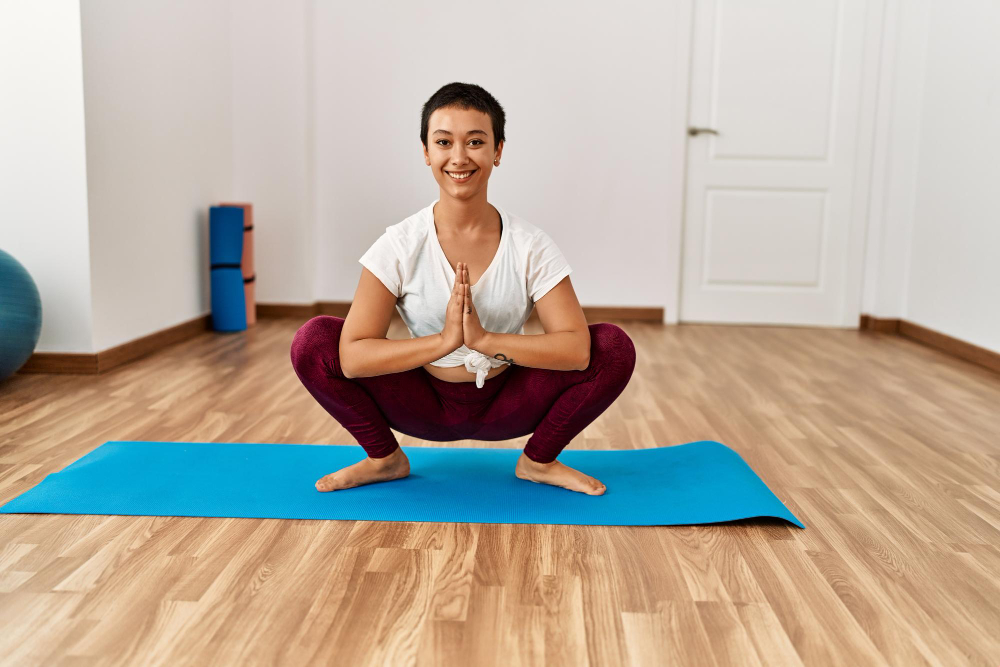
Stand with a wider stance than hip-width, toes slightly turned out. Squat down, with a block or stack of books under your seat if you need it, and keep your hands in prayer position at your chest. This pose opens the pelvis and can be useful in later pregnancy when preparing for labor, but should be done only with your doctor’s approval, especially in the third trimester.
8. Seated Twist (Modified)
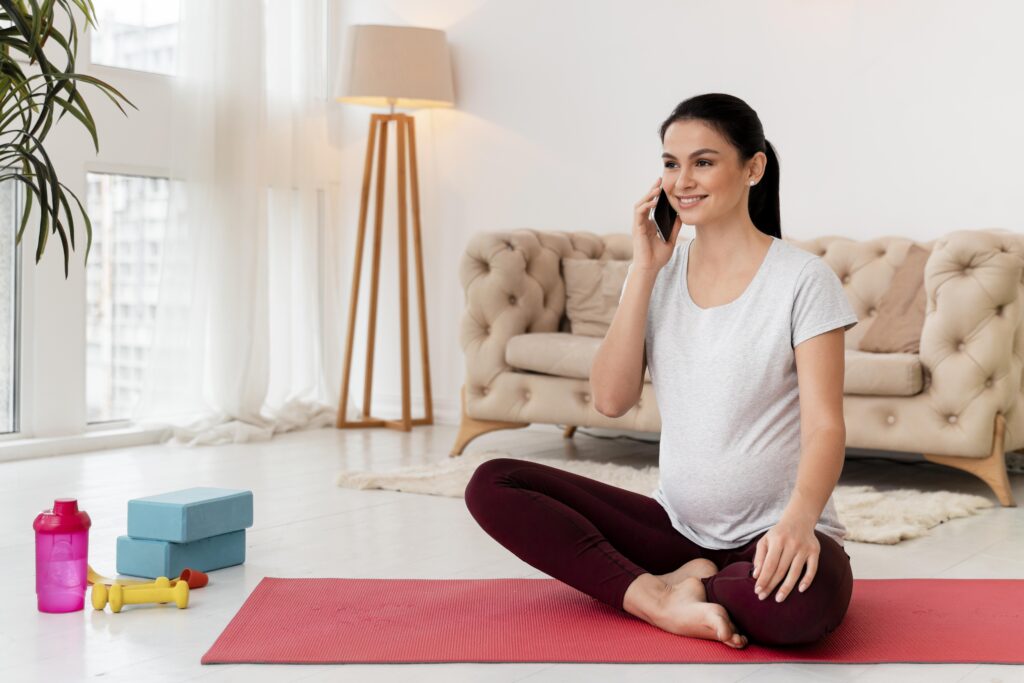
Sit on a cushion with legs crossed. Place one hand behind you and the other on the opposite knee, and twist from the upper back rather than the waist. Keep the twist small and easy. This will release tension between the shoulder blades without straining the abdomen.
9. Wall-Supported Chest and Shoulder Stretch
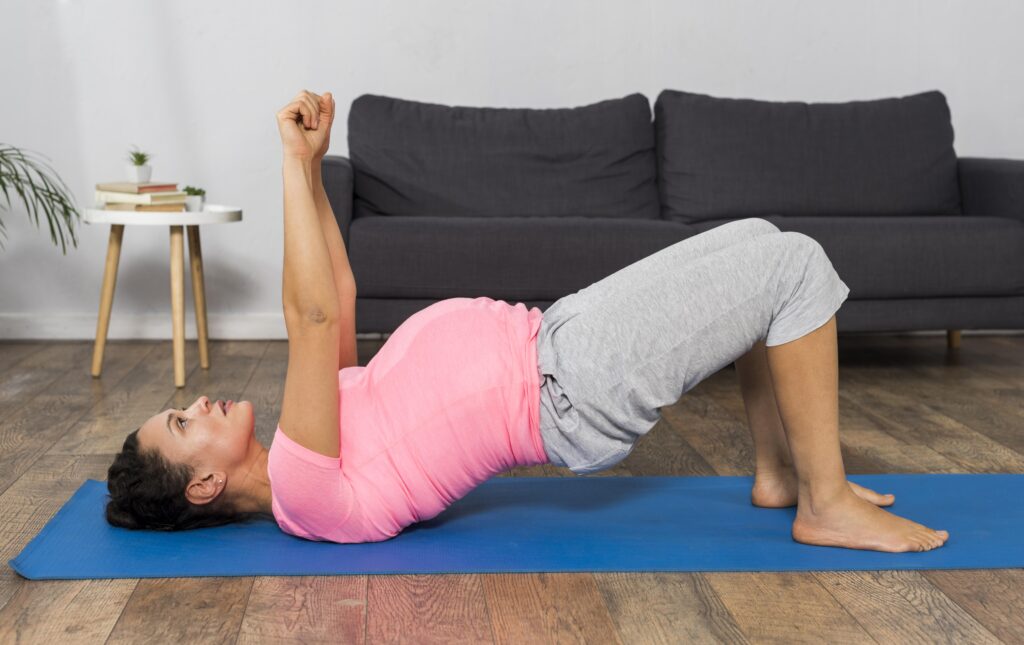
Place your hands on a wall at shoulder height and step back just a little bit so your chest drops down toward the floor. This helps to loosen tight shoulders and the upper back, which can ache from the extra weight of pregnancy and, later, from carrying a newborn.
10. Reclined Side-Lying Relaxation with Leg Stretch
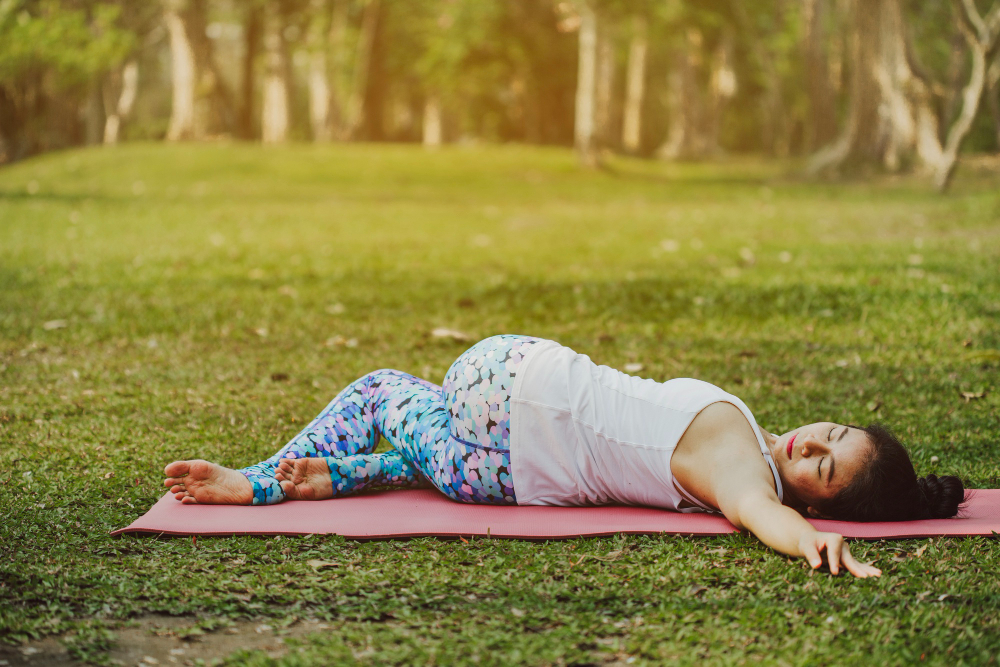
Lie on your left side with a pillow between your knees and a pillow under your head. Gently extend the upper leg forward and back a few times and then rest in stillness for a minute of slow breathing. This is a good practice of relaxation without lying on your back, as recommended by health organisations such as the NHS.
Trimester-Wise Points to Keep in Mind
- First Trimester: The focus is on gentle movement and breathing. Don’t twist too far, and don’t do anything that puts strain on the core.
- Second trimester: Your balance is beginning to change, so use a wall or chair for standing poses and avoid deep backbends.
- Third trimester: Reduce session time, don’t lie on your back for long, and stick to supported, seated, or side-lying stretches over standing balance poses.
At Mom’s Preg Ladder, our trimester-specific pregnancy yoga classes are structured around just these shifts and can join virtual pre-natal yoga, so each pose is appropriate to where you are in your pregnancy, rather than a one-size-fits-all routine.
When to Pause and Ask a Professional
Home stretching is a good way to maintain things day to day, but it is not a replacement for guided instruction. If you’re new to yoga, have had a complicated pregnancy, or simply want someone to check your form, working with a certified prenatal educator adds a level of safety that a video or article cannot. This is the kind of guidance that the team at Mom’s Preg Ladder, started by internationally-certified childbirth educator Swapnil Kaushik, provides through structured, trimester-based sessions, rather than generic workouts.
Frequently Asked Questions
Is it safe to do yoga stretches at home without a trainer during pregnancy?
Generally, once your doctor says it’s OK to exercise, simple, gentle stretches such as cat-cow or child’s pose are safe. For deeper poses or later trimesters, guided sessions are safer, as a trainer can correct your form and flag any red flags early.
How often should I do pregnancy yoga stretches?
ACOG and WHO recommend that most women do 10 to 20 minutes of stretching exercises on a daily basis or the general activity recommendation of about 150 minutes of moderate activity over the week.
Can pregnancy yoga stretches help with back pain and swelling?
Yes. Poses that open the hips and lengthen the spine, such as cat-cow and child’s pose, often help with lower back pain. Resting on your side with your legs slightly elevated can also help reduce swelling in your feet and ankles.
Which yoga poses should I avoid during pregnancy?
Don’t do deep abdominal twists, strong backbends, poses that require you to lie flat on your back for long periods after 16 weeks, and any pose that requires strong balance without support, especially in the third trimester.
When should I stop a stretch immediately?
Stop right away if you feel dizzy, experience sharp pain or cramping, have difficulty breathing, or notice any bleeding or fluid leaking. Lie on your left side and contact your doctor immediately.