
That sharp burning shock of pain that radiates from your lower back down through your buttock and into your leg is hard to mistake. If you are pregnant and you are feeling it, it’s not your imagination. Sciatic nerve pain in pregnancy is real, it is common, and it can make sitting, standing, sleeping, and walking feel like a lot of work.
The good news is that safe yoga poses for sciatic pain during pregnancy can be very helpful. They work by loosening the tight muscles that are pinching the sciatic nerve, improving the alignment of the spine, and reducing the pressure your growing baby is putting on the nerve pathway.
This guide includes 10 prenatal-safe yoga poses, clear instructions and modifications, and why each one is helpful. But before we do that, let’s understand what causes sciatic pain during pregnancy in the first place.
Why Does Sciatica Happen During Pregnancy?
The sciatic nerve is the largest in the body. It starts in the lower spinal cord, runs deep in the buttocks, and goes up the back of each leg to the foot. As per UT Southwestern Medical Center, only about 1 percent of pregnancy yoga classes patients are diagnosed with sciatica, but the real number is probably much higher, as mild cases are ignored as just back pain.
Orlovich Pain, MD, cites research that puts the figure at up to 50% of pregnant women experiencing some form of sciatic nerve pain during pregnancy.
Here’s what sets it off:
Hormonal changes: The hormone relaxin loosens ligaments and tendons in the pelvis to prepare for delivery. Increased joint mobility can reduce spinal stability and allow the vertebrae to shift in ways that irritate the sciatic nerve.
Postural changes: As the baby grows, the center of gravity moves forward in the belly. how to manage normal blood sugar levels The lower back reacts by curving even more deeply (increased lordosis), putting direct pressure on the lumbar spine and the nerve roots that make up the sciatic nerve.
Piriformis muscle tightening: The piriformis is a small muscle in the deep buttocks that often tightens due to postural changes during pregnancy. This muscle lies directly over the sciatic nerve, and sometimes the nerve actually pierces through the muscle. The piriformis gets tight and squeezes the nerve.
Baby’s position: In the second and third trimesters, especially in later pregnancy, the baby’s head can press directly on the nerve or the pelvic floor structures that support it.
How Yoga Helps Sciatic Pain During Pregnancy
Yoga works to relieve sciatic pain from many angles simultaneously. It stretches the muscles that squeeze the nerve, including the piriformis, glutes, hamstrings, and hip flexors. It also strengthens the muscles that hold up the spine, improving posture and reducing the postural causes of nerve irritation.
A systematic review published in the journal Spine pooled data from multiple clinical trials of 967 chronic low back pain patients and found there is strong evidence to support yoga for back pain relief, as per the Center for Spine and Ortho.
We must change the approach, in particular for pregnant women. Avoid deep twists that compress the belly and deep backbends pregnancy diet plans, especially after 20 weeks, and steer clear of any pose that increases pain or causes a “pins and needles” sensation. Always check with your doctor or midwife before you start or continue with a yoga practice during pregnancy.
10 Safe Yoga Poses for Sciatic Pain During Pregnancy
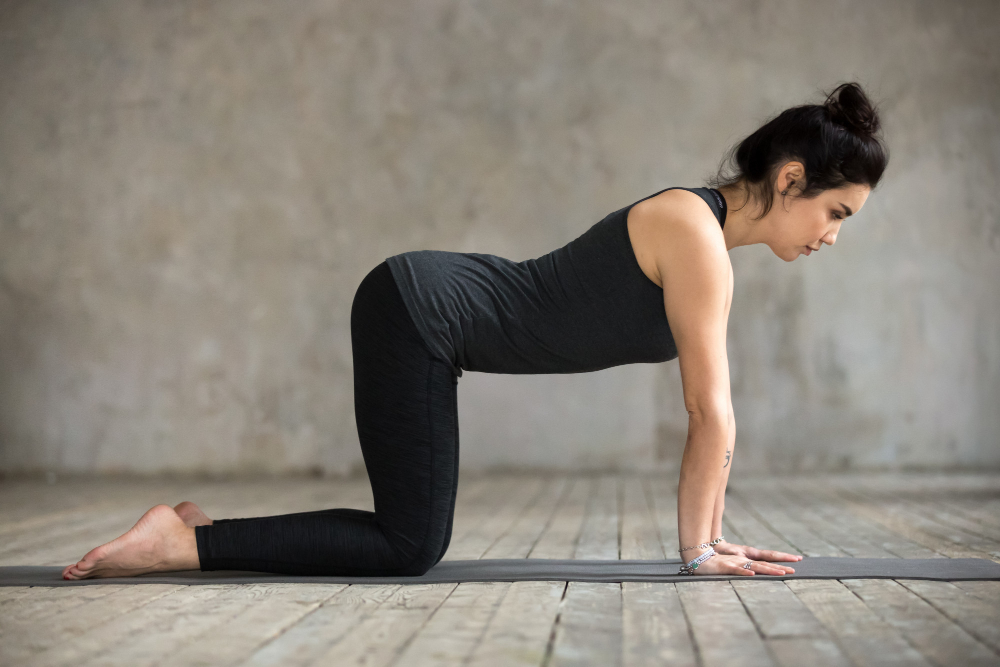
1. Cat-Cow (Marjaryasana-Bitilasana)
How it helps: Cat-Cow gently mobilizes the entire lumbar spine and pelvis, shifting the baby’s weight off the sciatic nerve and relieving compression at the nerve root. It also builds deep core muscles that support the spine.
How to do it:
- Start in a tabletop position on your hands and knees, wrists stacked under shoulders and knees stacked under hips.
- Put a folded blanket under your knees for some cushioning.
- Inhale: Gently lift the chest and let the belly soften toward the floor (Cow). Don’t arch your lower back too much.
- Exhale: Round the spine upward, tuck chin to chest, and gently pull belly in (Cat).
- Move for 8 to 10 rounds and breathe slowly.
Modification: Emphasize the cat position and only do a gentle version of cow to avoid over-arching the lumbar spine, which can worsen lordosis in pregnancy.
2. Wide-Knee Child’s Pose (Balasana)
Why it helps: Child’s Pose shifts the baby’s weight away from the spine and toward the hips and knees, relieving pressure on the spine. It relaxes the muscles of the lower back and hips. calms the nervous system and creates traction along the lumbar spine, providing instant relief for many women with sciatica.
How to do it:
- Come to your mat. Kneel, touch your big toes, and open your knees as wide as your mat.
- Put a bolster or a stack of folded blankets lengthwise between your knees.
- Let your torso hang over the bolster, and rest your arms in front of or by your sides.
- Breathe deeply for 1-2 minutes with your head turned to the side.
Modification: Use all the props you need to be completely comfortable. There should be space for the belly to fall between the knees without compression.
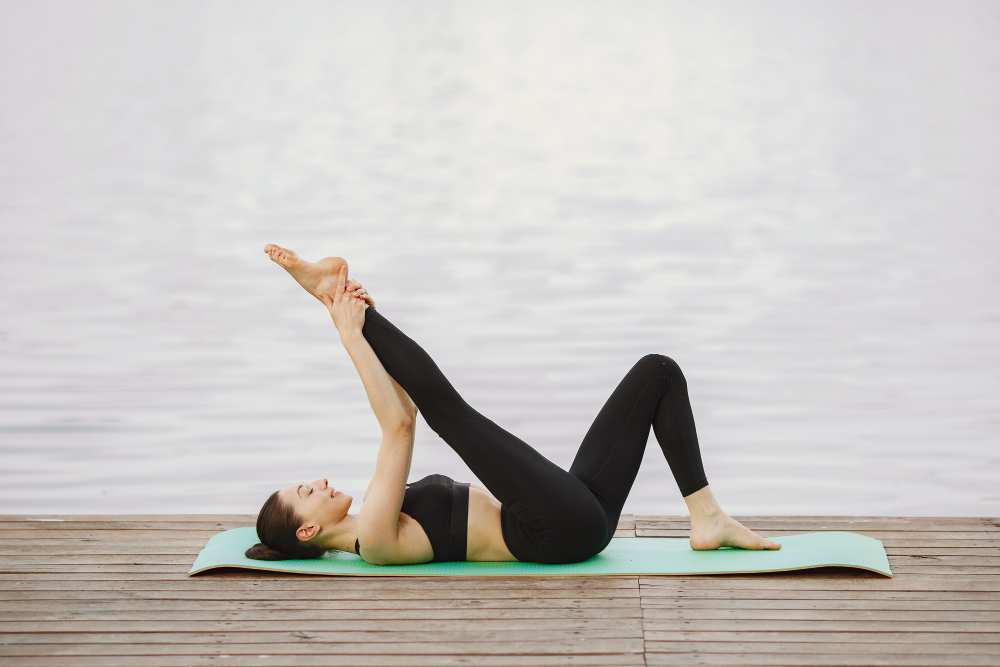
3. Reclined Pigeon Pose (Supta Kapotasana)
Why it helps: Pigeon Pose is one of the most direct stretches for the piriformis muscle, the small buttock muscle that often compresses the sciatic nerve during pregnancy. The reclined version is safer to do while pregnant than the traditional floor version, as it takes the pressure off the hips more and allows you to better control the depth of the stretch.
How to do it:
- Lie on your back with your knees bent and your feet flat on the floor (this is safe during early pregnancy; after 20 weeks, limit time on your back and tilt your body a little to the left).
- Place your right ankle on top of your left thigh just below the knee and flex your right foot.
- If you already feel a stretch on your right outer hip, stay here. To make it stronger, lightly pull your left knee toward your chest.
- Hold for 30 to 60 seconds. Change sides.
Modification: If lying on your back is uncomfortable in later pregnancy, do a seated version (Figure-Four Stretch): sit on a chair, cross one ankle over the opposite knee, sit tall, and gently lean the torso slightly forward.
4. Downward-Facing Dog (Adho Mukha Svanasana)
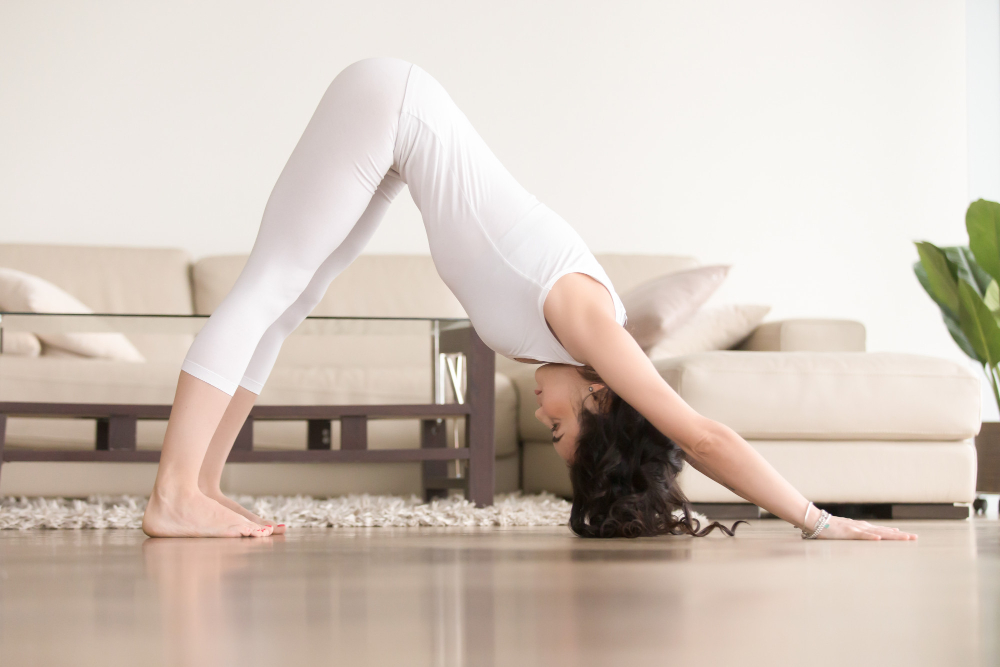
Why it helps: Downward Dog elongates the entire back body. It stretches the hamstrings, glutes, calves, and the muscles along the spine, all of which tighten during pregnancy and can lead to sciatic nerve compression. It also pulls gently on the spine to create space for the lower back bones to release pressure.
How to do it
- From a hands-and-knees position, tuck your toes and lift your hips up toward the ceiling into an inverted V.
- To protect the hamstrings and make space for the belly, keep the knees slightly bent.
- Press down through all fingers, roll the inner thighs back, and lengthen the tailbone toward the ceiling.
- Hold for 5 breaths, alternating heel pedaling if it feels nice.
Modification: Maintain a good bend in the knees throughout your pregnancy so the belly can hang free and not press toward your thighs. As your belly gets bigger, set your feet a little wider than hip-width apart.
5. Low Lunge (Anjaneyasana)
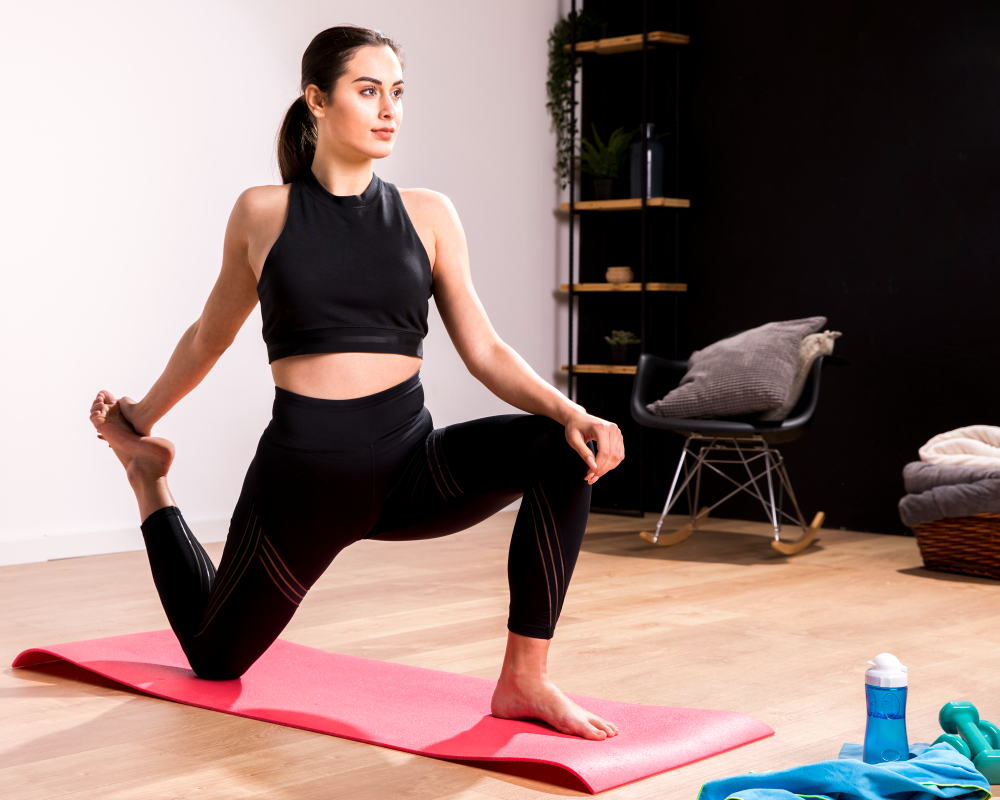
Why it helps: Sciatic pain is often accompanied by tight hip flexors that pull on the lumbar spine and increase nerve compression. Low lunge stretches the hip flexors of the back leg and strengthens the front leg. It also aids in opening the chest and enhances postural alignment.
How to do it:
- From a standing position, step your right foot forward into a lunge. Bring the left knee down to the floor, placing a folded blanket under it for comfort.
- Maintain the right knee directly over the right ankle.
- Lift the torso, gently draw up the front of the pelvis, and breathe.
- Inhale for 5 to 8 counts and then change sides.
Modification: Use your front thigh to support your hands and help you balance. As your belly grows, widen your stance to make more room.
6. Warrior II (Virabhadrasana II)
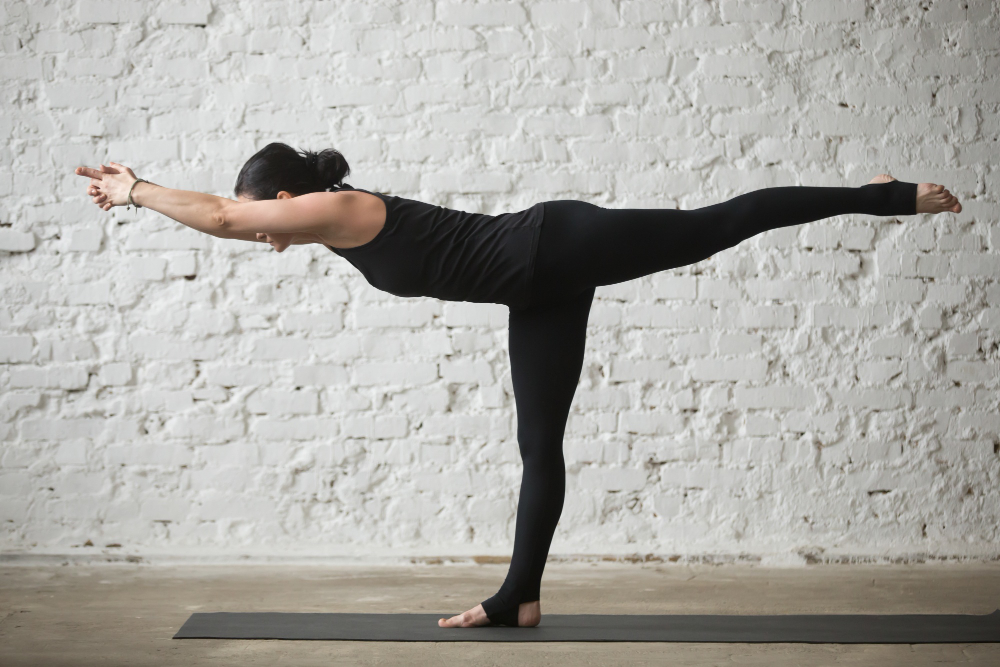
Why it helps: Warrior II strengthens the thighs, hips, and glutes, building the muscular support around the pelvis that helps protect the sciatic nerve from compression. It can also aid balance, which can become more challenging as pregnancy changes your center of gravity.
How to do it:
- Stand with your feet apart, approximately 3 to 4 feet.
- Turn the right foot out 90 degrees and the left foot in a little.
- Bend the right knee out to a comfortable depth, making sure the knee is tracking over the second toe.
- Keep your arms out wide, shoulder height, looking over your right hand.
- Hold for 5 breaths and switch sides.
Modification: Bend the knee less deeply than you would outside of pregnancy, and if you tire, hold for fewer breaths. In later trimesters, use a wall for balance support if needed.
7. Garland Pose / Supported Squat (Malasana)
How it helps: Malasana opens the pelvis, stretches the inner thighs and groin, and takes pressure off the sacrum and lower back. It is one of the most pregnancy-friendly poses and is often used to prepare the body for labor. The deep squat position also allows the baby to move into an optimal position, which can help to reduce sciatic nerve compression over time.
How to do it:
- Stand with your feet slightly wider than hip-width apart, and toes turned out at a comfortable angle.
- Squat down with your heels on the floor, or put a rolled blanket under your heels if they lift.
- Support yourself with a yoga block or firm cushion under your sitting bones.
- Join your palms together at the chest and use your elbows to gently open the inner knees.
- Hold for 5-10 inhales.
Modification: Use a block or stack of books to decrease the depth of the squat. Later in pregnancy, grasp a door frame or a stable chair to help with balance. If you have symphysis pubis dysfunction (pelvic girdle pain), avoid this pose.
8. Side-Lying Leg Stretch (Supta Padangusthasana variation)
Why it helps: The side-lying stretch targets the hamstrings and outer hip, two of the main areas where you feel sciatic pain. The side-lying position is one of the safest positions in pregnancy, as it does not put any pressure on the belly and does not have the problems of compression that lying on your back does.
How you do it:
- Lie on your left side with a pillow under your head and another between your knees for support.
- Keep the knees slightly bent for stability.
- Slowly straighten the right (top) leg as far as is comfortable, pointing the right foot.
- You can use a yoga strap or a scarf and loop it around the right foot, holding the ends loosely.
- Hold for 30 to 60 seconds, then slowly lower the leg. Change sides.
Modification: If you are straightening your leg all the way out and it is causing you sharp pain, keep a soft bend in the leg you are stretching. Don’t push the range of motion.
9. Thread the Needle (Parsva Balasana)
Why it’s good: Thread the Needle gently rotates through the upper back and opens the shoulder girdle and thoracic spine. The belly pulls the center of gravity down and rounds the upper back forward, which can contribute to overall spinal tension. This pose releases that tension without any rotation of the lumbar spine or compression of the belly, making it one of the safest spinal mobility poses for pregnant women.
How To:
- Start in a tabletop position on your hands and knees.
- Inhale, sweep the right arm out to the right and up.
- Breathe out and slide the right arm under the left arm on the floor so the right shoulder and right cheek are to the mat.
- The left hand gently pushes on the floor for support or can be put forward.
- Hold for 5 breaths. Return to the tabletop. Go the opposite way.
Modification: To add more cushioning, put a folded blanket under the shoulder that is on the floor.
10. Legs Up the Wall (Viparita Karani, modified)
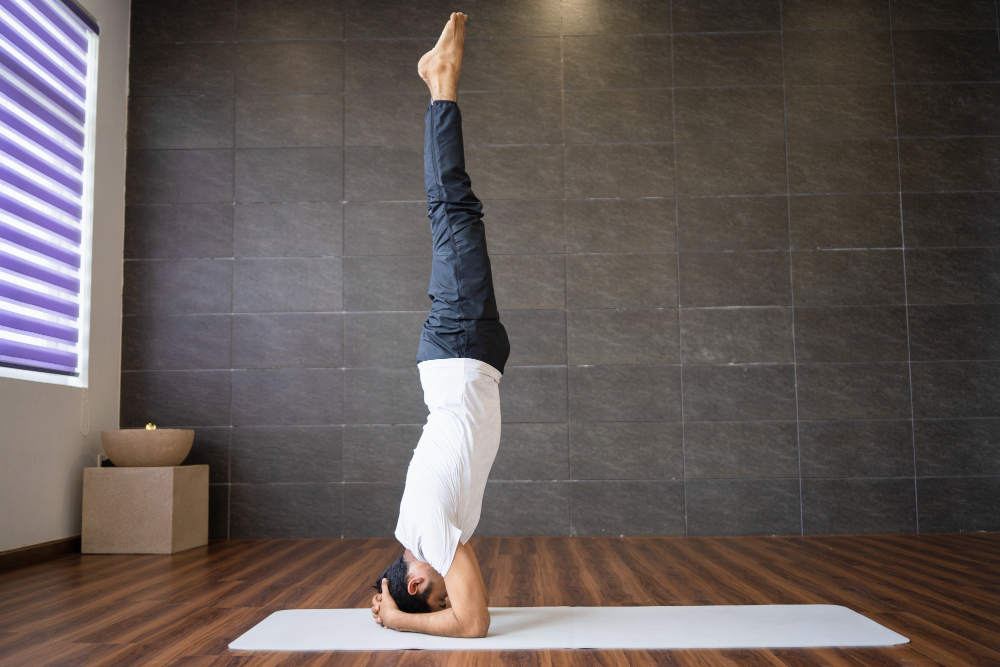
Why it helps: The elevated legs encourage blood and fluid to drain from the lower extremities, reducing swelling and potentially easing nerve compression. It gently releases the lower back and hamstrings. It is very restful. Pregnant women should modify this pose to avoid lying flat on the back.
What to do:
- Sit with your left hip as close to the wall as is comfortable.
- Lie back and swing your legs up the wall, using your hands to support your back. Place a folded blanket under your right hip to tilt your hips slightly to the left.
- Place the backs of your legs on the wall, or tilt them a bit away from vertical if that is more comfortable.
- Breathe slowly in this position for 2 to 5 minutes.
Modification: At 20 weeks, place a folded blanket or a thin bolster under your right hip to slightly tilt the pelvis to the left. This takes pressure off the vena cava (the large vein found along the right side of the spine), keeping blood flow to you and the baby safe. If you feel dizzy or short of breath, turn immediately onto your left side.
Important Safety Guidelines for Yoga with Sciatica in Pregnancy
Things to think about before beginning any yoga practice for sciatic pain during pregnancy:
- First, get medical clearance. Not all sciatic pain during pregnancy is created equal. In some cases, the problem is not just nerve compression from postural changes, but rather a herniated disc or spinal stenosis. Before you start, your doctor or midwife should confirm the cause.
- If pain increases, stop. These poses should be neutral or relieving. If any pose causes sharp pain, numbness, or tingling, come out of it slowly and don’t go back into it.
- 20 Weeks: Avoid lying flat on your back for long periods of time. Roll onto your left side or slightly tilt under your right hip.
- Pregnancy: Avoid deep twists that compress the belly, strong backbends, and poses that require lying face down.
- Use plenty of props. Blankets, bolsters, blocks, and straps are not symptoms of weakness. They make each pose safer and more effective for pregnant women.
- Train with a licensed instructor. Reading about poses and doing them safely under the watchful eye of a trained eye to check your alignment are two very different things. Relaxin, a hormone that greatly increases joint laxity in pregnancy, makes it easy to overstretch without realizing it.
Mom’s Preg-Ladder prenatal yoga classes are tailored for expectant moms, featuring trimester-appropriate sequencing and expert guidance from certified pregnancy health professionals. Whether you’re dealing with sciatica, lower back pain, or just trying to stay mobile and comfortable throughout your pregnancy, practicing with an instructor who understands your changing body makes a real difference.
When to See a Doctor Instead of Doing Yoga
Yoga can be a great way to find relief from sciatic pain related to pregnancy—but sometimes you need to see a doctor first. When to see your doctor or midwife
- The pain is severe, constant, or progressively worsening
- You see quite a bit of weakness in one leg or foot.
- Any loss of control of your bowel or bladder
- Pain after a fall/injury that started suddenly
- After a few weeks of consistent practice, yoga isn’t helping
In many cases, sciatica improves after the baby is born and the pressure is off the nerve. Until then, a gentle, consistent practice of yoga is one of the most effective and accessible tools for managing day-to-day discomfort.
Frequently Asked Questions
1. Can yoga cure sciatica during pregnancy?
Yoga does not cure sciatica in pregnancy, but it can help reduce pain, improve mobility, and manage symptoms effectively for many women. The poses work by releasing tight muscles that compress the sciatic nerve and improving spinal alignment. In most cases, pregnancy-related sciatica resolves after delivery, when the physical pressure on the nerve is removed.
2. Which yoga pose is best for sciatic pain during pregnancy?
The best poses for pregnancy-related sciatic pain are the reclined pigeon pose, cat-cow, and the wide-kneed child’s pose. The reclined pigeon directly targets the piriformis muscle, the most common site of nerve compression. Cat-cow opens up the lumbar spine and moves the baby’s weight off the nerve.
3. Is it safe to do yoga for sciatica in the third trimester?
Yes, with suitable modifications. Side-lying stretches, supported child’s pose, garland pose, cat-cow, and downward dog (with bent knees) are safe in the third trimester. Always use props for support and lie flat on your back for an extra minute or two. Practice with a certified prenatal yoga instructor.
4. How often should I practice yoga for sciatic relief during pregnancy?
For the best results in relieving sciatica, try gentle yoga three to five times a week. 15 to 20 minutes a day of specific stretching and movement is all that it takes to keep the hips flexible, reduce piriformis tightness, and help maintain lumbar alignment. Session length is secondary to consistency.
5. What yoga poses should I avoid with sciatica during pregnancy?
Avoid full forward bends while sitting or standing (other than Downward Dog), deep backbends, strong twists that squish the abdomen, face-down poses, or any pose that causes shooting pain or increases numbness. Always come out of a pose if it is aggravating your sciatic symptoms, not alleviating them.